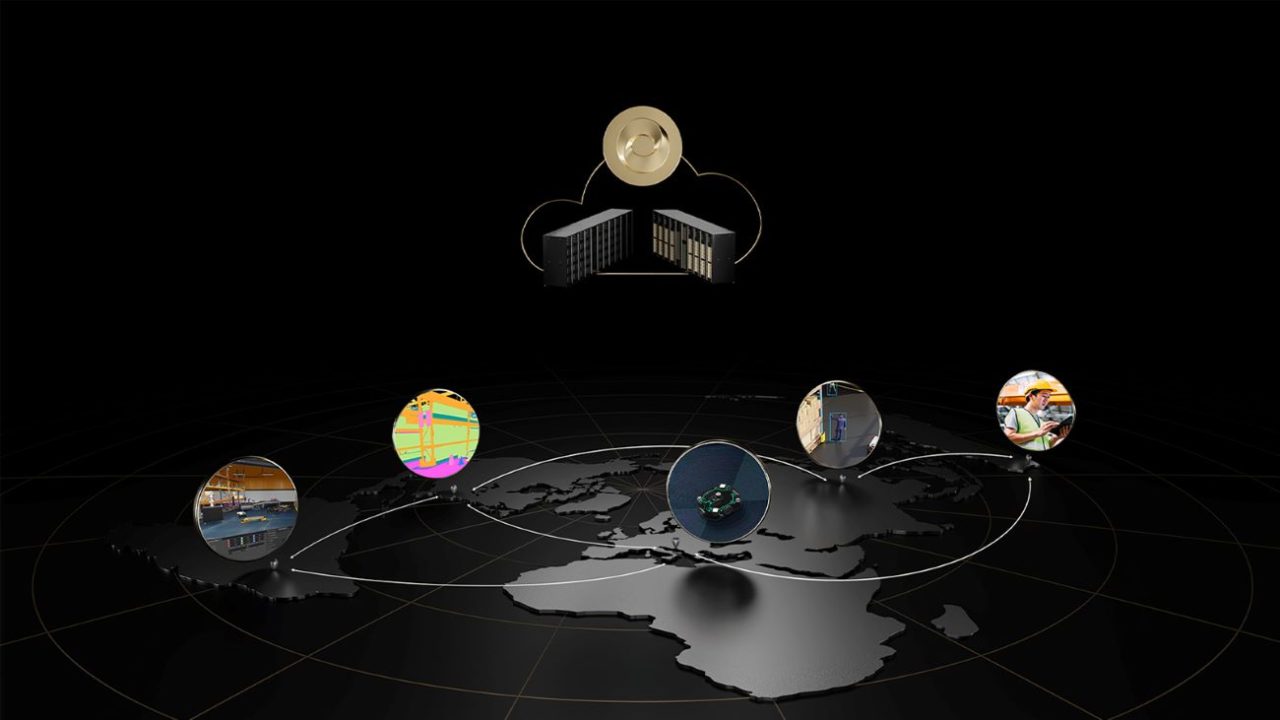
Robotics developers can span global teams testing for navigation of environments, underscoring the importance of easy access to simulation software for quick input and iterations.
At GTC today, NVIDIA founder and CEO Jensen Huang announced that the Isaac Sim robotics simulation platform is now available on the cloud.
Developers will have three options to access it. It will soon be available on the new NVIDIA Omniverse Cloud platform, a suite of services that enables developers to design and use metaverse applications from anywhere. It’s available now on AWS RoboMaker, a cloud-based simulation service for robotics development and testing. And, developers can download it from NVIDIA NGC and deploy it to any public cloud.
With these choices for accessing Isaac Sim in the cloud, individuals and teams can develop, test and train AI-enabled robots at scale and in the workflow that fits their needs. And it comes at a time when the need is greater than ever.
Consider that the mobile robotics market is expected to grow 9x worldwide from $13 billion in 2021 to over $123 billion in 2030, according to ABI Research.
“NVIDIA’s move to provide its visual computing capabilities as an autonomous robot training platform in the cloud should further enable the growing number of companies and developers building next-generation intelligent machines for numerous applications,” said Rob Enderle, principal analyst for the Enderle Group.
Scaling Simulations
Using Isaac Sim in the cloud, roboticists will be able to generate large datasets from physically accurate sensor simulations to train the AI-based perception models on their robots. The synthetic data generated in these simulations improves the model performance and provides training data that often can’t be collected in the real world.
Developers can now test the robot’s software by launching batches of parallel simulations that exercise the software stack in numerous environments and across varying conditions to ensure that the robots perform as designed. Continuous testing and continuous delivery, or CI/CD, of the evolving robotics software stack is an important component of successful robotics deployments.
Isaac Sim in the cloud will make it easy to meet the most compute-intensive simulation tasks like CI/CD and synthetic data generation.
The upcoming release of Isaac Sim will include NVIDIA cuOpt, a real-time fleet task-assignment and route-planning engine for optimizing robot path planning. Tapping into the accelerated performance of the cloud, teams can make dynamic, data-driven decisions, whether designing the ideal warehouse layout or optimizing active operations.
Remote Collaboration and Improved Access
Developing robots is a multidisciplinary endeavor. Mechanical engineers, electrical engineers, computer scientists and AI engineers come together to build the robot. With Isaac Sim in the cloud, these teams can be located across the globe and still able to share a virtual world in which to simulate and train robots.
Running Isaac Sim in the cloud means that developers will no longer be tied to a powerful workstation to run simulations. Any device will be able to set up, manage and review the results of simulations.
Results can be shared outside of the simulation team with potential partners, customers and co-workers.
Learn More
Register free to attend the two-hour hands-on workshop at GTC on using Isaac Sim with AWS RoboMmaker.
Also, learn more about Isaac Sim features and capabilities in the following GTC sessions:
- Leveraging Simulation Tools to Develop AI-Based Robots
- How to Build a Digital Twin: Bringing in Robotics
Apply for early access to Isaac Sim on Omniverse Cloud Services.