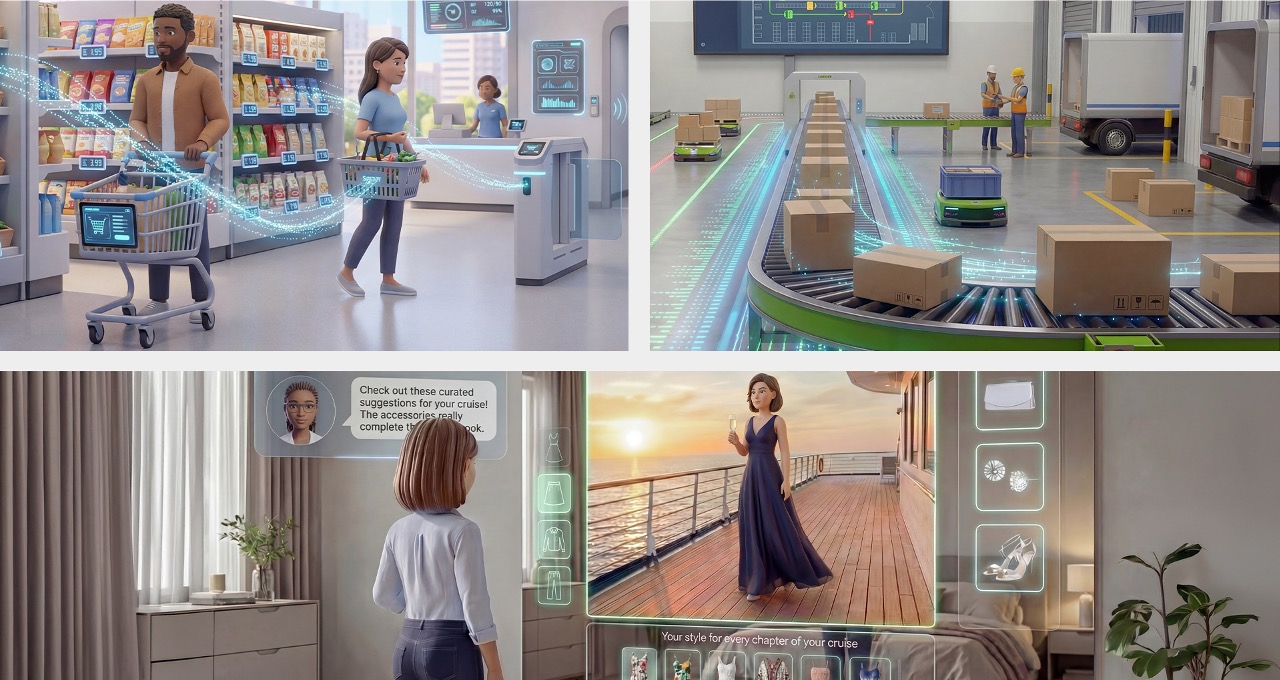
AI has transformed retail and consumer packaged goods (CPG) operations, enhancing customer analysis and segmentation to enable greater personalization for marketing and advertising, and boosting the speed and accuracy of demand forecasting for supply chains and logistics.
Companies are also raising the bar for customer engagement through intelligent digital shopping assistants and catalog enrichment by dynamically enhancing and localizing product information. AI agents are increasing the speed and efficiency of operations, while physical AI systems are helping streamline and automate warehouse and supply chain operations.
NVIDIA’s third annual State of AI in Retail and Consumer Packaged Goods survey report, which garnered hundreds of responses, showed maturation of AI within the industry as companies move AI projects from pilot to production in all areas.
Highlights of this year’s report include:
- 91% of respondents said their companies are either actively using or assessing AI.
- 90% said they’d build on the success of current projects by increasing their AI budgets in 2026.
- 89% reported AI is helping to increase annual revenue, while 95% said it is helping decrease annual costs.
- 79% said open-source models and software were moderately to extremely important to their AI strategy.
- 47% said their companies are either using or assessing agentic AI in their operations.
Read more below on some of the report’s key findings.
Open Source Opens Opportunities
Open source has quickly become the foundation of many retail AI systems, giving teams the flexibility to adapt models to their data and use cases while maintaining strong governance. Open, interoperable ecosystems also make it easier to plug AI into existing tools and workflows, helping retailers rapidly scale innovation.
“Most retailers first started experimenting with AI using proprietary AI vendors,” said Jason Goldberg, chief commerce strategy officer of Publicis Groupe. “They had the models, but they didn’t own the keys to their own kingdom. Open source flips that script, allowing retailers to leverage their proprietary data, avoid vendor lock-in and benefit from open-source community innovation.”
AI Unlocks Significant Business Impact
With 91% of respondents saying their companies are either actively using or assessing AI, the competitive question in retail and CPG has shifted from whether or not to invest in AI, to how to most effectively deploy and scale AI.
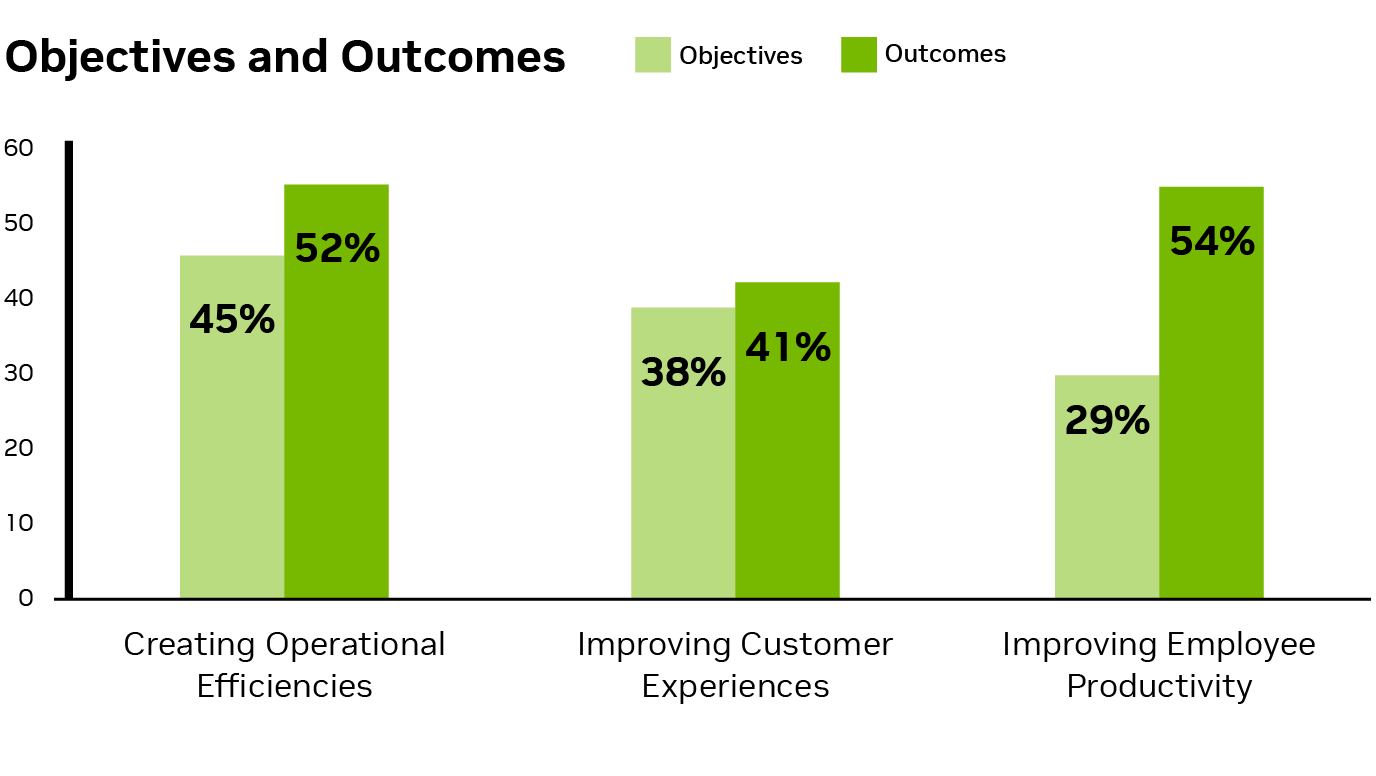
Across the industry, the business impact of AI has been tangible and significant. When asked how AI has improved their business, 54% cited improved employee productivity; 52% said AI has helped to create operational efficiencies; and 41% reported improved customer service.
As stated above, 89% of respondents said AI has helped to increase revenue. For many companies, that increase has been significant, with 30% stating revenue has increased by more than 10%. The story is the same for AI’s role in helping to decrease annual costs, with 95% agreeing AI has reduced costs and 37% saying costs have been reduced by more than 10%.
“What executives should be focused on is not green-lighting vanity projects at the expense of high-ROI wins,” said Chris Walton, co-CEO of Omni Talk. “The retailers who will succeed will start with boring use cases that solve specific P&L problems, prove the value, then scale.”
AI investment, including infrastructure, hiring AI experts and software, will increase next year, according to nine out of 10 survey respondents. And half of respondents said the increase could be significant, with budgets increasing 10% or more year over year.
Agentic AI Makes Big Debut in Retail
The retail and CPG industry is piloting AI agents across lines of business.
Overall, 47% of survey respondents said they’re using or assessing agentic AI — with 20% saying AI agents are already active in their organizations and another 21% reporting agents are coming within the next year.
“The truly disruptive impact of agentic AI will hit retail supply chains and operations first, such as autonomous agents handling real-time inventory rebalancing, dynamic pricing and vendor negotiations at scale, because that’s where the ROI is measurable,” said Walton.
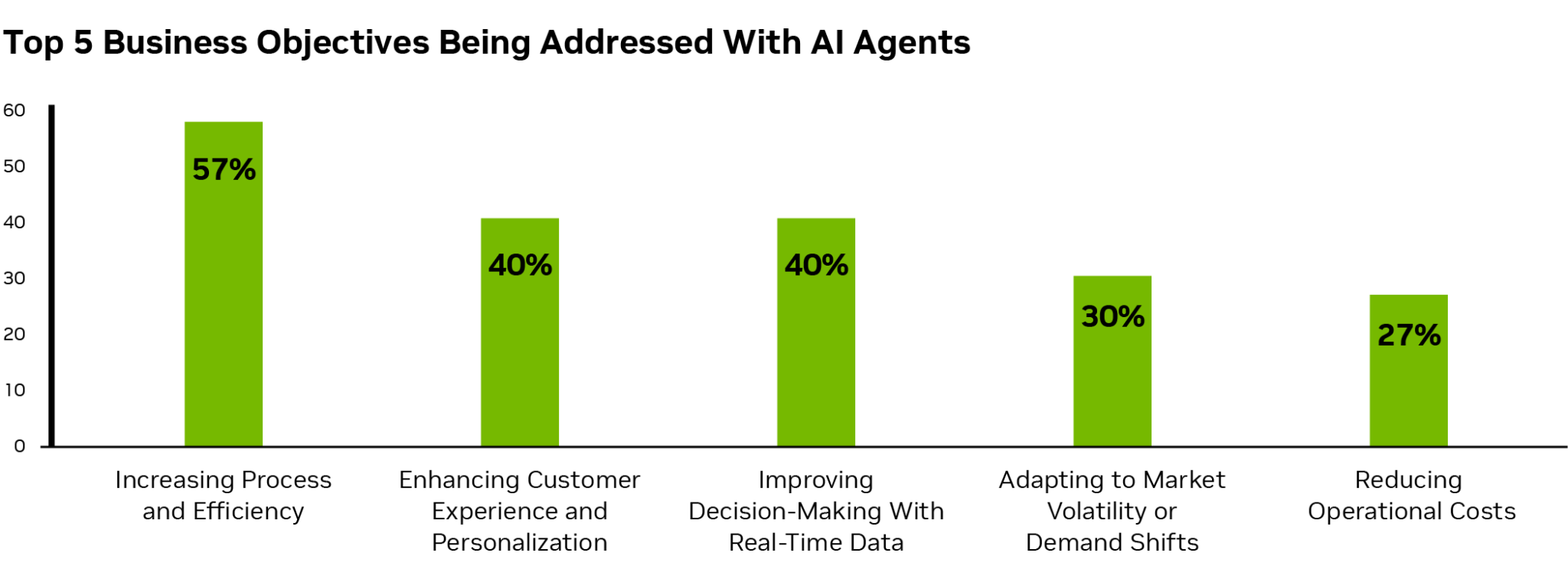
Survey respondents identified three clear goals for agentic AI in retail and CPG:
- Increased process speed and efficiency, per 57% of respondents.
- Enhanced customer experience and personalization, per 40%.
- Improved decision-making with real-time data, per 40%.
Broadly speaking, agentic AI will be spread across three operational lines: internal operations, employee and customer support, and customer engagement. For instance, in customer engagement, agents go beyond analytics and act on insights in real time, adjust messages, recommend products and guide purchase decisions based on individual customer contexts.
AI Providing Resilience to the Supply Chain
Retail and CPG have faced intense supply chain challenges this decade, and those challenges are only growing more complex. Sixty-four percent of respondents in this year’s survey reported increased challenges in the supply chain year over year, such as geopolitical instability, labor constraints, evolving consumer expectations for speed and transparency, and regulatory complexity across global operations.
“AI lets retailers optimize inventory at the store and customer level rather than at a regional level,” said Goldberg. “AI allows retailers to incorporate many more factors in their demand forecasts, and much more accurately predict and avoid out of stocks, by much more accurately matching supply to demand.”
The industry is turning to AI to streamline operations and solve complexity. The top pressure valve is using AI for supply chain operational efficiency and throughput, according to 51% of respondents. Meeting customer expectations was next on the list at 45%, and solving for traceability and transparency was third, per 38%.
Physical AI is gaining ground in the industry, with 17% of respondents using or evaluating the technology.
“The real transformation will come from AI that makes existing physical infrastructure smarter,” said Walton. “My favorite example is in-store robotics. Through them, you get better pricing, better inventory, management and better presentation quality.”
The early movers demonstrate that, when integrated thoughtfully, physical AI systems deliver more than task automation, enhancing flexibility and throughput in response to workforce pressures and rising logistical complexity.
Download the “State of AI in Retail and CPG: 2026 Trends” report for in-depth results and insights.
Explore NVIDIA’s AI solutions and enterprise-level AI platforms for retail.