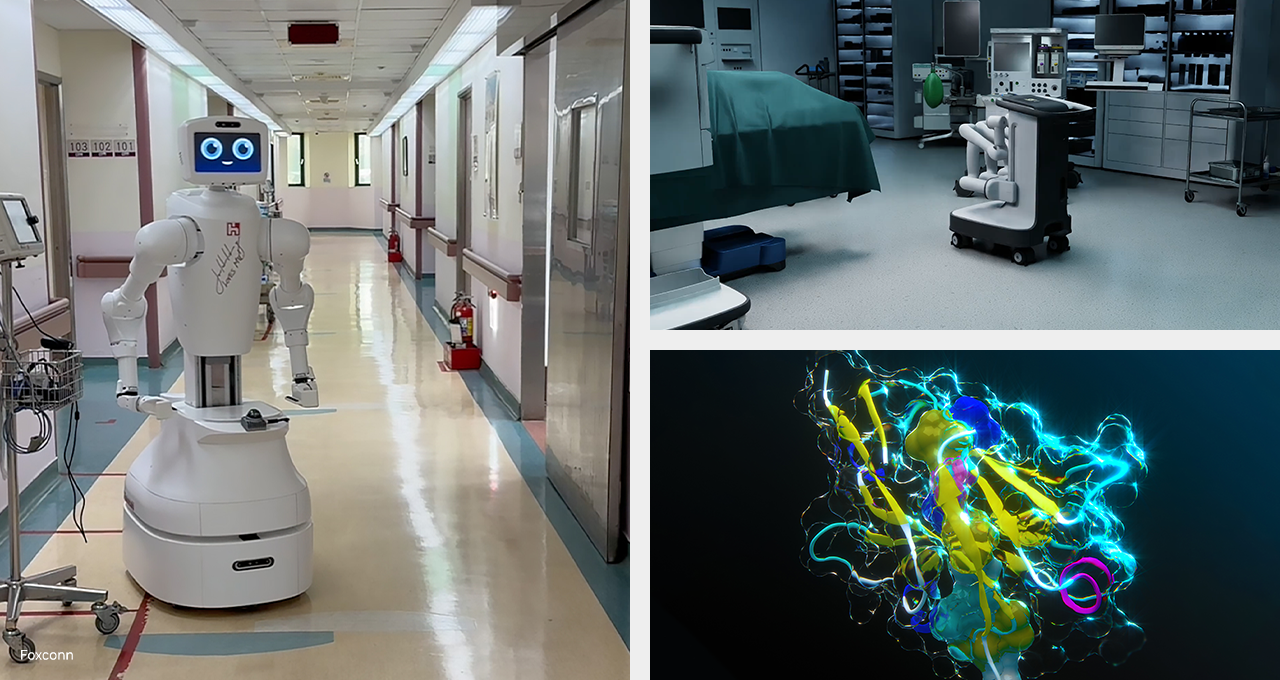
AI is accelerating every aspect of healthcare — from radiology and drug discovery to medical device manufacturing and new treatment methods enabled by digital twins of the human body.
NVIDIA’s second annual “State of AI in Healthcare and Life Sciences” survey report reveals how the industry is moving from AI experimentation to execution, reaping return on investment (ROI) on core applications like medical imaging and drug discovery.
The industry is also embracing open source software and AI models to tackle specific use cases, as well as exploring using agentic AI to speed knowledge retrieval and research paper analysis.
Highlights from this year’s report include:
- 70% of respondents said their organizations are actively using AI, up from 63% in 2024.
- 69% said they’re using generative AI and large language models, up from 54%.
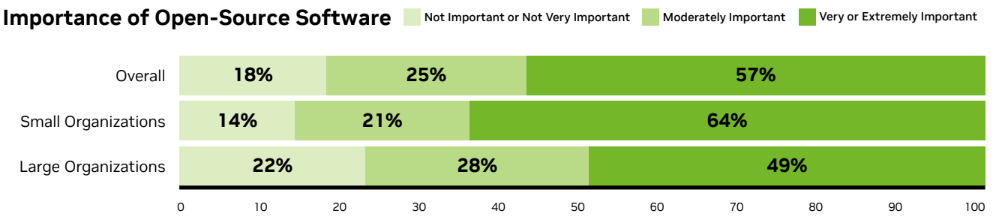
- 82% said open source software and models are moderately to extremely important to their organizations’ AI strategy.
- 47% said they’re using or assessing agentic AI.
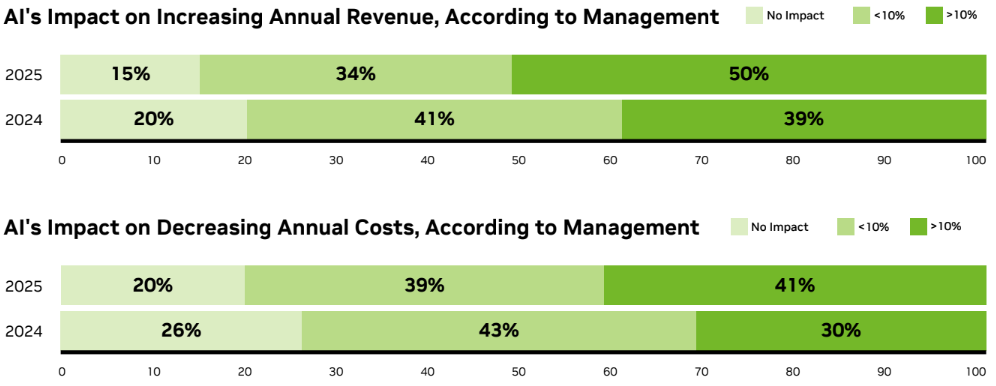
- 85% of executives said AI is helping increase revenue, and 80% said it’s helping reduce costs.
“Over the next 12-18 months, the most visible and scalable impact of AI will come from logistics and administrative streamlining,” said John Nosta, president of NostaLab, a healthcare think tank. “That’s where adoption curves are already steep — scheduling, documentation, coding, utilization management and care coordination.”
Read more below on some of the report’s key findings.
AI Adoption Ramps Up Across Healthcare and Life Sciences
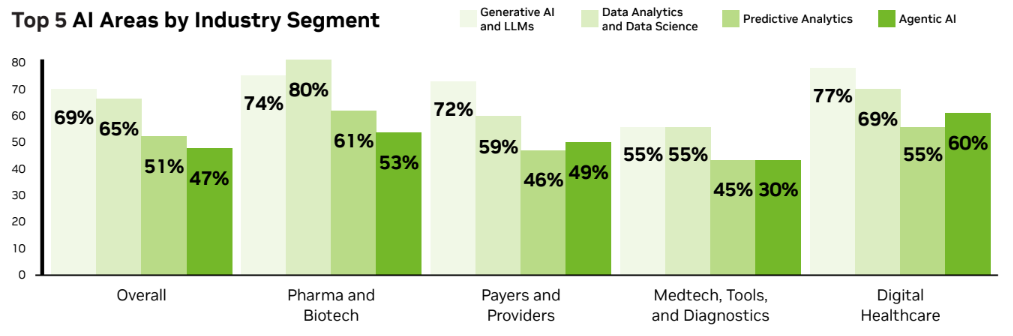
AI adoption is up across every industry segment in this year’s survey — spanning digital healthcare, pharmaceutical and biotechnology, payers and providers, and medical technology and tools — with digital healthcare leading at 78%, followed by medical technology at 74%.
The top industry workload was generative AI and large language models, according to 69% of respondents. AI for data analytics and data science was the second most-used workload, followed by predictive analytics. New to the survey, agentic AI ranked fourth, with 47% of respondents saying they’re using or assessing AI agents.
“Scaling generative AI in healthcare starts with focusing on real clinical and operational problems, rather than the technology itself,” said Dr. Annabelle Painter, clinical AI strategy lead at Visiba U.K. “The organizations seeing impact are those that embed AI into existing workflows instead of layering AI on top as a separate tool.”
Healthcare and life sciences organizations are deploying these AI workloads across a variety of use cases, each specific to their primary functions. For example, 61% of respondents from medical technology said they’re using AI for medical imaging, such as radiologists using it to work more quickly and efficiently, while 57% from pharmaceutical and biotechnology said drug discovery is being driven by AI.
For the entire industry, the top AI use cases were clinical decision support (such as radiologists highlighting areas of concern on a scan), medical imaging and workflow optimization.
AI Budgets to Increase With Strong ROI
AI is helping healthcare and life sciences organizations become even better at their core competencies — underscoring strong ROI.
In addition to increasing annual revenue and reducing annual costs, AI is boosting back-office productivity through workflow optimization and is scaling across other key business operations such as patient interaction and administrative tasks.
For example, 57% of respondents from the medical technology segment reported seeing ROI from deploying AI for medical imaging. Nearly half (46%) of pharmaceutical and biotechnology respondents said AI for drug discovery and development was among their top ROI use cases.
The top ROI use case for digital healthcare providers was virtual health assistants and chatbots, according to 37%, while 39% of respondents from payers and providers (which include hospitals, primary care providers and insurance companies) cited administrative tasks and workflow optimization as their top area of ROI.
As a result of AI’s positive impact, 85% of respondents said their AI budgets would increase this year, with another 12% saying budgets would stay the same. For almost half of respondents (46%), AI spending will increase significantly, by more than 10%.
“Healthcare organizations that successfully integrate AI are those that explicitly fund and prioritize evaluation as a core operational function, ensuring AI delivers measurable improvements in safety, quality and patient care over time,” said Painter.
Using Open Source for Domain-Specific AI Deployment
Leaning into open source models and software allows enterprises to build domain-specific applications, lending them greater flexibility and efficiency while boosting business returns.
The healthcare industry has embraced open source, with 82% of survey respondents stating it’s moderately to extremely important to their AI strategy.
“Open models will shape the intellectual field,” said Nosta. “They are essential for exploration and for keeping the field honest. But in clinical environments where safety, liability and accountability are nonnegotiable, proprietary systems will remain necessary for validation, integration and trust. The key insight here is that discovery will be open, and deployment will demand stewardship.”
Download the “State of AI in Healthcare and Life Sciences: 2026 Trends” report for in-depth results and insights.
Sign up for NVIDIA’s healthcare and life sciences newsletter.