country_code

Meet the Maker: Developer Taps NVIDIA Jetson as Force Behind AI-Powered Pit Droid

Goran Vuksic brings the bot to tech conferences across Europe, demonstrating the power of the edge AI platform through a familiar ‘Star Wars’ figure.
by

Goran Vuksic is the brain behind a project to build a real-world pit droid, a type of Star Wars bot that repairs and maintains podracers which zoom across the much-loved film series.

The edge AI Jedi used an NVIDIA Jetson Orin Nano Developer Kit as the brain of the droid itself. The devkit enables the bot, which is a little less than four feet tall and has a simple webcam for eyes, to identify and move its head toward objects.

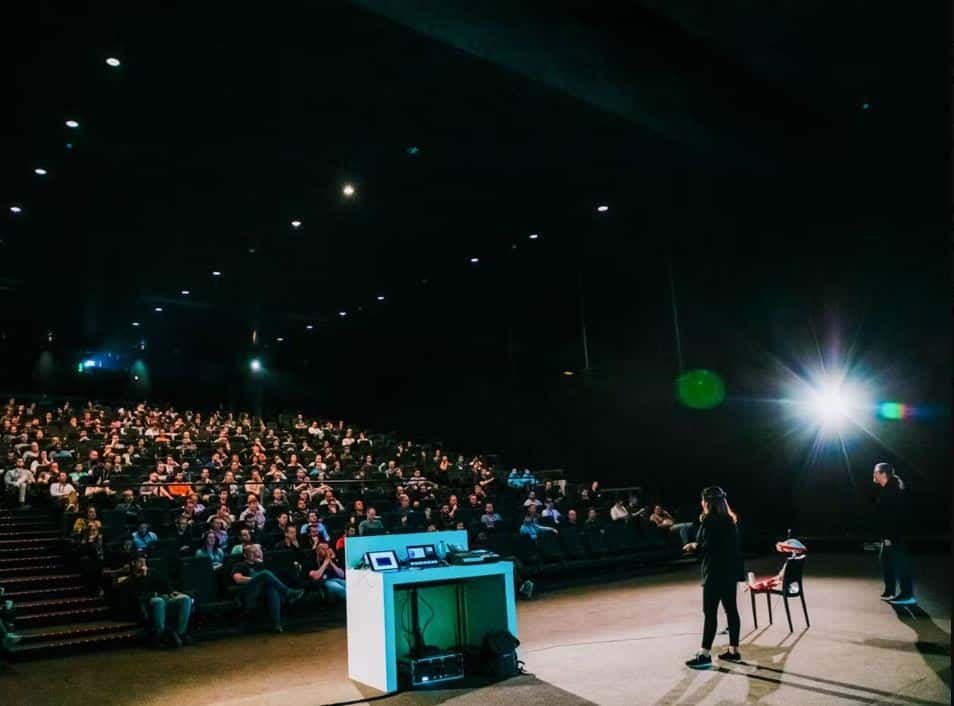
Vuksic — originally from Croatia and now based in Malmö, Sweden — recently traveled with the pit droid across Belgium and the Netherlands to several tech conferences. He presented to hundreds of people on computer vision and AI, using the droid as an engaging real-world demo.

The pit droid’s first look at the world.

A self-described Star Wars fanatic, he’s upgrading the droid’s capabilities in his free time, when not engrossed in his work as an engineering manager at a Copenhagen-based company. He’s also co-founder and chief technology officer of syntheticAIdata, a member of the NVIDIA Inception program for cutting-edge startups.

The company, which creates vision AI models with cost-effective synthetic data, uses a connector to the NVIDIA Omniverse platform for building and operating 3D tools and applications.

About the Maker

Named a Jetson AI Specialist by NVIDIA and an AI “Most Valuable Professional” by Microsoft, Vuksic got started with artificial intelligence and IT about a decade ago when working for a startup that classified tattoos with vision AI.

Since then, he’s worked as an engineering and technical manager, among other roles, developing IT strategies and solutions for various companies.

Robotics has always interested him, as he was a huge sci-fi fan growing up.

“Watching Star Wars and other films, I imagined how robots might be able to see and do stuff in the real world,” said Vuksic, also a member of the NVIDIA Developer Program.

Now, he’s enabling just that with the pit droid project powered by the NVIDIA Jetson platform, which the developer has used since the launch of its first product nearly a decade ago.

Vuksic reads to the pit droid.

Apart from tinkering with computers and bots, Vuksic enjoys playing the bass guitar in a band with his friends.

His Inspiration

Vuksic built the pit droid for both fun and educational purposes.

As a frequent speaker at tech conferences, he takes the pit droid on stage to engage with his audience, demonstrate how it works and inspire others to build something similar, he said.

Vuksic, his startup co-founder Sherry List and the pit droid present at the Techorama conference in Antwerp, Belgium.

“We live in a connected world — all the things around us are exchanging data and becoming more and more automated,” he added. “I think this is super exciting, and we’ll likely have even more robots to help humans with tasks.”

Using the NVIDIA Jetson platform, Vuksic is at the forefront of robotics innovation, along with an ecosystem of developers using edge AI.

His Jetson Project

Vuksic’s pit droid project, which took him four months, began with 3D printing its body parts and putting them all together.

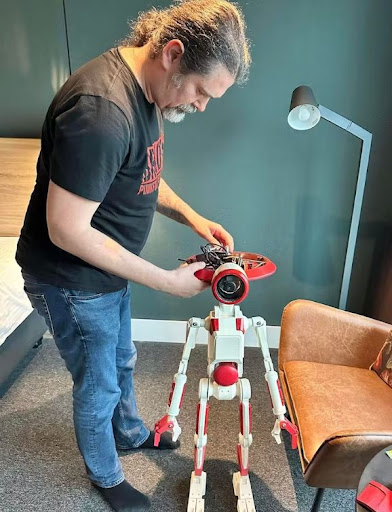
He then equipped the bot with the Jetson Orin Nano Developer Kit as the brain in its head, which can move in all directions thanks to two motors.

Vuksic places an NVIDIA Jetson Orin Nano Developer Kit in the pit droid’s head.

The Jetson Orin Nano enables real-time processing of the camera feed. “It’s truly, truly amazing to have this processing power in such a small box that fits in the droid’s head,” said Vuksic.

He also uses Microsoft Azure to process the data in the cloud for object-detection training.

“My favorite part of the project was definitely connecting it to the Jetson Orin Nano, which made it easy to run the AI and make the droid move according to what it sees,” said Vuksic, who wrote a step-by-step technical guide to building the bot, so others can try it themselves.

“The most challenging part was traveling with the droid — there was a bit of explanation necessary when I was passing security and opened my bag which contained the robot in parts,” the developer mused. “I said, ‘This is just my big toy!’”

Learn more about the NVIDIA Jetson platform.

Vera Delivers the Best of Both Worlds: Highest Throughput and Fastest Agents

by

AI agents do more than generate answers. They search for information, query databases, write and test code and take action. 

Each of those steps relies on a CPU, with agents moving between GPU reasoning and CPU execution throughout a task. 

As businesses put more agents to work, AI factories need CPUs that can execute those steps quickly and support many agents at once, all within the limits of available power.

What this means: AI infrastructure providers need to support more agents without making each one wait longer to get work done. And critically, AI factories are power limited. This means operators need to choose infrastructure that maximizes the work done for every watt. 

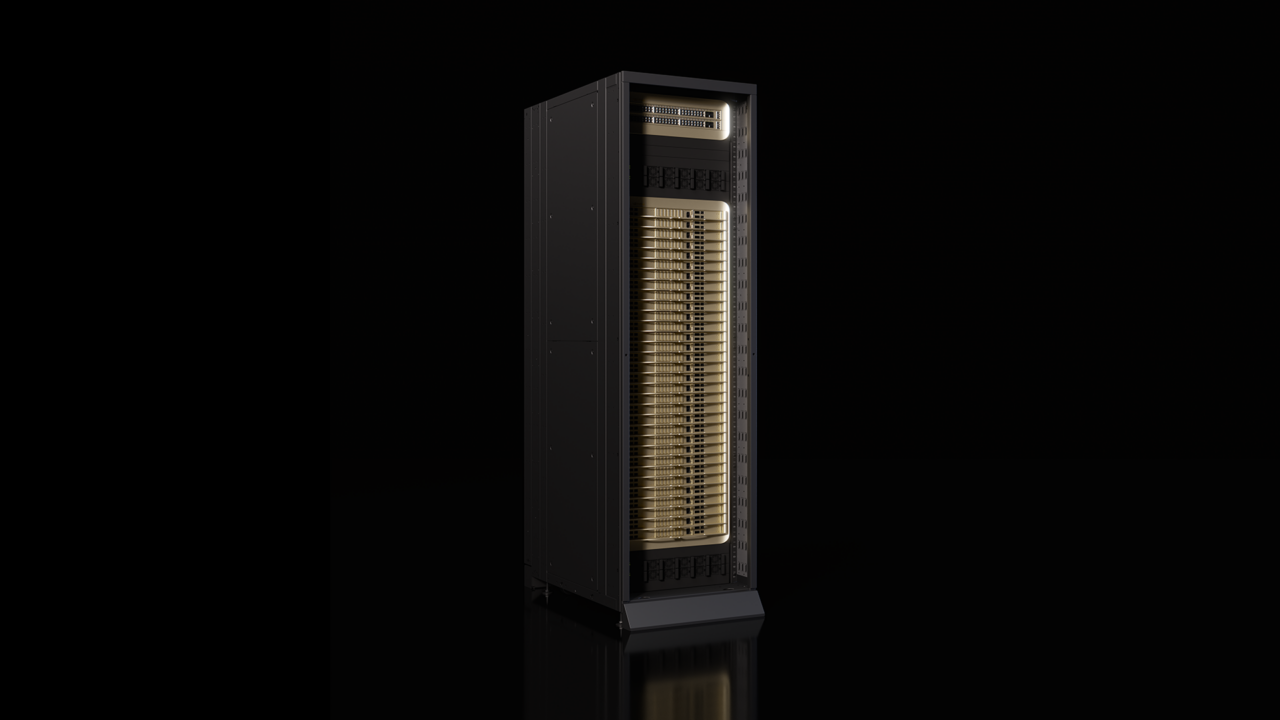
Why it matters: NVIDIA Vera delivers both fast agent performance and high capacity per watt within a single CPU. That gives providers one CPU for a range of agent workloads, rather than having to mix and match fast and dense x86 parts to balance speed and capacity.

The data that proves it: In a 100-megawatt data center comparison, NVIDIA found that a single Vera CPU performs better than the fastest x86 CPU and the most energy-efficient x86 CPU.

  • Vera delivers industry-leading agent speed while enabling 1.6x more agents per watt versus the fastest x86 CPU.
  • Vera delivers 2x faster agent speed with leading energy efficiency compared with the most energy-efficient x86 CPU.

Partners are already putting Vera to work. Early adopters see the same exceptional performance in production-style tests:

  • Perplexity: Ran agentic coding tasks 1.5x faster with Vera than on traditional CPUs. Perplexity plans to deploy Vera in an upcoming production system.
  • DeepInfra: Delivered up to 2.2x speed of the best x86 processor on agentic orchestration for its production agent workload, achieving the fastest of the four architectures tested.
  • ClickHouse: Its standard binary, with no Vera-specific tuning, scaled near-linearly across 176 cores and topped the ClickBench hardware leaderboard.
  • DuckLabs: Achieved about 1.5x the median TPC-H SF1000 performance of an Intel Xeon 6 baseline.
  • Daytona: Brought 1,000 agent sandboxes online in 10.8 seconds, and achieved 12.7 completed jobs per second at 2,000 concurrent sandboxes, using Vera versus 88.4 seconds with x86.
  • Modal: Achieved up to 2x sandbox throughput per core versus comparable x86 hardware, with gains that grow under heavy load.

Learn more about the NVIDIA Vera CPU.

Building Trusted AI Infrastructure for Safe and Secure AI

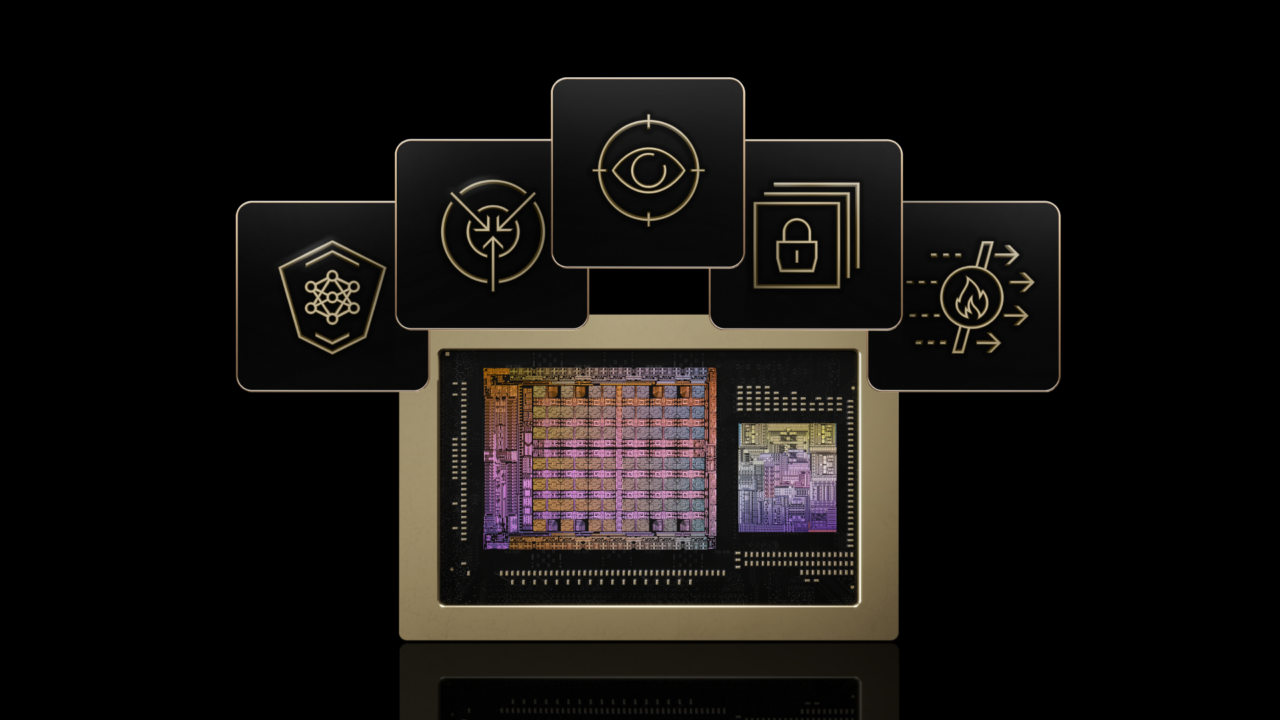
NVIDIA and cybersecurity partner Eclypsium are advancing infrastructure security for cloud computing and agentic AI with NVIDIA BlueField and Eclypsium infrastructure assurance.
by

AI is transforming how organizations build applications, process information and automate decisions. As AI agents become increasingly autonomous, access sensitive data, interact with tools and take actions across enterprise systems, securing the infrastructure that powers them becomes more important than ever.

AI security extends beyond models and applications. It encompasses the compute, networking, storage, firmware and management systems that execute workloads and enforce security controls.

Trusted AI must therefore be anchored in trusted infrastructure. That means moving from assumed trust to verifiable trust: evidence that critical infrastructure is in a known-good state, remains correctly configured and has not drifted because of vulnerabilities, unauthorized modifications, supply-chain compromise or persistent threats.

NVIDIA and cybersecurity partner Eclypsium are advancing infrastructure security for cloud computing and agentic AI

NVIDIA’s built-in platform protections and Eclypsium’s infrastructure provide the trust layer for building and maintaining trust in the infrastructure powering AI. The result is a stronger chain of trust, from verified hardware and firmware to independently enforced AI agent execution.

NVIDIA BlueField DPUs provide a foundation for securing this infrastructure, combining programmable acceleration with hardware-rooted trust, isolation and configurable security boundaries. Every cloud provider builds their infrastructure around DPUs. These capabilities help cloud providers and enterprises build secure, scalable infrastructure tailored to their operational requirements.

A growing cybersecurity ecosystem extends this foundation with additional capabilities. Eclypsium brings expertise in continuous infrastructure security, firmware integrity assessment, configuration analysis and monitoring, helping organizations strengthen visibility and operational assurance across their environments.

Security by Design With NVIDIA BlueField 

Modern cloud and AI infrastructure relies on specialized processors that accelerate networking, storage, security and management.

NVIDIA BlueField DPUs combine high-performance networking, programmable computing and in-silicon acceleration to run critical infrastructure services independently of host workloads.

This separation establishes distinct trust domains, allowing infrastructure operators to manage and protect underlying resources independently of the applications and operating systems running on their servers.

BlueField runs NVIDIA Sentry, part of the NVIDIA OpenShell Reference Architecture. This role in protecting autonomous AI agents makes securing the DPU increasingly important. BlueField has dedicated Arm CPU cores, an operating system, firmware and a management controller, and it moves data directly into host and GPU memory as part of its normal function. That privileged position makes BlueField an effective independent control point, and is why the DPU belongs in every operator’s security model, asset inventory and monitoring.

BlueField is engineered with defense in depth, beginning with a hardware root of trust and extending across firmware, operating systems, software and device management.

Its security architecture incorporates authenticated boot, hardware-enforced isolation, protected key management, secure firmware updates, rollback protection and device attestation. These mechanisms work together to protect platform integrity and enforce security boundaries.

Security also extends throughout the product lifecycle. NVIDIA follows rigorous secure development practices, including threat modeling, architecture and code reviews, automated security analysis, vulnerability management, fuzzing and offensive security research.

No complex computing platform is immune to vulnerabilities. That’s why NVIDIA maintains a continuous commitment to security engineering, vulnerability response and software and firmware updates throughout the supported product lifecycle.

Configurable Security for Different Infrastructure Trust Models

No two infrastructure environments have identical security requirements.

A hyperscale cloud supporting multiple tenants operates under different trust assumptions than a single-tenant enterprise AI cluster or an air-gapped AI environment.

These differences influence how administrative privileges, management interfaces, device access and isolation boundaries should be configured.

A defining advantage of DPUs is their combination of in-silicon acceleration and programmable computing. Unlike conventional high-speed network adapters, DPUs provide dedicated compute resources capable of running sophisticated infrastructure services and policies independently of the host.

NVIDIA BlueField uses this programmability to support different deployment models through configurable security boundaries. Operators can determine which capabilities to enable, how interfaces are exposed and how infrastructure access is controlled.

For example, a cloud provider can place tenant workloads and the host operating system in one trust domain while operating infrastructure services in a separate domain controlled by the provider.

BlueField supports configurations that can be locked into cryptographically attestable trust profiles, helping operators establish and verify intended security boundaries.

The presence of a capability or interface does not mean every deployment must expose or enable it. Secure infrastructure design requires defining the appropriate trust model and configuring the platform accordingly.     

Memory-access protections are an important example. DPUs, GPUs and management controllers can read and write system memory directly through direct memory access. Eclypsium’s research demonstrates the importance of host controls such as IOMMU translation, PCIe access control services and address translation services. Eclypsium enables operators to verify the configuration of critical hardware settings rather than assume it. 

This flexibility enables organizations to balance security, performance and operational requirements without imposing a one-size-fits-all architecture.

Extending Infrastructure Security Through the Ecosystem

Security capabilities built into infrastructure provide the foundation for protection. Cybersecurity partners can build on that foundation to address additional operational requirements.

Eclypsium brings complementary capabilities focused on infrastructure visibility, firmware integrity, configuration assessment and ongoing monitoring. Eclypsium AI Infrastructure Assurance verifies hardware and firmware against known-good baselines, identifies vulnerabilities and insecure configurations, monitors device and firmware posture, and detects drift, unauthorized modifications and persistent threats below the operating system.

For organizations seeking visibility across their environments, Eclypsium’s technologies can help identify infrastructure components, assess firmware, and detect threats, malware, vulnerabilities and configuration risks, as well as changes that may affect their security posture.

These capabilities give operators additional tools to evaluate and manage infrastructure security. Together, these capabilities independently check hardware integrity and establish trust in the underlying infrastructure based on verifiable evidence.

For example, an organization can establish an approved infrastructure configuration during deployment, use BlueField’s built-in security mechanisms to protect platform integrity and use Eclypsium’s assessment capabilities to identify unexpected configuration changes or emerging firmware risks.

The value extends beyond any single device. Modern AI infrastructure includes GPUs, DPUs, management controllers, networking equipment and other components, each contributing to the overall security posture.

Eclypsium’s broader infrastructure assessment capabilities can help organizations maintain visibility across these components as environments grow and evolve.

No single security control can establish trust across the entire AI stack. Defense in depth requires platform security, independent verification and continuous assurance working together, each providing evidence that the other layers are operating on a trusted foundation. BlueField provides security by design, while Eclypsium provides additional verification and monitoring across AI infrastructure.

Maintaining Security Throughout the Infrastructure Lifecycle

Infrastructure security does not end when a system enters production.

Devices move through manufacturing, provisioning, deployment, operation, updates, recovery, and eventual reassignment or decommissioning. Each transition introduces operational considerations that organizations must manage.

BlueField incorporates security protections throughout these stages, including secure provisioning, authenticated firmware updates, rollback protection and device attestation.

These mechanisms help establish and maintain platform integrity as infrastructure evolves.

Organizations can complement these protections with Eclypsium’s lifecycle assessment and monitoring capabilities to maintain component visibility, detect threats, malware and vulnerabilities, evaluate firmware risks and identify configuration changes over time.

This can support repeatable operational practices, including establishing an approved configuration before deployment, monitoring infrastructure during operation and reassessing relevant device state after updates or recovery. 

In practice, that means treating each DPU, GPU and management controller as a first-class asset with its own firmware versions, configuration and owner, bringing it into vulnerability management alongside the host operating system, and including management-interface telemetry such as baseboard management controller and Redfish logs in security monitoring. Because these components persist across operating system reinstalls, reassessment should also follow incident response and precede reassigning hardware to a new tenant.

Different mechanisms contribute different forms of assurance. Secure boot authenticates boot components, attestation provides evidence about measured platform state and configuration assessment helps operators evaluate how systems are deployed and managed.

Each of these is necessary, and none is sufficient on its own. Boot-time measurements confirm how a system started, not how it is behaving now, and an integrity check on a model file confirms the artifact on disk, not the copy running in memory. Continuous runtime verification can help detect runtime changes. Collecting the same state from independent vantage points, such as host configuration of hardware settings, PCIe topology, management controller firmware and change history, forces an attacker to keep every view consistent, which makes compromise substantially harder to hide.

Advancing Infrastructure Security Through Research and Collaboration

Security is a continuous process of engineering, evaluation and improvement.

As infrastructure grows more complex, independent security research plays an important role in identifying potential weaknesses, challenging assumptions and advancing industry security practices.

NVIDIA brings deep product expertise, secure development practices and established vulnerability response processes. Eclypsium contributes independent security research and expertise in assessing infrastructure components, firmware and configurations.

These complementary perspectives can help translate security research into practical improvements in product protections, deployment guidance and operational practices.

The purpose of that research is to make the ecosystem stronger. NVIDIA partnered with Eclypsium to demonstrate how compromised AI infrastructure could affect a model and its reasoning while remaining undetected by stored-model integrity checks: the model file, its hash and its signature all remained valid while the model running in memory behaved differently. 

This challenge is not unique to any one vendor or architecture. GPU-based, alternative-accelerator and custom ASIC systems all depend on privileged components, including host processors, accelerator firmware, management controllers, smart NICs and the mechanisms that move model data between them, that sit beneath the model and can reach the memory where it runs.

NVIDIA continues to invest in BlueField security throughout the product lifecycle, evaluating reported findings and delivering updates or guidance as appropriate.

Collaboration across technology providers, cybersecurity partners, researchers and infrastructure operators helps strengthen the broader ecosystem and supports the continued evolution of trusted infrastructure. Through efforts such as the Open Secure AI Alliance, researchers, technology providers and security teams can turn research findings into shared evaluation methods, verification checks and defenses that raise the assurance baseline for AI infrastructure.

Extending Trusted Infrastructure to Agentic AI

The next major computing transformation is already underway.

AI agents are evolving from systems that generate information into autonomous systems capable of reasoning, accessing sensitive data, interacting with tools and taking actions on behalf of people and organizations.

Protecting these systems requires infrastructure that can independently observe agent behavior, govern access, and enforce security policies in real time.

With the NVIDIA OpenShell Reference Architecture, NVIDIA is extending hardware-isolated infrastructure security into the age of autonomous AI.

NVIDIA BlueField-4 provides the infrastructure foundation for NVIDIA Sentry, a unified security software framework built on NVIDIA DOCA. Operating independently of the host and beyond the agent’s reach, NVIDIA Sentry enables out-of-band monitoring of agent behavior and real-time, in-silicon policy enforcement to help detect and contain threats.

This approach complements NVIDIA OpenShell’s software execution boundaries with an independent layer of infrastructure protection.

As organizations deploy agentic AI at scale, the security of the underlying infrastructure becomes even more critical. NVIDIA provides the mechanisms to govern and enforce safe agent behavior. Eclypsium offers additional tools to verify and monitor hardware and firmware across AI infrastructure. 

The result is an operational model for trusted AI: verify the infrastructure, enforce AI execution from independent security boundaries, govern what agents can access and do, and continuously monitor each layer for changes that could break the chain of trust. Together, the companies are continuously evaluating potential attack scenarios and strengthening AI infrastructure security.


Kazakhstan Expands Compute for Its AI Future

Jensen Huang’s visit to the nation’s capital, Astana — including a presidential meeting and public fireside chat — coincided with new AI infrastructure commitments anchored by NVIDIA compute.
by

Kazakhstan’s AI ecosystem is moving from infrastructure plans to deployment. 

The shift is visible across the full AI stack — from infrastructure to models to applications.

The announcements below — coinciding with a visit to Astana by NVIDIA founder and CEO Jensen Huang — point to the nation’s increasing supply of accelerated computing, along with its growing demand for what comes next.

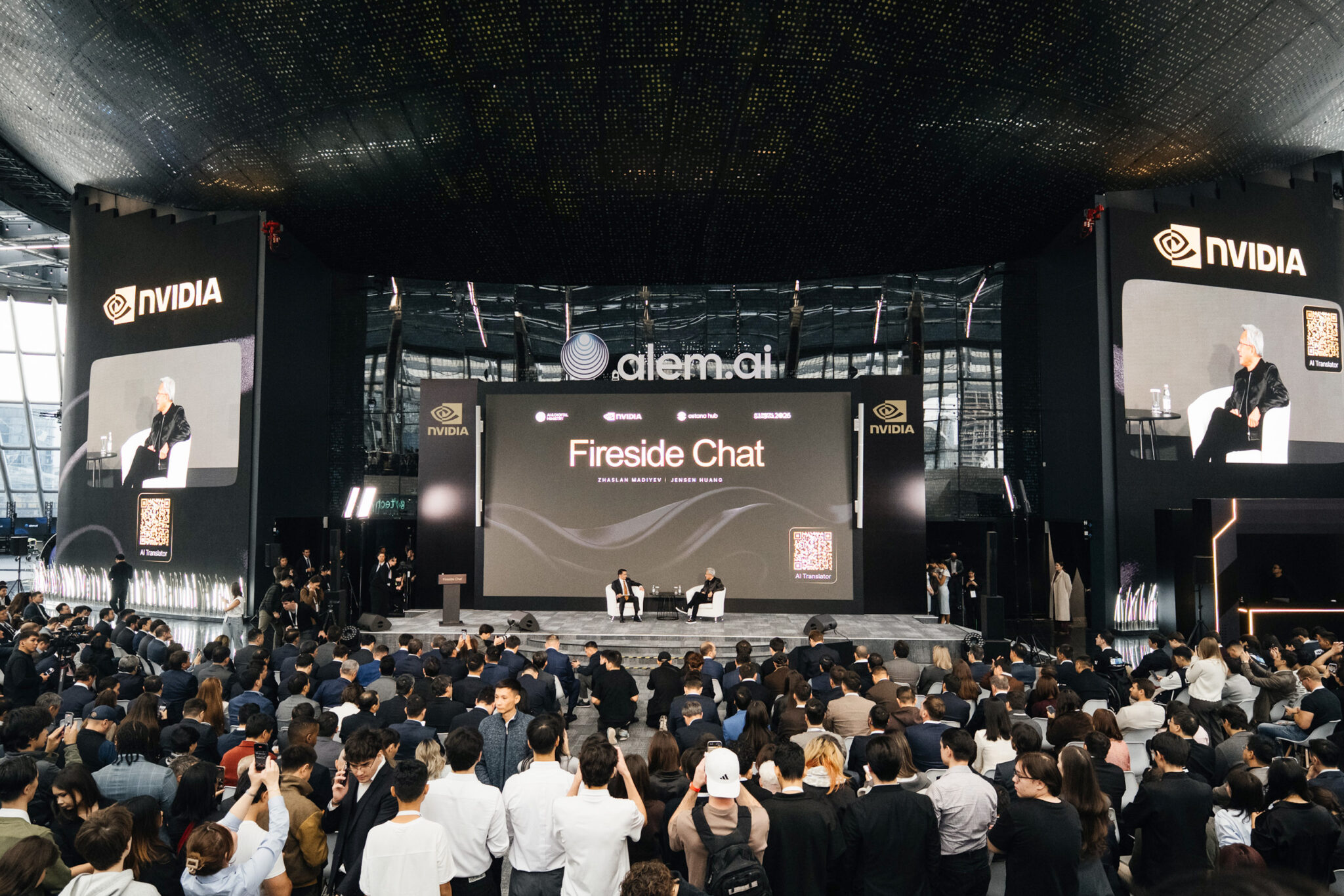
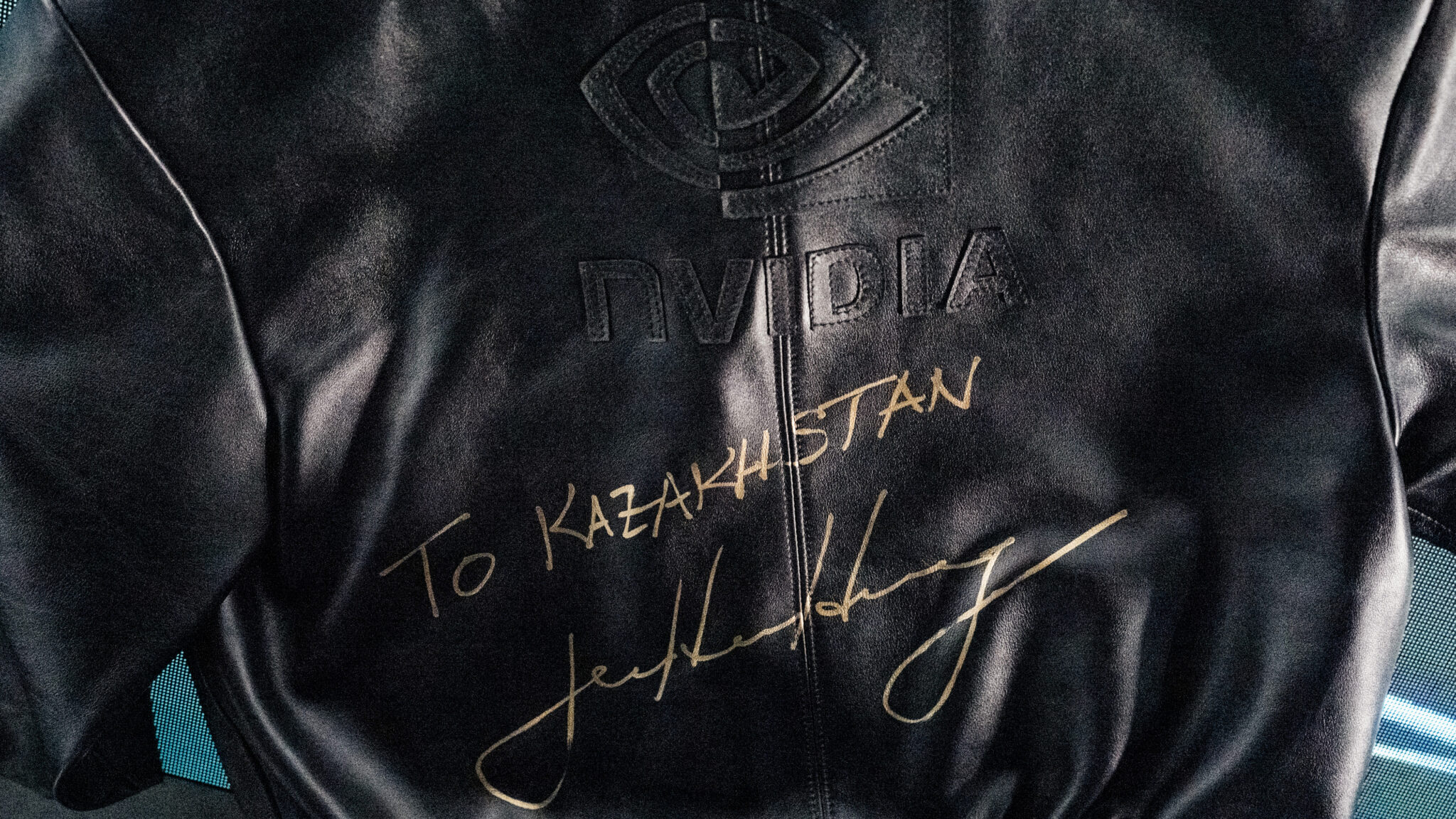
On Friday, Oct. 23, NVIDIA founder and CEO Jensen Huang visited Astana, meeting with President Kassym-Jomart Tokayev at the Akorda Presidential Palace and joining Deputy Prime Minister Zhaslan Madiyev — Kazakhstan’s minister of AI and digital development — for a public fireside chat at the Alem.AI program. 

Jensen Huang and Kazakhstan’s AI Minister Speak at Alem.AI

In their fireside chat at Alem.AI, Kazakhstan’s international center for artificial intelligence, Madiyev and Huang discussed the country’s push to become an AI nation — building the energy and computing infrastructure to support homegrown AI and applying it across the economy.

Madiyev said Kazakhstan wants AI that reflects its language and culture. “We want AI that understands and speaks Kazakh and captures cultural contexts and cultural specifics,” he said, describing the country’s work on Kazakh-language models. 

Huang said Kazakhstan could turn its energy resources into a foundation for AI production — and a new kind of export. “Instead of just exporting energy, in the future, you could transform energy into intelligence and export intelligence,” he said.

He also argued that local data is central to that ambition: it embodies a country’s culture, history and values. “Your country’s data is your natural resource. It belongs to you.” 

The conversation also turned to physical AI. Madiyev pointed to Kazakhstan’s factories, mines, agriculture, transport and logistics as potential areas for development, asking how the country could become a hub for training models for robots and other physical systems.

Huang called the idea “fantastic,” saying physical AI could transform industries from mining and mineral processing to agriculture. 

Huang said AI and robotics can help people do more, but ambition will shape how fully they seize that opportunity. He applied the idea to Kazakhstan, saying AI could help lift the country and its people.

“If you have ambition, and I believe you do, AI will lift your nation,” Huang said. “AI will lift your people.”

Huang also praised the founders of Higgsfield AI, the Kazakhstan-founded startup, and it was announced NVIDIA is making an investment into the startup during the event. “The first thing and the last thing is you invest in people, not companies,” he said, describing the founders as visionary and pointing to their effort to compete globally. 

Asked about AI security, Huang said the technology must be developed and deployed responsibly. He described NVIDIA’s OpenShell as a way to contain AI agents by limiting their access to files and tools and monitoring their activity.

For young people entering a fast-changing field, Huang recommended learning how AI works — not just how to use it. He said aspiring AI programmers should understand the technology’s principles, strengths and weaknesses, combining technical knowledge with the ability to work effectively with AI.

“I envy being 18 years old today… because the world is changing so rapidly, and there’s a complete reset because of technology.”

The Infrastructure Layer Is Scaling

The visits coincided with a signing ceremony marking Firebird’s investment agreement with the government of Kazakhstan, held at the presidential palace. 

Building on its first AI factory in Armenia, Firebird is expanding into Kazakhstan, where it has secured a U.S. export license for 45,000 NVIDIA Grace Blackwell GPUs. The first phase is under construction with Kazakhtelecom at Data Center Valley, targeting commercial launch in the third quarter of 2027.

A planned second phase would bring Firebird’s total potential AI infrastructure capacity in Kazakhstan to approximately 500 megawatts. Firebird also plans to establish Firebird Labs Kazakhstan to support local AI startups, research and talent development through funding, access to compute and research partnerships.

Firebird cofounder and CEO Razmig Hovaghimian attended the signing ceremony at the Akorda Presidential Palace alongside government officials.

“What began as a seed of an idea 180 days ago has grown into a major investment in Kazakhstan’s AI future,” said Razmig Hovaghimian, co-Founder and CEO of Firebird. “President Tokayev’s vision gave us the confidence to think bigger about what we can build together. With Jensen Huang here today, that ambition feels more tangible than ever. We’re building the infrastructure for Kazakhstan’s talent and ideas to reach the world.”

Kazakhtelecom, the nation’s largest telecommunications company, has already deployed 400 NVIDIA H200 and 480 NVIDIA B300 GPUs in Astana and Almaty.

Next year, the company plans to deploy more than 1,000 GPUs in the Data Center Valley, along with more than 1,000 NVIDIA Vera Rubin GPUs in the Ekibastuz region, serving diverse workloads with infrastructure that enterprises, developers and institutions can use at scale.

An Honorary Black Belt for Huang

At the end of their meeting, President Tokayev presented Huang with the Order of Dostyk, First Class, for his contribution to the development of artificial intelligence in Kazakhstan. Dostyk means friendship and the Order honors peace, friendship and cooperation.

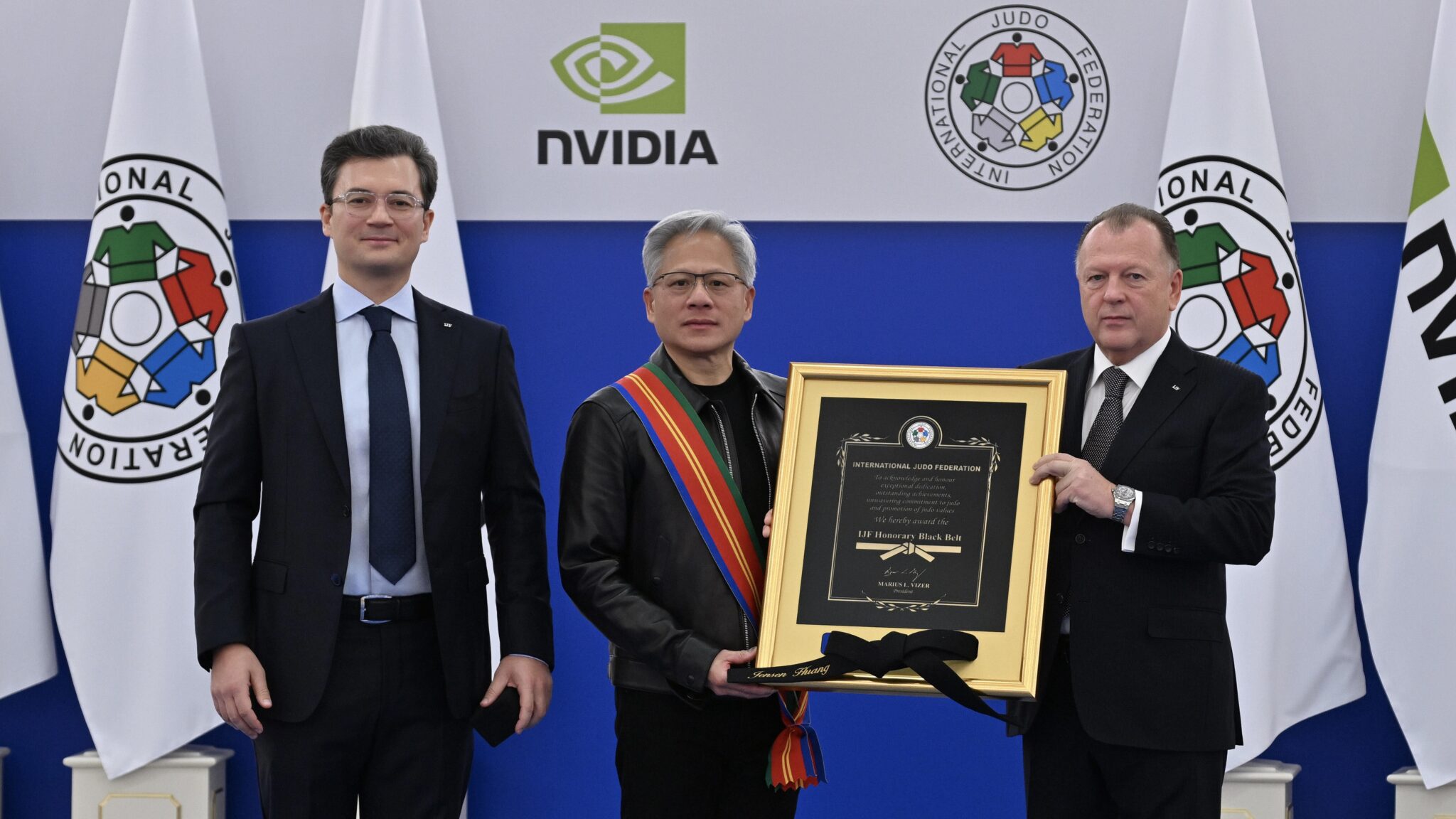
Later that day, President of the International Judo Federation (IJF) Marius Vizer and Timur Kemell, IJF director of promotion and development and a member of the IJF Executive Committee, presented Huang with an honorary black belt in Judo. The belt, embroidered in gold stitching, was a special thanks for Huang’s support of Kazakhstan’s AI ambition and for leadership aligned with the spirit and rigor of the martial art.

AI-Native Companies Scale With Compute

And that development is accelerating. The nation’s AI-native companies are also building out their compute capacity — and the applications that run atop them.

Higgsfield is expanding its AI infrastructure with NVIDIA Vera Rubin running on cloud service providers, giving the company additional capacity as models, products and customer demand for its generative media applications grow.

inDrive and Pony.ai are also collaborating to explore robotaxi services in Kazakhstan, with Astana as the first deployment city. The companies will assess the feasibility of bringing Pony.ai’s seventh-generation robotaxis to the inDrive app, supported by NVIDIA AI infrastructure, built on the NVIDIA Hyperion sensor and compute platform with the NVIDIA Halos safety system.

More local capacity gives developers and companies room to train, fine-tune and serve increasingly capable models. Successful applications, in turn, create demand for more compute.

Kazakhstan’s AI opportunity isn’t defined by GPU counts alone. Connecting that infrastructure with developers, universities, startups and industries can turn accelerated computing into useful applications.

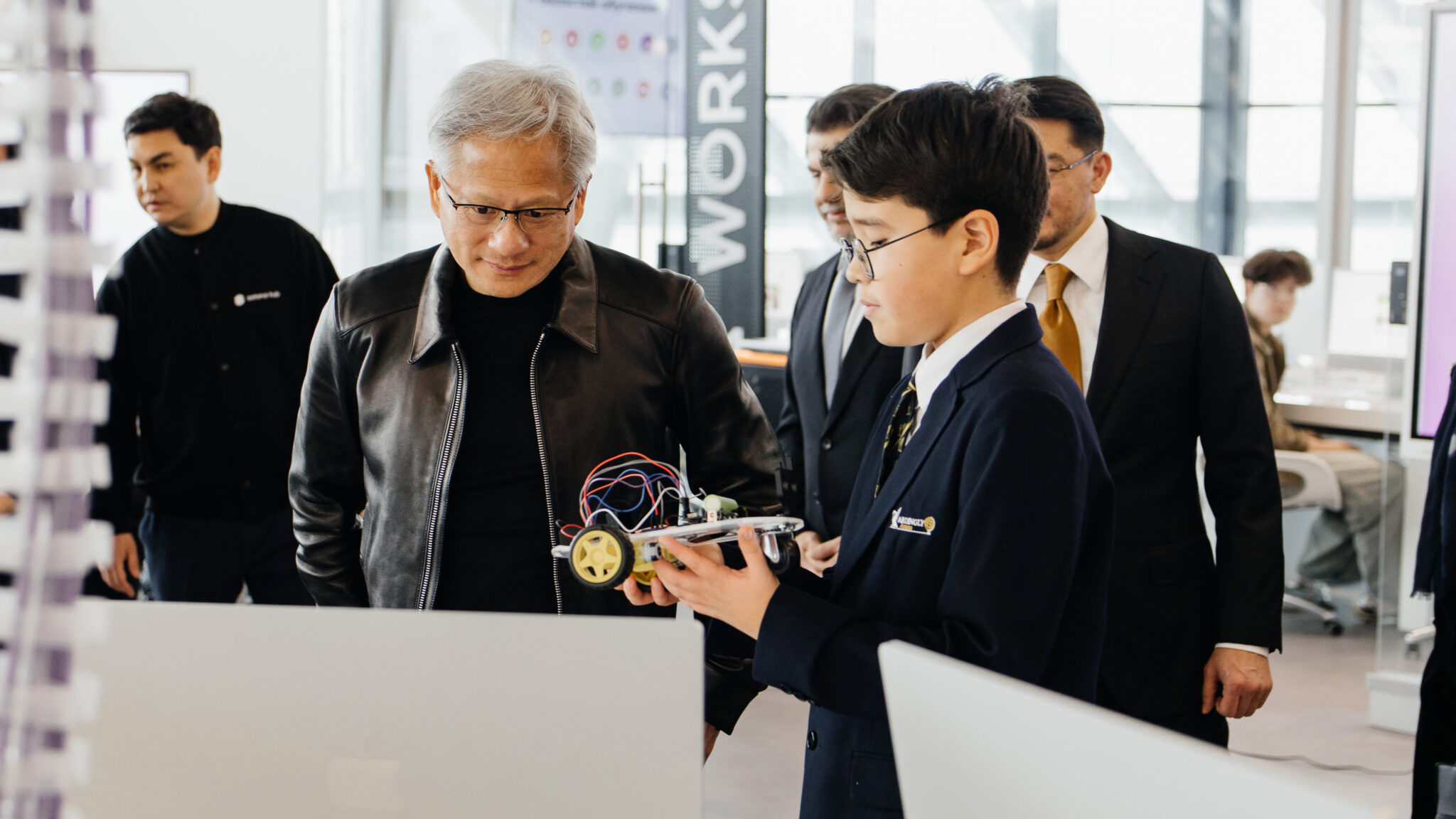
That was at the core of the discussion the NVIDIA team had with hundreds of developers from across Kazakhstan during a reception later in the evening. The gathering in this self-proclaimed AI nation was inspiring because of the ideas shared, the clear drive to build and a collective ambition to share it with the world. 

Today’s announcements represent different layers of the AI stack in Kazakhstan— infrastructure deployment, access to compute and AI-native product development — where the AI foundation is reaching new scale.

Watch the fireside chat between Jensen Huang and Deputy Prime Minister Zhaslan Madiyev, streamed live from Alem.AI in Astana.

Watch NVIDIA founder and CEO Jensen Huang’s GTC Berlin keynote in replay.