country_code

Beyond Be-leaf: Immersive 3D Experience Transports Audiences to Natural Worlds With Augmented Reality

Factory 42 uses NVIDIA RTX, CloudXR and 5G to power an interactive Green Planet AR Experience.
by

Imagine walking through the bustling streets of London’s Piccadilly Circus, when suddenly you’re in a tropical rainforest, surrounded by vibrant flowers and dancing butterflies.

That’s what audiences will see in the virtual world of The Green Planet AR Experience, an interactive, augmented reality experience that blends physical and digital worlds to connect people with nature.

During the Green Planet AR Experience, powered by EE 5G, visitors are led through a living rainforest and six distinct biomes by a 3D hologram of Sir David Attenborough, familiar to many as the narrator of some of the world’s most-watched nature documentaries.

All images courtesy of Factory 42.

Audiences engage and interact with the plant life by using a mobile device, which acts as a window into the natural world.

To bring these virtual worlds to life in a sustainable way, award-winning studio Factory 42 combined captivating storytelling with cutting-edge technology. Using NVIDIA RTX and CloudXR, the creative team elevated the AR experience and delivered high-fidelity, photorealistic virtual environments over a 5G network.


Natural, Immersive AR Over 5G — It’s a Stream Come True

The Green Planet AR Experience’s mission is to inspire, educate and motivate visitors toward positive change by showcasing how plants are vital to all life on earth. Through the project, Factory 42 and the BBC help audiences gain a deeper understanding of ecosystems, the importance of biodiversity and what it means to protect our planet.

To create an immersive environment that captured the rich, vivid colors and details of natural worlds, the Factory 42 team needed high-quality imagery and graphics power. Using mobile edge computing allowed them to deliver the interactive experience to a large number of users over EE’s private 5G network.

The AR experience runs on a custom, on-premises GPU edge-rendering stack powered by NVIDIA RTX 8000 professional GPUs. Using NVIDIA RTX, Factory 42 created ultra-high-quality 3D digital assets, environments, interactions and visual effects that made the natural elements look as realistic as possible.

With the help of U.K.-based integrator The GRID Factory, the GPU edge-rendering stack is connected to EE’s private 5G network using the latest Ericsson Industry Connect solution for a dedicated wireless cellular network. Using NVIDIA RTX Virtual Workstation (RTX vWS) on VMware Horizon, and NVIDIA’s advanced CloudXR streaming solution, Factory 42 can stream all the content from the edge of the private 5G network to the Samsung S21 mobile handsets used by each visitor.

“NVIDIA RTX vWS and CloudXR were a step ahead of the competitive products — their robustness, ability to fractionalize the GPU, and high-quality delivery of streamed XR content were key features that allowed us to create our Green Planet AR Experience as a group experience to thousands of users,” said Stephen Stewart, CTO at Factory 42.

The creative team at Factory 42 designed the content in the AR environment, which is rendered in real time with the Unity game engine. The 3D hologram of Sir David was created using volumetric capture technology provided by Dimension Studios. Spatial audio provides a surround-sound setup, which guides people through the virtual environment as digital plants and animals react to the presence of visitors in the space.

Combining these technologies, Factory42 created a new level of immersive experience — one only made possible through 5G networks.

“NVIDIA RTX and CloudXR are fundamental to our ability to deliver this 5G mobile edge compute experience,” said Stewart. “The RTX 8000 GPU provided the graphics power and the NVENC support required to deploy into an edge rendering cluster. And with CloudXR, we could create robust connections to mobile handsets.”
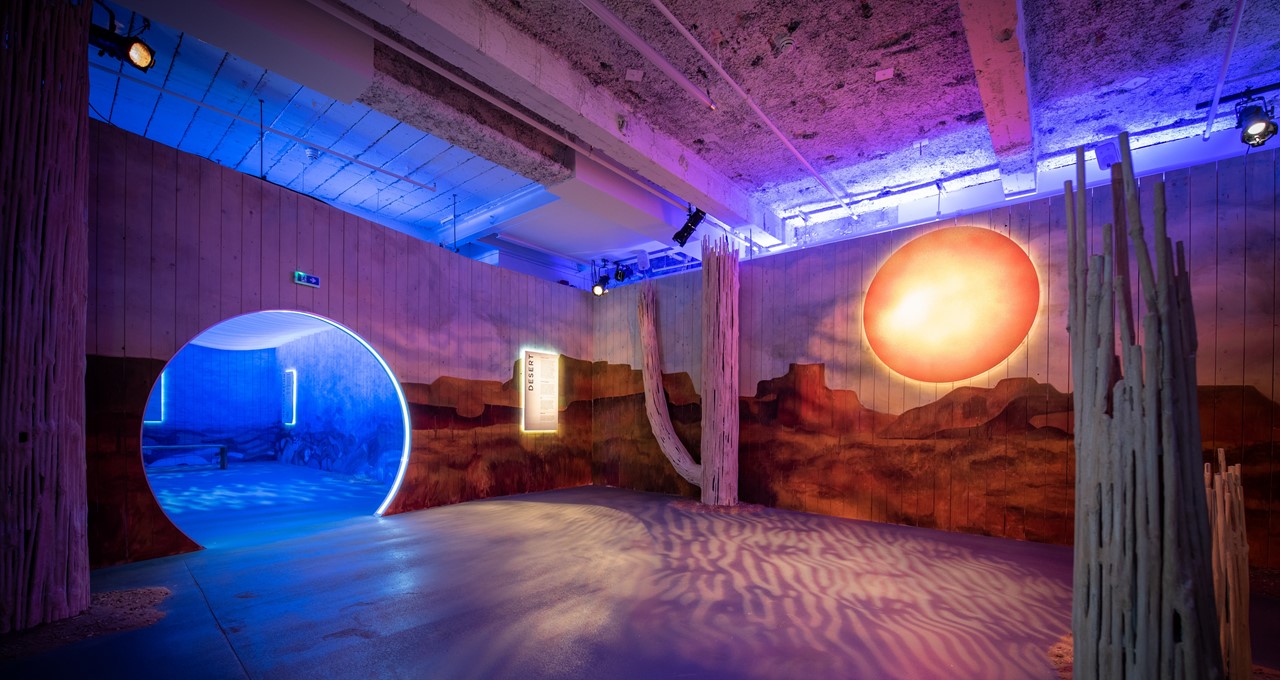
Sustainability was considered at every level of construction and operation. The materials used in building The Green Planet AR Experience will be reused or recycled after the event to promote circularity. And combining NVIDIA RTX and CloudXR with 5G, Factory 42 can give audiences interactive experiences with hundreds of different trees, plants and creatures inside an eco-friendly, virtual space.

Experience the Future of Streaming at GTC

Learn more about how NVIDIA is helping companies create unforgettable immersive experiences at GTC, which runs from March 21-24.

Registration is free. Sign up to hear from leading companies and professionals across industries, including Factory 42, as they share insights about the future of AR, VR and other extended reality applications.

And watch the keynote address by NVIDIA CEO Jensen Huang, on March 22 at 8 a.m. Pacific, to hear the latest news on NVIDIA technologies.
Built for Vera Rubin, NVIDIA Spectrum-6 Arrives in Gigascale AI Factories

Next-generation NVIDIA Spectrum-X Ethernet connects hundreds of thousands of GPUs with the performance, resilience and efficiency needed for gigascale AI, with AI infrastructure leaders already adopting.
by

AI has entered the gigascale era.

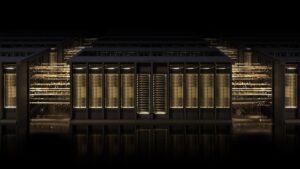
The world’s most advanced AI factories are bringing together hundreds of thousands of GPUs and CPUs to train frontier models, power agentic AI and generate intelligence at unprecedented scale. At this level, networking becomes a critical computing power multiplier in driving token generation.

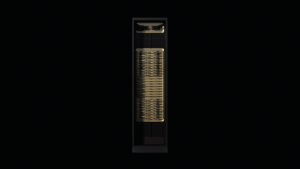
Marking a networking milestone, NVIDIA Spectrum-6 — a 102.4-terabit-per-second Ethernet switch system delivering 2x the capacity of previous-generation systems and built as part of the NVIDIA Vera Rubin platform — is arriving across the world’s gigascale AI factories.

Spectrum-6 anchors the next generation of the NVIDIA Spectrum-X Ethernet platform, delivering the bandwidth, scale and intelligence needed to operate an AI factory as one end-to-end computing system.

Leading AI Builders Move First

The world’s leading AI infrastructure builders — including CoreWeave, Microsoft, Nebius, SpaceXAI and Tesla — will be among the first to bring in Spectrum-6 to accelerate their AI factories.

For cloud providers, Spectrum-6 means more compute capacity can operate as a unified, high-performance resource, helping customers train models and deploy inference services faster.

“CoreWeave is built for the most demanding AI workloads, and networking is central to delivering that performance at scale,” said Min Jun, director of product for networking at CoreWeave. “Bringing NVIDIA Spectrum-6 and liquid-cooled Spectrum-X Ethernet infrastructure into our AI factories will help us deliver the bandwidth, resilience and efficiency customers need to train frontier models and deploy inference faster.”

“At gigascale, performance comes down to coordination: keeping every GPU in lockstep so one slow link doesn’t stall an entire job,” said Laurelle Roseman, vice president of global partnerships at Nebius. “That’s what NVIDIA Spectrum-6 goes after, and why we brought it in early — a fabric that stays fast and resilient as our customers’ most demanding workloads scale.”

For AI pioneers building their own infrastructure, Spectrum-6 means more GPUs working in lockstep, higher utilization during demanding collective operations and greater resilience for long-running jobs.

Across use cases, the outcome is faster time to results and better economics at extraordinary scale.

CoreWeave, Microsoft and Nebius will be among the first providers to deploy NVIDIA Vera Rubin-based infrastructure with Spectrum-6, extending access to the platform across a broad community of developers, startups and enterprises.

AI Performance Is a Network Problem

Peak GPU performance alone no longer predicts the performance of an AI factory.

Large-scale training and inference workloads depend on thousands of accelerators exchanging data continuously. Collective communications are the fundamental operations that synchronize work across GPUs and generate intense east-west traffic, often with many systems transmitting simultaneously.

Ethernet was designed primarily for enterprise applications and north-south traffic moving between users, servers and storage. It wasn’t created for the synchronized, collective-heavy communication patterns of gigascale AI.

Spectrum-X Ethernet changes that. Purpose-built for AI, it transforms Ethernet into a high-performance scale-out fabric engineered to keep every GPU fed with data.

The Next Generation of Spectrum-X Ethernet

The Spectrum-6 switch chip combines with the NVIDIA ConnectX-9 SuperNIC to form the next generation of Spectrum-X Ethernet, and is engineered as part of NVIDIA Vera Rubin, bringing together the NVIDIA Vera CPU, Rubin GPU, NVLink 6 Switch, ConnectX-9 SuperNIC, BlueField-4 DPU and Spectrum-6 Ethernet switch. 

Spectrum-6 supports both pluggable and co-packaged optics form factors. In addition, Spectrum-6 offerings support liquid cooling, enabling a comprehensive, end-to-end cooling approach for the entire AI factory while increasing network power efficiency. 

Unlike off-the-shelf Ethernet, the NVIDIA Spectrum-X Ethernet networking platform for AI factory scale-out combines intelligent switches, NVIDIA ConnectX-9 SuperNICs and full-stack networking software, all engineered together for AI. The platform’s advanced features continuously optimize how traffic moves through the fabric.

In addition, NVIDIA Spectrum-X technology intelligently balances traffic across available paths, rapidly bypasses failures and precisely recovers when data traveling across a network fails to reach its destination. Plus, support for open network operating systems and a choice of RDMA transport models gives AI builders flexibility without compromising performance. 

Spectrum-X Ethernet is inherent to NVIDIA’s vertically integrated, horizontally open approach: codesigning silicon, systems and software across the full computing platform while supporting standard Ethernet, open network operating systems, open protocols and a broad ecosystem of cloud providers, system makers and infrastructure partners. Instead of needing to assemble a collection of parts and optimize them afterward, customers gain a complete AI factory platform designed to deliver the fastest time to train and the lowest cost per token.

Demonstrating this approach, Spectrum-X Ethernet delivers up to 1.6x higher AI networking performance than off-the-shelf Ethernet and sustains up to 95% network efficiency across deployments exceeding 100,000 GPUs. 

Hardware-accelerated Spectrum-X multiplane topologies reduce the number of switches required for data centers by 1.7x to further accelerate network efficiency. Further layering on the benefits achieved via Spectrum-X Ethernet Photonics, including 5x higher power efficiency and 10x improved mean time between incidents, network fabric enhancements continue to deliver workload accelerations beyond component-level optimization. 

Learn more about the NVIDIA Spectrum-X Ethernet platform.