country_code

Top Israel Medical Center Partners with AI Startups to Help Detect Brain Bleeds, Other Critical Cases

Assuta Medical Centers, Aidoc and Rhino Health are integrating tools built on NVIDIA AI technology with hospital research and clinical workflows to improve patient outcomes.
by Isha Salian
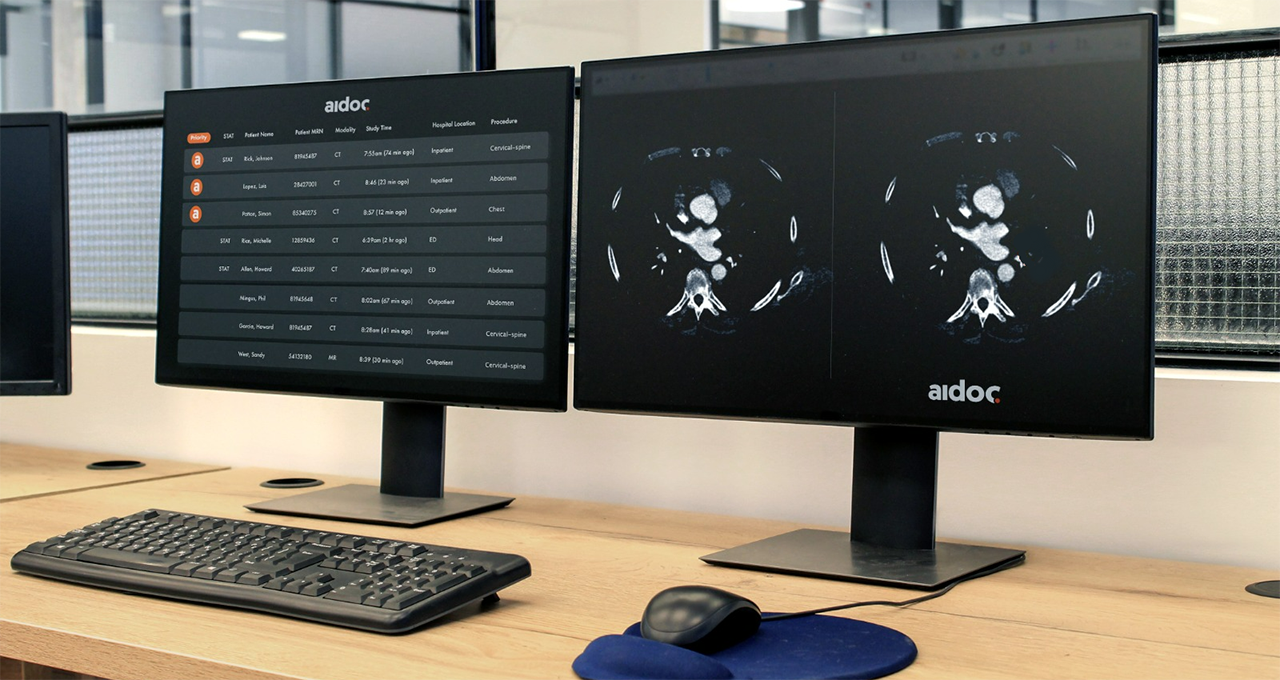
Aidoc's AI system

Israel’s largest private medical center is working with startups and researchers to bring potentially life-saving AI solutions to real-world healthcare workflows.

With more than 1.5 million patients across eight medical centers, Assuta Medical Centers conduct over 100,000 surgeries, 800,000 imaging tests and hundreds of thousands of other health diagnostics and treatments each year. These create huge amounts of de-identified data that Assuta is securely sharing with more than 20 startups through its innovation arm, RISE, launched last year working in collaboration with NVIDIA.

One of the startups, Aidoc, is helping Assuta alert imaging technicians with AI-based insights of possible bleeding in the brain and other critical conditions in a patient’s scan within minutes. Another, Rhino Health, is using federated learning powered by NVIDIA FLARE to make AI development on diverse medical datasets from hospitals across the globe more accessible to Assuta’s collaborators.

Both companies are members of NVIDIA Inception, a global program designed to support cutting-edge startups with go-to-market support, expertise and technology.

“We’re building a hub to serve innovators with the infrastructure they need to develop, test and deploy new AI technology for image analysis and other data-heavy computations in radiology, pathology, genomics and more,” said Daniel Rabina, director of innovation at RISE. “We want to make collaboration with companies, research institutes, hospitals and universities possible while maintaining patient data privacy.”

To support AI development, testing and deployment, Assuta has installed NVIDIA DGX A100 systems on premises and adopted the NVIDIA Clara Holoscan platform, plus software libraries including MONAI for healthcare imaging and NVIDIA FLARE for federated learning.

NVIDIA and RISE are collaborating on RISE with US, a program built to introduce selected Israeli entrepreneurs and early-stage startups working on digital and computational health solutions to the U.S. market. Applications to join the program are open until August 28.

Aidoc Flags Urgent Cases for Radiologist Review

Aidoc, which is New York-based with a research branch in Israel, has developed FDA-cleared AI solutions to flag acute conditions including brain hemorrhages, pulmonary embolisms and strokes from imaging scans.
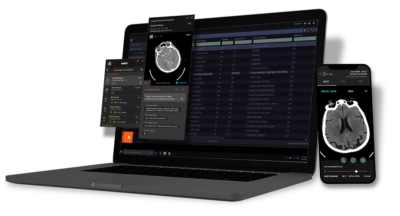
Aidoc desktop and mobile interfaceFounded in 2016 by a group of veterans from the Israel Defense Forces, the startup has deployed its AI to analyze millions of cases across more than 1,000 medical facilities, primarily in the U.S., Europe and Israel.

Its algorithms integrate seamlessly with the PACS imaging workflow used by radiologists worldwide, working behind the scenes to analyze each imaging study and flag urgent findings — bringing potentially critical cases to the radiologist’s attention for review.

Aidoc’s tools can help address the growing shortage of radiologists globally by reducing the time a radiologist needs to spend on each case, enabling care for more patients. And by pushing potentially critical cases to the top of a radiologist’s pile, the AI can help clinicians catch important findings sooner, improving patient outcomes.

The startup uses NVIDIA Tensor Core GPUs in the cloud through AWS for AI training and inference. Adopting NVIDIA GPUs helped reduce model training time from days to a couple hours.

Immediate Impact at Assuta Medical Centers 

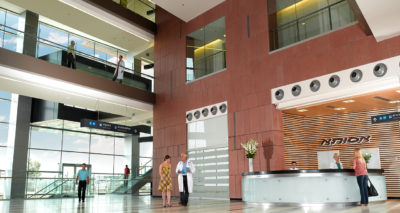
Assuta is a private chain of hospitals that provides elective care — typically dealing with routine screenings rather than emergency room patients — but it adopted Aidoc’s solution to help imaging technicians spot critical cases that need urgent attention among its roughly 200,000 CT tests conducted annually.

When a radiology scan isn’t urgent, it may take a couple days for a doctor to review the case. Aidoc can shrink this time to minutes by identifying concerning cases as soon as the scans are captured by radiology staff. Assuta facilities
At Assuta, urgent findings are typically found among cancer patients, or people who have recently undergone surgery and need follow-up scans. The healthcare organization is using Aidoc’s AI tools to detect intracranial hemorrhages and two kinds of pulmonary embolism.

“We saw the impact right away,” said Dr. Michal Guindy, head of medical imaging and head of RISE at Assuta. “Just a couple days after installing Aidoc at Assuta, a patient came in for a follow-up scan after a brain procedure and had an intracranial hemorrhage. Because Aidoc alerted the imaging technician to flag it for further review, our doctors were able to call the patient while they were on their way home and immediately redirect them to the hospital for treatment.”

Rhino Health Fosters Collaboration With Federated Learning

In addition to deploying AI models in full-scale, real-world settings, Assuta is supporting innovators who are developing, testing or validating new medical AI solutions by sharing the healthcare organization’s data, while also using federated learning through Rhino Health.

Assuta has millions of radiology cases digitized — a desirable resource for researchers and startups looking for robust, diverse datasets to train or validate their AI models. But because of data privacy protection, it’s important that patient information stays safely within the firewall of medical centers like Assuta.

“Data diversity is necessary to develop AI models meant for the use of medical teams. Without optimal computing resources, it would be extremely difficult to use our data and make the magic happen,” said Rabina. “That’s why we need federated learning enabled by both NVIDIA and Rhino Health.”

Federated learning allows companies, healthcare institutions and universities to work together by training and validating AI models across multiple organizations’ datasets while maintaining each organization’s data privacy. Rhino Health provides a neutral platform — available through the NVIDIA AI Enterprise software suite — that enables secure collaboration, powered by NVIDIA A100 GPUs in the cloud and the NVIDIA FLARE federated learning framework.

With Rhino Health, Assuta aims to help its collaborators develop AI models across hospitals internationally, resulting in more generalizable algorithms that perform more accurately across different patient populations.

Register for NVIDIA GTC, running online Sept. 19-22, to hear more from leaders in healthcare AI.

Subscribe to NVIDIA healthcare news and watch on demand as Assuta, Aidoc and Rhino Health speak at an GTC panel.
NVIDIA DSX Air Boosts Time to Token With Accelerated Simulation for AI Factories

Used by CoreWeave and others, the new platform enables enterprises to simulate complex deployments through validated reference architectures for compute, networking, storage, orchestration and security — before a single server is unboxed.
by Scott Martin

Setting up AI factories in simulation — decreasing deployment time from months to days — is  accelerating the next industrial revolution. 

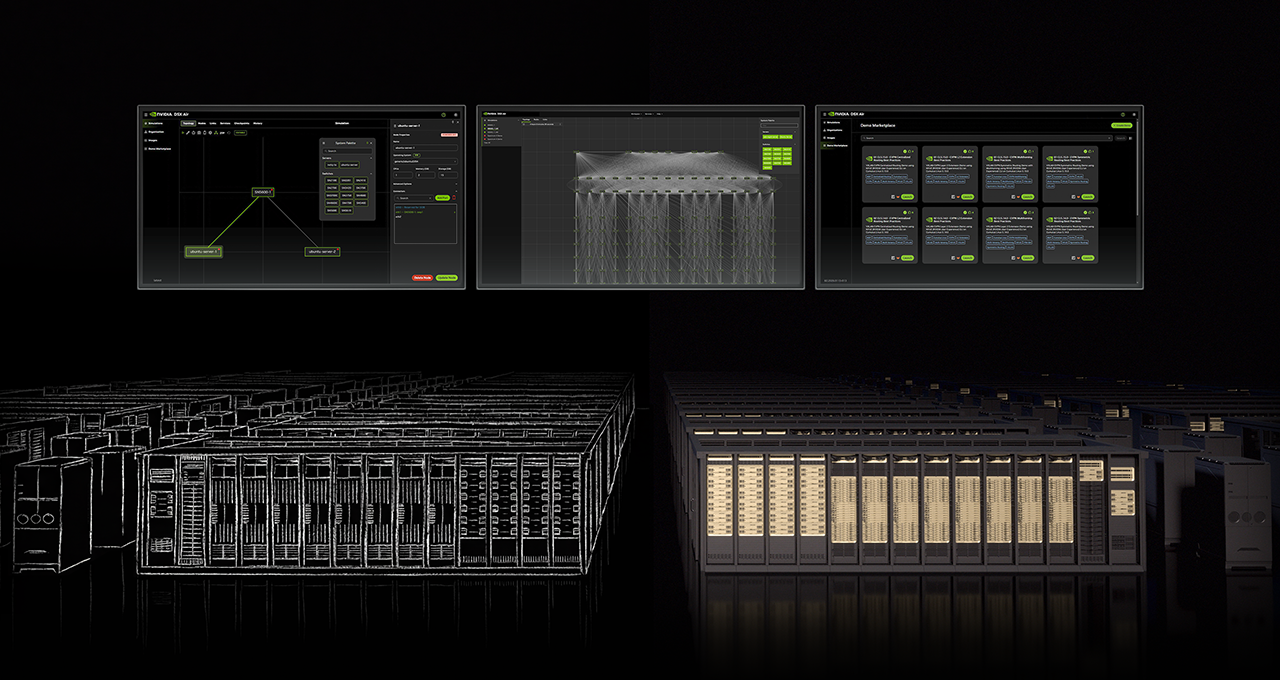
Nowhere was that more apparent than at GTC 2026, in San Jose, where NVIDIA founder and CEO Jensen Huang introduced NVIDIA DSX Air. Part of NVIDIA DSX Sim in the DSX platform, NVIDIA’s blueprint for AI factories, DSX Air is a software-as-a-service platform for logically simulating AI factories. It delivers high‑fidelity digital simulations of NVIDIA hardware infrastructure, including GPUs, SuperNICs, DPUs and switches, and it integrates with leading partner solutions for storage and routing, security, orchestration and more via open, API-based connectivity.

NVIDIA DSX Air enables a complete AI factory ecosystem, uniting NVIDIA infrastructure with partner technologies to deliver full‑stack simulation and accelerate complex AI deployments.    

Companies building some of the world’s most advanced AI infrastructure, including CoreWeave, are already using DSX Air to simulate and validate their environments long before hardware reaches the loading dock. The development underscores a new reality: simulation is now essential to accelerating AI deployment at scale.

DSX Air allows organizations to construct a full digital twin of their AI factory — compute, networking, storage, orchestration and security — before a single server is unboxed. By shifting integration and troubleshooting into simulation, customers are reducing the time to first token from weeks or months to mere days or hours, saving enormous amounts of time and costs.

An industry analogy for this AI factory simulation phenomenon explains it well: It’s like IT mirroring your laptop to set up a new one, except the “laptop” is a hyperscale AI factory and the “mirroring” is a complete, high‑fidelity replica of the production environment.

For operators racing to bring new AI capacity online, this change is transformative.

Building a Platform for an Entire Ecosystem

The NVIDIA DSX Air simulation platform is designed to support the entire AI factory ecosystem. Server manufacturers, orchestration vendors, storage providers and security partners can all validate their offerings alongside NVIDIA infrastructure — together, in one environment, at scale.

This ecosystem‑wide capability is already reshaping partner workflows.

Server manufacturers, which serve as the primary channel for enterprise inference, can now model and validate their reference architectures without building expensive physical labs. Enterprise AI environments rarely fit rigid designs, and customers often require bespoke configurations. With DSX Air, manufacturers can create digital twins tailored to specific customer needs, test their software stacks and deliver validated solutions without touching hardware.

Orchestration vendors — critical for enterprises and tier‑2 clouds that need turnkey AI services — gain the ability to test at scale. At GTC, NVIDIA showcased a multi‑tenant RTX PRO Server environment running entirely in simulation, with Netris providing network orchestration, Rafay handling host orchestration and NVIDIA Run:ai optimizing GPU allocation. These partners can now validate complex workflows under realistic conditions without deploying physical clusters.

The simulation environment is also valuable for validating the data platforms that power AI factories. Instead of requiring large physical clusters, DSX Air allows ecosystem partners to model complete AI workflows alongside NVIDIA compute, networking and software infrastructure. At GTC, the booth demonstration features a video retrieval-augmented generation workload running on the VAST AI Operating System, including a fully operational VAST cluster with DataEngine nodes and the video search and summarization front end. DataEngine triggers and functions process and index video content through an end-to-end pipeline, illustrating how AI applications can be designed, tested and validated inside the DGX Air simulation before deploying physical infrastructure.

Security vendors — facing some of the most demanding validation requirements — can now test multi‑tenant policies, DPU‑accelerated isolation and threat detection in a realistic environment. The GTC demo includes Check Point’s distributed firewall running on simulated BlueField DPUs, TrendAI Vision One for threat detection and Keysight AI Inference Builder, an emulation and analytics platform designed to validate inference-optimized AI infrastructure at scale. Security partners can identify vulnerabilities and validate policies in a customer’s digital twin long before production goes live.

Across the ecosystem, partners emphasized the same point: DSX Air gives them a complete, scalable and cost‑effective way to validate their solutions with NVIDIA infrastructure and with each other.

Operating With a New Model to Accelerate Time to Token

NVIDIA DSX Air isn’t just a deployment accelerator — it introduces a new operational model for AI factories.

On the first day, customers build their intended production environment entirely in simulation. They configure networking, compute, storage, orchestration, security and scheduling exactly as they plan to deploy them. They validate that everything works together, identify issues early and ensure the environment behaves as expected.

Next, they can deploy with confidence. Because the environment has already been tested end to end, the probability of a smooth bring‑up increases dramatically. Time to first token shrinks, and teams can focus on running workloads rather than troubleshooting infrastructure.

Afterward and beyond, DSX Air becomes a safe environment for change management. Long‑lived simulations allow customers to test upgrades, rehearse maintenance windows, validate patches and predict operational impact before touching production. Only after changes succeed in simulation are they applied to the live environment, maximizing uptime and ensuring infrastructure availability.

This lifecycle approach reflects how modern AI factories can operate as they scale.

Simulating AI Factories Becomes the Backbone of AI Infrastructure

GTC showed that simulation is no longer a future concept — it is the new backbone of AI infrastructure deployment and operations.

NVIDIA DSX Air enables customers and partners to simulate everything in one place, accelerating deployment, reducing risk and ensuring day‑one performance at scale.

Adopting NVIDIA DSX Air to Accelerate Deployments With Simulation

Siam.AI, Thailand’s largest AI cloud provider, has accelerated its infrastructure deployment with NVIDIA DSX Air. Using simulation, Siam.AI embraced NVIDIA best practices well ahead of schedule, ensuring day-one operational expertise and validating their architecture in a virtual environment before the physical hardware even arrived.

Similarly, Hydra Host is using DSX Air to accelerate development of Brokkr, its AI factory operating system for bare-metal GPU provisioning that’s used by dozens of GPU deployments globally. By simulating full-stack environments in DSX Air before deploying to production, Hydra Host can validate Brokkr’s automation and orchestration workflows across diverse networking and hardware configurations at scale. This simulation-first approach lets Hydra Host ship validated infrastructure faster to customers worldwide while minimizing risk to live systems as global AI demand grows.

As AI factories grow in size and complexity, the ability to validate full‑stack environments before hardware arrives will define the pace of innovation. NVIDIA DSX Air delivers that capability today, giving organizations the fastest possible path to first token and a more reliable way to operate AI infrastructure over time.

Learn more about NVIDIA DSX Air.


NVIDIA GTC 2026: Live Updates on What’s Next in AI

Rolling coverage from San Jose, including NVIDIA CEO Jensen Huang’s keynote, news highlights, live demos and on‑the‑ground color through March 19.
by NVIDIA Writers

NVIDIA and Thinking Machines Lab Announce Long-Term Gigawatt-Scale Strategic Partnership

by NVIDIA Newsroom

NVIDIA and Thinking Machines Lab announced today a multiyear strategic partnership to deploy at least one gigawatt of next-generation NVIDIA Vera Rubin systems to support Thinking Machines’ frontier model training and platforms delivering customizable AI at scale. Deployment on the NVIDIA Vera Rubin platform is targeted for early next year. The partnership also includes an effort to design training and serving systems for NVIDIA architectures and broaden access to frontier AI and open models for enterprises, research institutions and the scientific community.

NVIDIA has also made a significant investment in Thinking Machines Lab to support the company’s long-term growth.

“AI is the most powerful knowledge discovery instrument in human history,” said Jensen Huang, founder and CEO of NVIDIA. “Thinking Machines has brought together a world-class team to advance the frontier of AI. We are thrilled to partner with Thinking Machines to realize their exciting vision for the future of AI.”

“NVIDIA’s technology is the foundation on which the entire field is built,” said Mira Murati, cofounder and CEO of Thinking Machines. “This partnership accelerates our capacity to build AI that people can shape and make their own, as it shapes human potential in turn.”

Building powerful AI systems that are understandable, customizable and collaborative demands advances in research, design and infrastructure at scale. This partnership provides that foundation, with the shared aim of ensuring that the most transformative technology of our time expands human capability.