country_code

Beyond Be-leaf: Immersive 3D Experience Transports Audiences to Natural Worlds With Augmented Reality

Factory 42 uses NVIDIA RTX, CloudXR and 5G to power an interactive Green Planet AR Experience.
by Nicole Castro

Imagine walking through the bustling streets of London’s Piccadilly Circus, when suddenly you’re in a tropical rainforest, surrounded by vibrant flowers and dancing butterflies.

That’s what audiences will see in the virtual world of The Green Planet AR Experience, an interactive, augmented reality experience that blends physical and digital worlds to connect people with nature.

During the Green Planet AR Experience, powered by EE 5G, visitors are led through a living rainforest and six distinct biomes by a 3D hologram of Sir David Attenborough, familiar to many as the narrator of some of the world’s most-watched nature documentaries.

All images courtesy of Factory 42.

Audiences engage and interact with the plant life by using a mobile device, which acts as a window into the natural world.

To bring these virtual worlds to life in a sustainable way, award-winning studio Factory 42 combined captivating storytelling with cutting-edge technology. Using NVIDIA RTX and CloudXR, the creative team elevated the AR experience and delivered high-fidelity, photorealistic virtual environments over a 5G network.


Natural, Immersive AR Over 5G — It’s a Stream Come True

The Green Planet AR Experience’s mission is to inspire, educate and motivate visitors toward positive change by showcasing how plants are vital to all life on earth. Through the project, Factory 42 and the BBC help audiences gain a deeper understanding of ecosystems, the importance of biodiversity and what it means to protect our planet.

To create an immersive environment that captured the rich, vivid colors and details of natural worlds, the Factory 42 team needed high-quality imagery and graphics power. Using mobile edge computing allowed them to deliver the interactive experience to a large number of users over EE’s private 5G network.

The AR experience runs on a custom, on-premises GPU edge-rendering stack powered by NVIDIA RTX 8000 professional GPUs. Using NVIDIA RTX, Factory 42 created ultra-high-quality 3D digital assets, environments, interactions and visual effects that made the natural elements look as realistic as possible.

With the help of U.K.-based integrator The GRID Factory, the GPU edge-rendering stack is connected to EE’s private 5G network using the latest Ericsson Industry Connect solution for a dedicated wireless cellular network. Using NVIDIA RTX Virtual Workstation (RTX vWS) on VMware Horizon, and NVIDIA’s advanced CloudXR streaming solution, Factory 42 can stream all the content from the edge of the private 5G network to the Samsung S21 mobile handsets used by each visitor.

“NVIDIA RTX vWS and CloudXR were a step ahead of the competitive products — their robustness, ability to fractionalize the GPU, and high-quality delivery of streamed XR content were key features that allowed us to create our Green Planet AR Experience as a group experience to thousands of users,” said Stephen Stewart, CTO at Factory 42.

The creative team at Factory 42 designed the content in the AR environment, which is rendered in real time with the Unity game engine. The 3D hologram of Sir David was created using volumetric capture technology provided by Dimension Studios. Spatial audio provides a surround-sound setup, which guides people through the virtual environment as digital plants and animals react to the presence of visitors in the space.

Combining these technologies, Factory42 created a new level of immersive experience — one only made possible through 5G networks.

“NVIDIA RTX and CloudXR are fundamental to our ability to deliver this 5G mobile edge compute experience,” said Stewart. “The RTX 8000 GPU provided the graphics power and the NVENC support required to deploy into an edge rendering cluster. And with CloudXR, we could create robust connections to mobile handsets.”
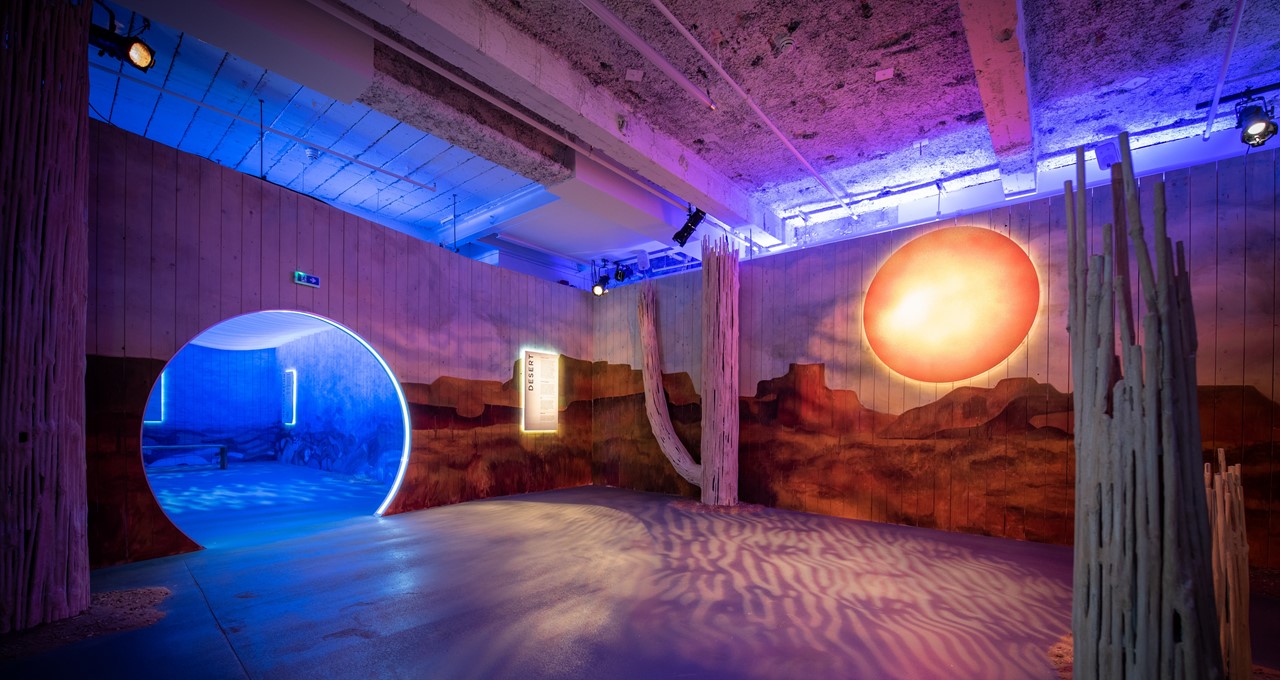
Sustainability was considered at every level of construction and operation. The materials used in building The Green Planet AR Experience will be reused or recycled after the event to promote circularity. And combining NVIDIA RTX and CloudXR with 5G, Factory 42 can give audiences interactive experiences with hundreds of different trees, plants and creatures inside an eco-friendly, virtual space.

Experience the Future of Streaming at GTC

Learn more about how NVIDIA is helping companies create unforgettable immersive experiences at GTC, which runs from March 21-24.

Registration is free. Sign up to hear from leading companies and professionals across industries, including Factory 42, as they share insights about the future of AR, VR and other extended reality applications.

And watch the keynote address by NVIDIA CEO Jensen Huang, on March 22 at 8 a.m. Pacific, to hear the latest news on NVIDIA technologies.
New NVIDIA Nemotron 3 Super Delivers 5x Higher Throughput for Agentic AI

A new, open, 120-billion-parameter hybrid mixture-of-experts model optimized for NVIDIA Blackwell addresses the costs of long thinking and context explosion that slow autonomous agent workflows.
by Kari Briski

Launched today, NVIDIA Nemotron 3 Super is a 120‑billion‑parameter open model with 12 billion active parameters designed to run complex agentic AI systems at scale. 

Available now, the model combines advanced reasoning capabilities to efficiently complete tasks with high accuracy for autonomous agents.

AI-Native Companies: Perplexity offers its users access to Nemotron 3 Super for search and as one of 20 orchestrated models in Computer. Companies offering software development agents like CodeRabbit, Factory and Greptile are integrating the model into their AI agents along with proprietary models to achieve higher accuracy at lower cost. And life sciences and frontier AI organizations like Edison Scientific and Lila Sciences will power their agents for deep literature search, data science and molecular understanding.

Enterprise Software Platforms: Industry leaders such as Amdocs, Palantir, Cadence, Dassault Systèmes and Siemens are deploying and customizing the model to automate workflows in telecom, cybersecurity, semiconductor design and manufacturing. 

As companies move beyond chatbots and into multi‑agent applications, they encounter two constraints.

The first is context explosion. Multi‑agent workflows generate up to 15x more tokens than standard chat because each interaction requires resending full histories, including tool outputs and intermediate reasoning. 

Over long tasks, this volume of context increases costs and can lead to goal drift, where agents lose alignment with the original objective.

The second is the thinking tax. Complex agents must reason at every step, but using large models for every subtask makes multi-agent applications too expensive and sluggish for practical applications.

Nemotron 3 Super has a 1‑million‑token context window, allowing agents to retain full workflow state in memory and preventing goal drift.

Nemotron 3 Super has set new standards, claiming the top spot on Artificial Analysis for efficiency and openness with leading accuracy among models of the same size. 

The model also powers the NVIDIA AI-Q research agent to the No. 1 position on DeepResearch Bench and DeepResearch Bench II leaderboards, benchmarks that measure an AI system’s ability to conduct thorough, multistep research across large document sets while maintaining reasoning coherence. 

Hybrid Architecture

Nemotron 3 Super uses a hybrid mixture‑of‑experts (MoE) architecture that combines three major innovations to deliver up to 5x higher throughput and up to 2x higher accuracy than the previous Nemotron Super model. 

  • Hybrid Architecture: Mamba layers deliver 4x higher memory and compute efficiency, while transformer layers drive advanced reasoning.
  • MoE: Only 12 billion of its 120 billion parameters are active at inference. 
  • Latent MoE: A new technique that improves accuracy by activating four expert specialists for the cost of one to generate the next token at inference.
  • Multi-Token Prediction: Predicts multiple future words simultaneously, resulting in 3x faster inference.

On the NVIDIA Blackwell platform, the model runs in NVFP4 precision. That cuts memory requirements and pushes inference up to 4x faster than FP8 on NVIDIA Hopper, with no loss in accuracy. 

Open Weights, Data and Recipes

NVIDIA is releasing Nemotron 3 Super with open weights under a permissive license. Developers can deploy and customize it on workstations, in data centers or in the cloud.

The model was trained on synthetic data generated using frontier reasoning models. NVIDIA is publishing the complete methodology, including over 10 trillion tokens of pre- and post-training datasets, 15 training environments for reinforcement learning and evaluation recipes. Researchers can further use the NVIDIA NeMo platform to fine-tune the model or build their own. 

Use in Agentic Systems

Nemotron 3 Super is designed to handle complex subtasks inside a multi-agent system. 

A software development agent can load an entire codebase into context at once, enabling end-to-end code generation and debugging without document segmentation. 

In financial analysis it can load thousands of pages of reports into memory,  eliminating the need to re-reason across long conversations, which improves efficiency. 

Nemotron 3 Super has high-accuracy tool calling that ensures autonomous agents reliably navigate massive function libraries to prevent execution errors in high-stakes environments, like autonomous security orchestration in cybersecurity.

Availability

NVIDIA Nemotron 3 Super, part of the Nemotron 3 family, can be accessed at build.nvidia.com, Perplexity, OpenRouter and Hugging Face. Dell Technologies is bringing the model to the Dell Enterprise Hub on Hugging Face, optimized for on-premise deployment on the Dell AI Factory, advancing multi-agent AI workflows. HPE is also bringing NVIDIA Nemotron to its agents hub to help ensure scalable enterprise adoption of agentic AI. 

Enterprises and developers can deploy the model through several partners:

The model is packaged as an NVIDIA NIM microservice, allowing deployment from on-premises systems to the cloud.

Stay up to date on agentic AI, NVIDIA Nemotron and more by subscribing to NVIDIA AI news, joining the community, and following NVIDIA AI on LinkedIn, Instagram, X and Facebook.

Explore self-paced video tutorials and livestreams.