country_code

NVIDIA BioNeMo Agent Toolkit Brings Accelerated AI to Life Sciences Researchers in Claude Science

Anthropic’s Claude Science, an AI workbench for science research, lets scientists use agents to build workflows harnessing NVIDIA BioNeMo models, libraries and accelerated workflows.
by

Life sciences has entered an era of computational scale, and for more than a decade, NVIDIA has built the full GPU-accelerated computing stack — spanning hardware, frameworks, libraries, models, microservices and domain-specific tools — to help researchers run more sophisticated workflows and iterate faster.

This week, Anthropic announced Claude Science, an AI workbench for science research that lets scientists converse with agents in natural language to run their work end to end.

Claude Science integrates with NVIDIA BioNeMo Agent Toolkit as a resource that scientists can access within their workflow. The toolkit packages NVIDIA-accelerated capabilities as callable skills, enabling Claude Science to select the appropriate tool, prepare valid inputs and execute the workflow — all while connecting to NVIDIA compute resources deployed anywhere. This brings NVIDIA’s accelerated models, libraries and NVIDIA NIM microservices directly into the same environment where the rest of the research happens.

The world’s largest pharmaceutical companies use NVIDIA technologies to advance AI-enabled research across drug discovery, genomics, medical imaging, molecular design and protein engineering. Today, 18 of the top 20 pharmaceutical companies use NVIDIA BioNeMo, underscoring the breadth of its role across the ecosystem.

Advancing the Agentic Era of Scientific Discovery

Claude Science lets scientists use natural language to move their research from intent into action, without manually configuring models, endpoints, or software environments. NVIDIA BioNeMo Agent Toolkit extends that with access to accelerated workflows and models like Evo 2, Boltz-2 and OpenFold3, so the analyses that benefit from acceleration run faster. 

A scientist begins by describing a research task, such as analyzing a genomic sequence, predicting a protein structure or designing a potential binder, in natural language. Claude Science interprets the request and orchestrates the work through preconfigured domain-specialized agents that know established workflows across genomics, proteomics, single-cell analysis, cheminformatics and clinical research. 

BioNeMo Agent Toolkit gives these agents the context needed to connect each step with an appropriate NVIDIA scientific capability. Each skill includes information about its purpose and required inputs, helping agents prepare and execute the workflow and return outputs for review.

The result is an iterative loop between scientific reasoning and accelerated computational work. Scientists can inspect outputs, refine their questions and determine the next step while staying focused on the science.

One powerful example is generating better inhibitors of common cancer targets. In this workflow, a scientist starts with a known cancer-causing antigen mutation and asks Claude to design numerous potential inhibitors. Claude Science integrated with BioNeMo Agent Toolkit and NVIDIA NIM microservices accelerates high-throughput inhibitor prediction, optimization and validation.

A Scientific Foundation Built for Agents

AI agents reason, plan and use tools to complete tasks. In life sciences, those tools are often specialized computational workflows. 

An autonomous AI scientist agent doesn’t reason in isolation. It may need to fingerprint a library of compounds, cluster promising hits, generate conformers for top candidates, analyze genomic context and compare perturbation responses before recommending the next experiment. 

Each step relies on a scientific tool, and the agent can only work as fast as those tools run.

NVIDIA BioNeMo Agent Toolkit gives scientific agents the accelerated tools they need to operate at the speed of science. It includes:

  • NVIDIA Parabricks accelerates genomic analysis from hours to minutes, so an agent can integrate genomic context into a decision in near real time.
  • RAPIDS-singlecell, developed by scverse, compresses a 1.3-million-cell preprocessing and clustering workflow from 52 minutes to 25 seconds, so single cell analysis becomes part of the reasoning loop rather than an offline batch of jobs.
  • nvMolKit accelerates cheminformatics operations like similarity search and conformer generation by up to 3,000x, so an agent iterating across a massive chemical space gets results at the speed of thought.
  • NVIDIA BioNeMo open models deliver core biomolecular capabilities accelerated by NVIDIA libraries, so an agent has a purpose-built scientific model for each step of a workflow.
  • BioNeMo NIM microservices package those models as enterprise-ready inference endpoints — containerized microservices with the full accelerated software stack pre-integrated and tuned for high-performance inference — so an agent can call a single stable application programming interface for production deployment.

NVIDIA BioNeMo Agent Toolkit is open and harness-agnostic, allowing the same scientific skills to work across agent frameworks and research platforms. The toolkit and its skills are available now through NVIDIA developer resources and GitHub.

Scientists can access BioNeMo-powered workflows through Anthropic’s Claude Science, which is entering public beta today. As part of the public beta, Anthropic is inviting researchers to provide feedback on additional domain specialists and integrations they need.
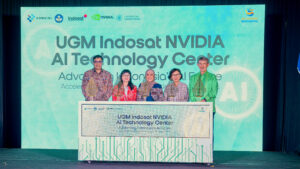
Universitas Gadjah Mada, Indosat and NVIDIA Open Indonesia’s First University AI Center to Develop Local AI Talent

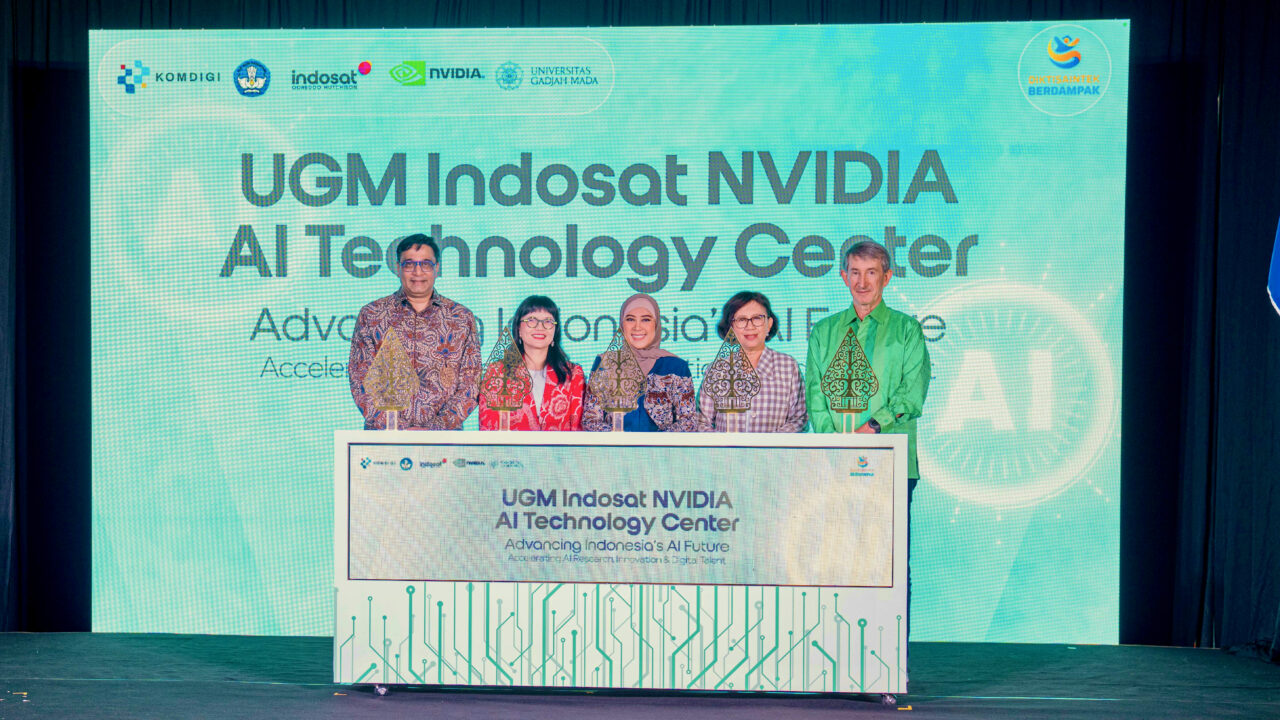
Komdigi, Universitas Gadjah Mada, Indosat and NVIDIA launch the UGM Indosat NVIDIA AI Technology Center, bringing world-class AI infrastructure to Indonesia’s researchers and students and developers.
by

Indonesia is taking charge of its AI future.

This week, the Ministry of Communication and Digital Affairs (Komdigi), Indosat Ooredoo Hutchison (Indosat or IOH), NVIDIA and Universitas Gadjah Mada (UGM) launched the UGM Indosat NVIDIA AI Technology Center (NVAITC) in Yogyakarta — the country’s first university-based AI technology center. Established under Indonesia’s AI Center of Excellence initiative, UGM Indosat NVAITC brings government, industry and academia together to develop AI that addresses Indonesia’s most urgent national priorities.

“The Indonesia AI Center of Excellence reflects our long-term vision to position Indonesia as a nation that not only adopts AI but also develops and contributes AI innovations to the world,” said Meutya Hafid, Indonesia’s Minister of Communication and Digital Affairs. “Through initiatives like this, we are laying the foundations of Indonesia’s AI sovereignty and ensuring AI becomes a driver of economic growth, national competitiveness and solutions to Indonesia’s most pressing challenges.”

“UGM is committed to supporting Indonesia’s AI ambitions through education, research, and innovation that deliver real societal impact,” said Prof. dr. Ova Emilia, Ph.D. “This initiative supports national priorities in higher education, research downstreaming and talent development by accelerating the adoption of AI and preparing future-ready Indonesian talent.”

Compute That Belongs to the Country

Powered by NVIDIA’s full-stack AI platform and GPU Merdeka — Indosat’s sovereign GPU-as-a-service platform — UGM Indosat NVAITC gives UGM’s researchers and students access to enterprise-grade accelerated computing, AI software, open source, pretrained models, development frameworks and technical mentorship. It also connects Indonesian researchers to a worldwide ecosystem of expertise.

“At Indosat, we believe no Indonesian should be left behind in the AI era,” said Vikram Sinha, president director and CEO of Indosat Ooredoo Hutchison. “Through UGM Indosat NVAITC, we are bringing the best of global AI technologies and expertise to Indonesia, while expanding access for the ecosystem of researchers, students, startups, and innovators across the country. By strengthening AI readiness and empowering Indonesian talent, we aim to support the government’s vision for AI and help position Indonesia not only as a user of AI technologies, but as a nation that develops and contributes AI innovations to the world.”

The opportunity is real. Indonesia is the world’s fourth-most populous country, with researchers and developers working on problems of scale and urgency. What they’ve historically lacked is access to the compute, models and infrastructure to move from insight to impact.

“Indonesia is home to an extraordinary community of researchers, developers and innovators with the potential to shape the future of AI,” said Marc Hamilton, vice president of solutions architecture and engineering at NVIDIA. “From healthcare and agriculture to disaster preparedness, the opportunities for AI to drive real change are immense. Through UGM Indosat NVIDIA AI Technology Center, NVIDIA is committed to equipping Indonesian talent with NVIDIA Nemotron open models and expertise to turn that potential into innovation with local and global impact.”

AI for Indonesian Challenges

Three initial projects define what this center is for, focused on healthcare, agriculture and natural disaster response.

Indonesia records over 1 million new tuberculosis (TB) cases every year. TB is curable — but it kills when it goes undetected. Detection in rural and underserved areas has depended on equipment and expertise unavailable at the community level. UGM’s Faculty of Medicine Public Health and Nursing team, led by dr. Dian Kesumapramudya Nurputra, M.Sc, Ph.D, SpA , is developing an AI-powered electronic screening technology — eNose-TB — that screens for TB by analyzing breath samples. The goal: affordable, fast, accessible screening that reaches patients in remote clinics and villages — no specialist or expensive lab required. 

“As researchers, we have always believed that technology developed in Indonesia can solve Indonesian challenges,” said Dian. “Through the center, access to world-class AI infrastructure and expertise will help us accelerate our research and bring us closer to our dream of developing affordable and accessible healthcare technologies that can improve lives across Indonesia.”

Agriculture employs nearly 30% of Indonesia’s workforce. SmartAgri uses multimodal AI — combining satellite imagery, sensor data and local agricultural knowledge — alongside edge computing to deliver precision farming for Indonesian terrain, crops and smallholders. These AI-powered recommendations help farmers know exactly when and how to irrigate, delivering impact that compounds over time.

Indonesia sits on the Pacific Ring of Fire, facing more natural disaster risk than almost anywhere on earth. Tech4Disaster is building a geospatial AI platform using NVIDIA accelerated computing to process satellite and sensor data at speed — giving communities and emergency responders earlier warning, better situational awareness and faster coordination tools when disaster strikes.

Learn more about the UGM Indosat NVIDIA AI Technology Center.

Firebird Launches CIS Region’s Largest AI Factory in Armenia

Firebird, NVIDIA, Dell Technologies, CoreWeave and regional leaders mark a milestone in building AI infrastructure to support economic growth, scientific research and technological advancements.
by

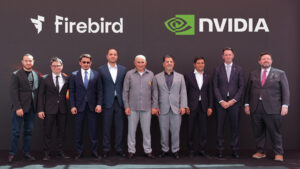
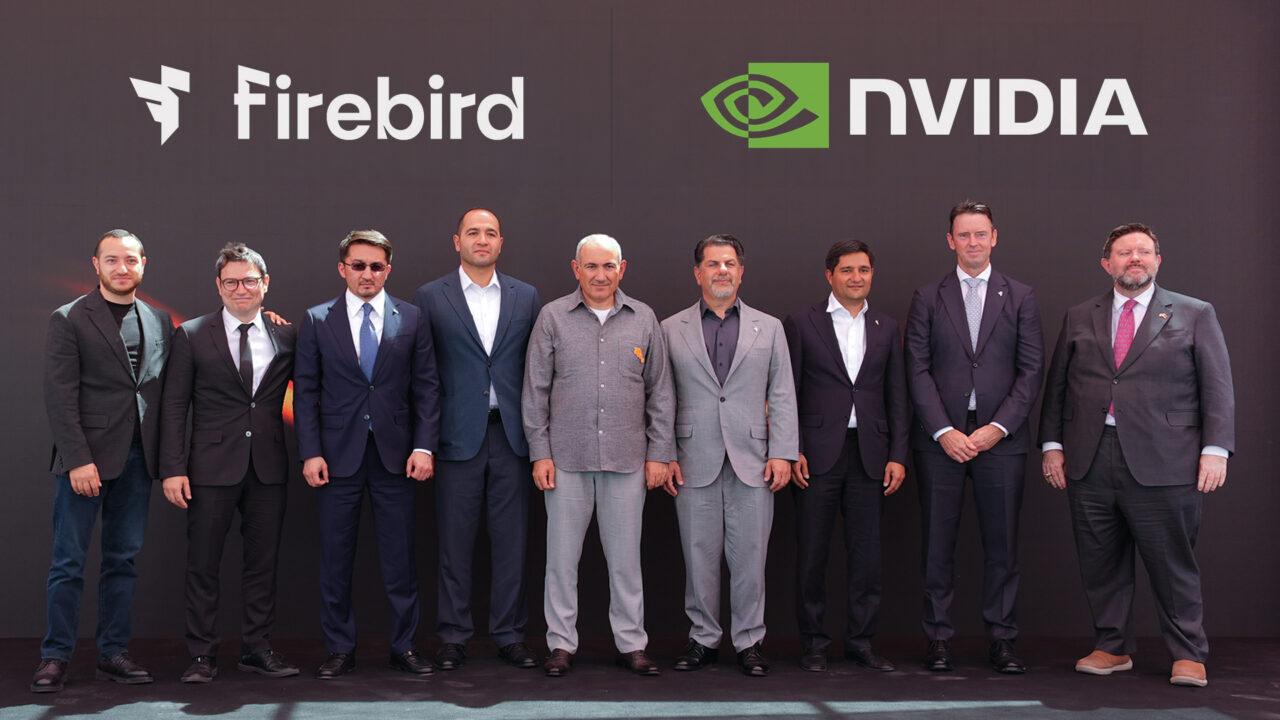
The global buildout of AI infrastructure reached a new milestone today — Firebird, an emerging AI cloud, launched the CIS region’s largest AI factory in Armenia, establishing a new AI computing hub powered by NVIDIA accelerated computing and Dell Technologies high-performance AI infrastructure

Nikol Pashinyan, prime minister of the Republic of Armenia; Zhaslan Madiyev, deputy prime minister of the Republic of Kazakhstan; and David Allen, U.S. chargé d`affaires, a.i. in Armenia, attended the AI factory opening ceremony. 

AI factories are the foundational infrastructure for the AI era, providing the computing capacity needed to train, fine-tune and deploy AI models for every domain at scale.

Building the Infrastructure to Create Intelligence at Home

While AI services are available globally, countries also need the capacity to develop and run AI for their own languages, industries and national priorities. Firebird’s AI factory brings that capacity to Armenia, giving developers, startups, enterprises, universities and public institutions the compute to build and scale AI at home.

Firebird plans to deploy more than 70,000 NVIDIA Rubin and Blackwell GPUs and 300 megawatts of AI infrastructure capacity in Armenia by the end of 2027, accelerating the country’s development as a center for AI research, advanced computing and innovation. 

“Our ambition for what we are building in the next 2 years or so is roughly 2 gigawatts of capacity around the world. We’re very focused on merging into frontier markets,” said Alexander Yesayan, co-founder of Firebird.

At this scale, energy efficiency is essential. Built on the NVIDIA DSX platform, this AI factory integrates accelerated computing, networking, power and cooling as one codesigned system. Firebird’s AI factory is designed from the ground up to turn compute into revenue. With DSX, it can run up to 40% more GPUs on the same footprint, producing more tokens per dollar and extracting more value from every megawatt of capacity.

A Magnet for Global AI, a Catalyst for Local Innovation

Firebird’s ambitions extend beyond a single site. With NVIDIA’s support, the company is pursuing an approximately 2-gigawatt AI infrastructure roadmap spanning Armenia, Kazakhstan and additional markets. 

Firebird also announced that NVIDIA intends to invest in the company, following an earlier investment by CoreWeave this year. These investments will help Firebird expand its global infrastructure and operational footprint, and support its efforts to establish the largest and most advanced compute clusters across frontier markets.

Delivered in just over six months, the Armenia AI factory demonstrates Firebird’s ability to turn ambitious infrastructure plans into operational AI capacity with exceptional speed.

Schneider Electric provides the power infrastructure supporting Firebird’s AI factory in Hrazdan, helping Firebird meet its accelerated deployment schedule by rapidly delivering and setting up critical systems, including medium- and low-voltage switchgear, three-phase uninterruptible power supply systems and rack enclosures. This keeps the power buildout moving at the pace of the compute and provides a reliable foundation to bring NVIDIA accelerated computing online at scale.

To support the facility’s thermal needs, Vertiv provided a cooling architecture combining chilled-water technology, advanced controls and Vertiv TrimCooler technology for efficient heat rejection. Vertiv’s iCOM CWM Chilled Water Manager centrally coordinates cooling resources, improving visibility, efficiency and responsiveness as demand shifts with AI workloads.

Early demand is coming from AI-native companies including Perplexity, which is working with Firebird to access high-performance AI infrastructure for its AI agent platform and answer engine. 

As AI becomes essential infrastructure worldwide, Firebird’s expansion can help make the CIS region a magnet for global companies building and running AI — and a catalyst for local developers, researchers and enterprises. 

Powered by NVIDIA’s total AI factory platform — reference architecture, accelerated computing, networking and AI software — and deployed on Dell PowerEdge servers, the new Firebird AI factory will help Armenia’s builders turn energy into intelligence and connect their innovations to the global AI economy.


  • Categories:
  • AI

Into the Omniverse: How Open World Models Push the Frontier of Physical AI

by

Editor’s note: This post is part of Into the Omniverse, a series focused on how developers, 3D practitioners and enterprises can transform their workflows using the latest advancements in OpenUSD and NVIDIA Omniverse.

In July, NVIDIA joined more than 200 companies and organizations in signing “Open Weights and American AI Leadership,” an open letter arguing that AI leadership will be measured not by any single frontier model but by whether an open ecosystem reaches every sector. 

Open models, which anyone can download, inspect, modify and run on their own infrastructure, are what make that possible. Nowhere is that more crucial than in physical AI, where every deployment is a specialization problem.

Physical AI has to understand and predict consequences, not just appearances. 

To make this possible, world models learn how physical environments behave, what may happen next and which following actions make sense. They can generate physically grounded world and action data, simulate future states and provide a foundation that teams can specialize for a robot, autonomous vehicle or vision AI system.

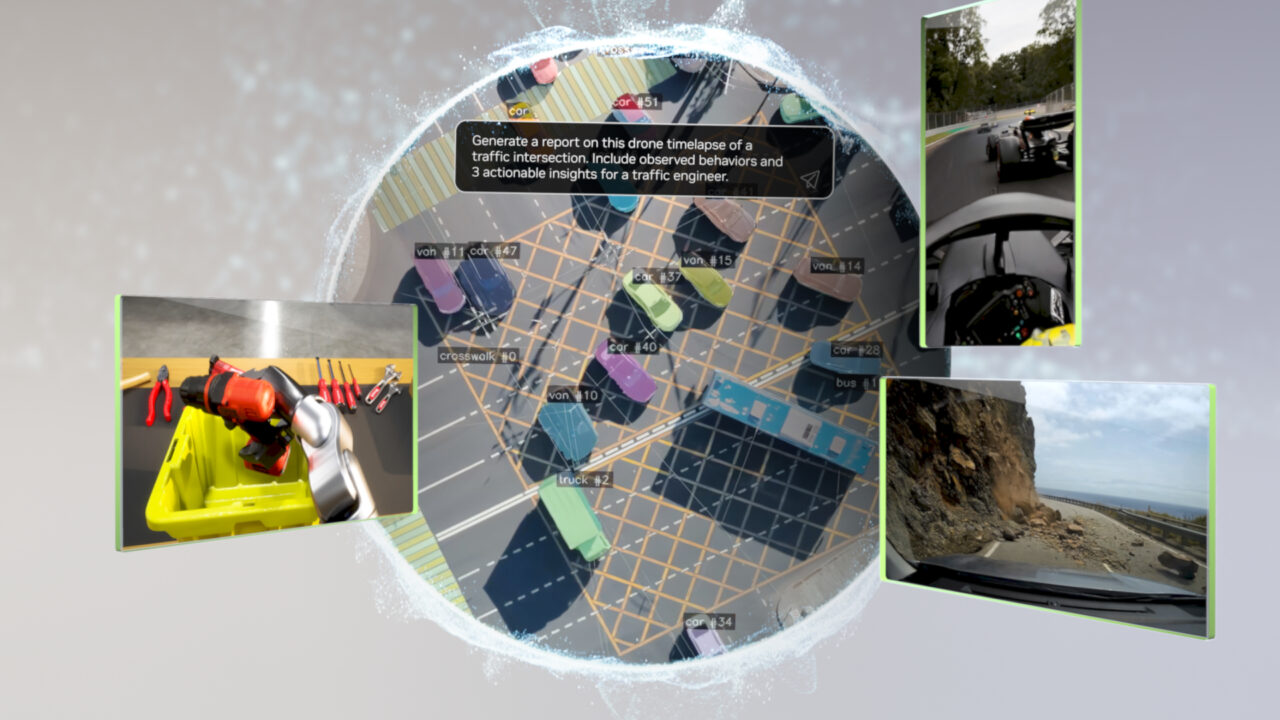
Open world models are already being used to generate training data, test policies and specialize physical AI systems. NVIDIA Cosmos 3 brings these capabilities together in an open model family, with leading benchmark results and adoption across robotics, autonomous vehicles and vision AI.

And NVIDIA Omniverse libraries, part of NVIDIA Agent Toolkit, provides prebuilt capabilities for building simulation-ready worlds that physical AI teams can use to train, test and validate systems before real-world deployment.

World Models Are the Foundation of Physical AI

The data behind physical AI is difficult and expensive to collect at the scale required. Rare events and long-tail scenarios can be especially difficult to reproduce safely and repeatedly. 

World models enable:

  • More useful data by learning physical relationships from large-scale multimodal scenarios.

  • More diverse environments that vary in weather, lighting, objects and trajectories.

  • A better foundation to build on and adapt to a particular robot, vehicle, sensor configuration, task or operating environment. 


A general model hasn’t seen a team’s particular robot, sensors or operating environment. Closing that gap requires access to model weights, a license that permits adaptation and the tools needed for post-training. 

NVIDIA Cosmos world foundation models are available under the Linux Foundation’s OpenMDW 1.1 license, enabling teams to post-train models on their own data and hardware. Specialization is where openness becomes a practical technical requirement.

Specializing a model is only part of the workflow. Teams also need environments to generate data, run simulations and test behavior. 

Omniverse libraries help developers build simulation-ready environments, while OpenUSD provides the open framework for composing, reusing and exchanging complex 3D data across digital twins, simulations and synthetic data generation workflows. Together, Omniverse and OpenUSD cut the duplicated work that can otherwise pile up every time assets, sensor configurations or environmental conditions change.

Cosmos 3: The Frontier Model

NVIDIA Cosmos 3 — a frontier open physical AI foundation omni-model built on a mixture-of-transformers architecture — combines vision reasoning, world generation and action prediction, letting developers use one model family to understand scenes, generate synthetic data, simulate future states and build specialized world action models.

Developers can use Cosmos 3 as a vision language model, as a physics-grounded world simulator that predicts future world states and generates large-scale synthetic data, or as the backbone for world action models, instead of assembling and maintaining a separate model for each capability.

The family includes Cosmos 3 Super (64B) for high-fidelity world modeling, Cosmos 3 Nano (16B) for efficient reasoning and post-training, and Cosmos 3 Edge (4B) for on-device vision reasoning and robot policy deployment. Lightweight enough to run on edge GPUs, Cosmos 3 Edge can be deployed across NVIDIA RTX GPUs, NVIDIA DGX systems and NVIDIA Jetson, including Jetson Thor platforms.

Across benchmark evaluations, Cosmos 3 ranks No. 1 on Artificial Analysis for open weights text-to-image and image-to-video generation, on PAI-Bench for world generation and in the image-to-video category of Physics-IQ. For robot policy, it ranks No. 1 on RoboLab. Cosmos 3 Super is also the highest-ranked open model on VANTAGE-Bench for vision understanding.


In addition to Cosmos, NVIDIA’s physical AI stack includes Isaac GR00T for robotics, Alpamayo for autonomous vehicles and Metropolis for vision AI. 

How Developers Are Putting Cosmos 3 to Work

Across industries, developers are building on NVIDIA Cosmos for physical AI applications: Doosan Robotics, LG Electronics, Samsung Electronics and Skild AI in robotics; Li Auto, Xiaomi and Afari in autonomous vehicles; and Centific, Fogsphere, Linker Vision, Milestone Systems and Yuan for vision AI agents powering industrial AI and smart spaces applications.

The NVIDIA Cosmos Coalition extends this work by bringing together world model builders, AI developers and physical AI leaders to contribute models, research and evaluation methods. NVIDIA recently expanded the coalition to Japan, where robotics and manufacturing leaders intend to join and develop open world models for factories, logistics, agriculture, construction, healthcare and transportation.

Together, these implementations and collaborations are establishing open world models as an adaptable foundation for physical AI across robots, autonomous vehicles and vision AI systems.

Get Plugged In

Learn more about world models, OpenUSD and physical AI development by exploring these resources: