country_code

Digital Sculptor Does Heavy Lifting With Lightweight Mobile Workstation

Marlon Nuñez designs stunning 3D characters with real-time ray tracing using the Lenovo ThinkPad P1, powered by NVIDIA RTX A5000 graphics.
by

As a professional digital sculptor, Marlon Nuñez is on a mission to make learning 3D art skills easier, smoother and more fun for all. And with the help of an NVIDIA RTX-powered Lenovo mobile workstation, he takes his 3D projects to the next level, wherever he goes.

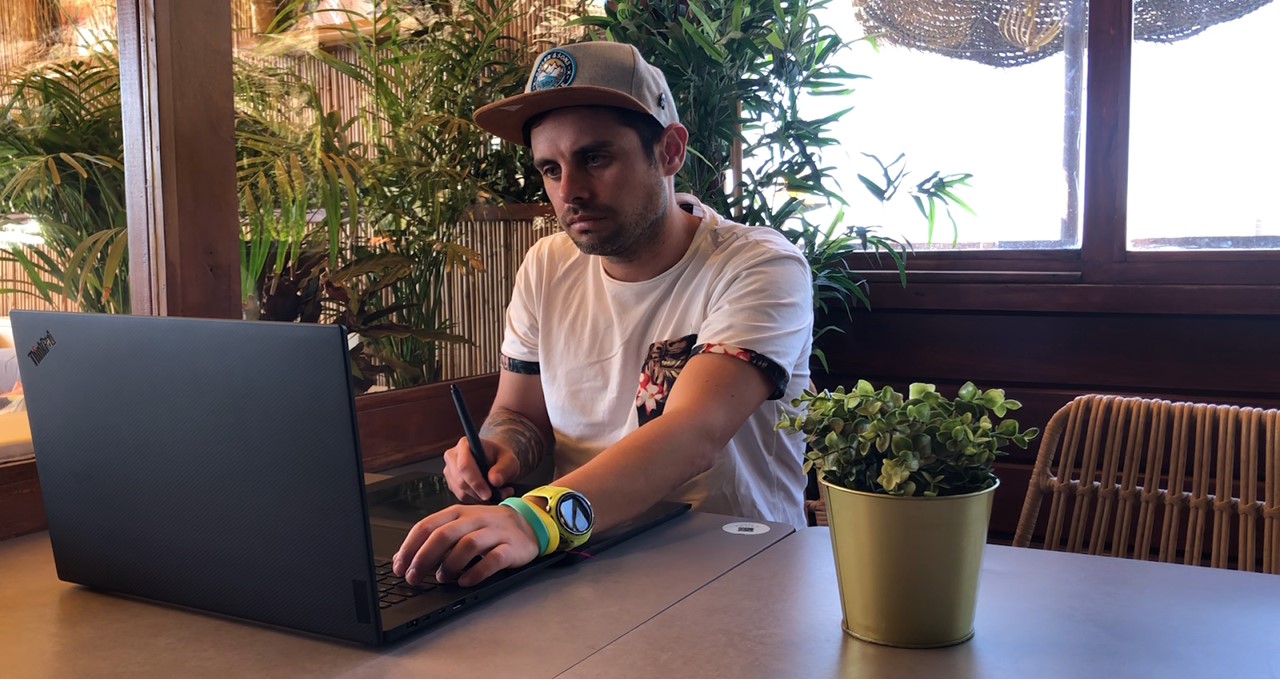
Nuñez is the art director and co-founder of Art Heroes, a 3D art academy. Based in Spain, Nuñez specializes in creating digital humans and stylized 3D characters, a complex feat. But he tackles his demanding creative workflows from anywhere, thanks to his Lenovo ThinkPad P1 powered by the NVIDIA RTX A5000 Laptop GPU.

The speed and performance of RTX-powered technology enable Nuñez to create stunning characters in real time.

“As an artist, render times and look development are where you spend most of your time,” said Nuñez. “NVIDIA RTX allows you to work with ray tracing on, providing artists with the option to make these creative processes faster and easier.”

Powerful Performance on the Go

Nuñez says there are three main benefits he has experienced with his RTX-powered mobile workstation. First, it’s light — the Lenovo ThinkPad P1 packs the power of the ultra-high-end NVIDIA RTX A5000 laptop GPU into a thin chassis that only weighs around four pounds. Nuñez said he can easily travel with his portable workstation — he doesn’t even need a bag to carry it.

Second, the NVIDIA RTX GPU supports intense real-time ray tracing, which allows Nuñez to make photorealistic graphics and hyper-accurate designs. It also helps him tackle challenging tasks and maintain multiple workflows. From multitasking with several apps to rendering on the fly, RTX technology helps Nuñez easily keep up with creative tasks.

And lastly, the Lenovo ThinkPad P1 has a color-calibrated screen. Nuñez finds this preset feature particularly helpful, as it lets him see vibrant colors in his designs without having to worry about screen reflections.

All of these benefits make the ThinkPad P1 the ideal workstation for working under any scenario, the artist said. With the accelerated workflows it enables, as well as the ability to see his designs running in real time, Nuñez can finalize his 3D character designs faster than ever.

Image courtesy of Marlon Nuñez.

NVIDIA RTX Accelerates Creative Development

Nuñez creates extremely detailed 3D creations and characters, which means rendering and look development take a significant amount of time. RTX graphics cards enable unique ray-tracing capabilities that allow Nuñez to easily speed up his overall development process.

“I decided to test the NVIDIA RTX on my new Lenovo ThinkPad P1, and I was pretty shocked at how well it performed inside Unreal Engine 5 with ray tracing enabled,” said Nuñez. “I created the layout, played with the alembic hair and shaders, and used the sequencer on the scene — it was very responsive all the time.”

Ray tracing also enables artists to access extreme precision when it comes to life-like lighting. Because ray-tracing technology automatically renders light behavior in a physically accurate way, Nuñez doesn’t have to manually adjust render settings or complex setups.

Nuñez believes real-time ray tracing is already making a big difference across industries, especially for virtual productions and game development. With the help of an NVIDIA RTX GPU on a mobile workstation, creators can perform complex tasks in less time, from any location.

Learn more about NVIDIA RTX Laptop GPUs and watch Marlon Nuñez talk about his workflow below:
Heart of the Matter: How a Major Children’s Hospital Uses Open Source NVIDIA AI for Cardiac Care

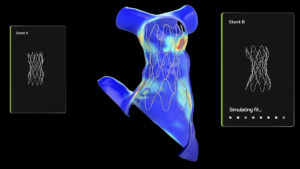
Children’s Hospital of Philadelphia is using open source AI tools to model children’s hearts in seconds — with the goal of enabling safer, more precise care for kids with congenital heart disease.
by

From Enablement to Execution, Egypt’s AI Ecosystem Reaches Production Scale

AI factories are also coming online across South Africa, Morocco and Nigeria, enabling Africa’s developers and enterprises to reach production-scale compute onshore.
by

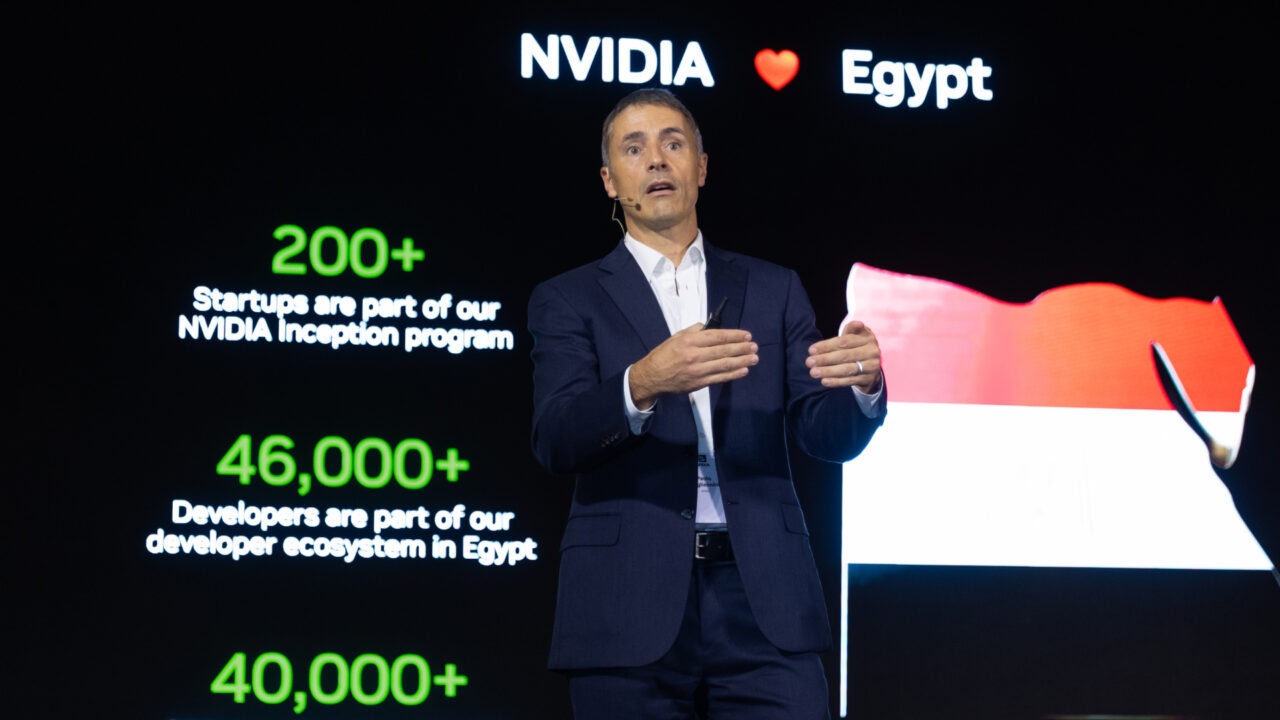
Today, Egypt’s AI builders gathered in the Grand Egyptian Museum for a reception that highlighted the nation’s rapidly growing AI ecosystem — spanning AI natives, developers, researchers, startups and enterprises — building applications across industries.

The event included a keynote from Paolo Guglielmini, vice president of EMEA at NVIDIA. Ahmed Mostafa, regional AI adoption lead for the Middle East and Africa at NVIDIA, delivered a session on “Why Accelerating Every Layer Matters,” exploring NVIDIA’s full-stack approach to AI development and deployment.

The event also featured a panel moderated by Basil Fateen, head of startups for the Middle East and Africa at NVIDIA, with participation from startups across smart spaces, healthcare, cybersecurity and robotics.

In Egypt, the NVIDIA Deep Learning Institute learner base grew more than tenfold in a single year. In June, the National Telecommunications Regulatory Authority of Egypt licensed Hassan Allam Data Centers to build and operate data centers in the country. Under that license, Hassan Allam Utilities and investment firm A15 agreed to develop a new data center, an estimated $400 million investment.

In addition, NVIDIA and A15 in July hosted an event connecting Egypt’s leading founders with NVIDIA’s global ecosystem. This has been complemented by recent startup and investor events in Egypt, including engagements with A15 and Plug and Play at the Creativa Innovation Hub at Sultan Hussein Kamel Palace, an affiliate of the Ministry of Communications and Information Technology.

Spanning a range of industries, members of the NVIDIA Inception program in Egypt include:

  • Aidera: A unified enterprise intelligence system that connects data, systems, workflows and operational touch points turning enterprise-wide signals into informed decisions, intelligent automation, coordinated execution and measurable impact.
  • Intella: Developing Arabic speech intelligence for applications across financial services, telecommunications and more.
  • Marses Robotics: Developing autonomous robotics and industrial automation technologies.
  • Proteinea: Combining AI protein design with lab experiments to develop differentiated medicines.
  • Stakpak: Developing an open source autonomous developer-operations AI agent.
  • Paymob and Thndr: Building better financial services through technology and AI. 

The NVIDIA VC Alliance has also expanded its presence in Egypt, with A15 and M Empire joining the program, connecting more local investors with NVIDIA’s global startup ecosystem. This momentum has been complemented by startup and investor events, including collaborations with RiseUp and Plug and Play, as well as Flat6Labs, a regional entrepreneurship platform supporting startups and innovation across emerging markets, and Algebra Ventures, a Cairo-based venture capital firm backing technology startups.

AI Growth Across Africa

The Egypt ecosystem event showed just a piece of Africa’s larger, growing AI ecosystem. 

For most of the past decade, conversations about Africa’s AI ecosystem revolved around “potential.” They centered on what the technology might do for the continent, rather than what the continent could build with it.

Africa is home to roughly 18% of the world’s population but less than 1% of the world’s data center capacity. This means African developers have often relied on cloud-based compute hosted outside the continent for large-scale AI training.

This is rapidly changing. Within a year, four AI factories have been announced or brought online across Africa, with another 656 megawatts of new capacity in the pipeline. These AI factories will provide African developers and enterprises with the accelerated computing infrastructure needed to train, fine-tune and deploy AI models closer to where data is created.

Cassava Technologies, Africa’s first NVIDIA Cloud Partner, is expanding access to NVIDIA accelerated computing through its AI factory in South Africa and planned deployments across Egypt, Kenya, Nigeria and Morocco — an investment that could reach $720 million. In Egypt, Cassava and Vodafone Egypt recently announced an AI factory initiative to provide businesses and government organizations with locally hosted AI infrastructure through GPU-as-a-service, supporting the development and deployment of AI applications while keeping data in-country. 

Building on Cassava’s first AI factory in South Africa, the rollout aims to expand access to local accelerated computing, helping developers, enterprises and researchers train, customize and deploy AI models closer to where their data is created.

Similarly, Stratos Lab, a South African AI neocloud provider, is partnering with ECOBLOX and Digital Parks Africa to launch an AI cloud powered by more than 50 NVIDIA HGX B300 systems — delivering over 7 exaflops of performance. The deployment gives African enterprises and developers access to high-performance GPU compute locally, enabling model training, inference and agentic AI workloads with lower latency and at reduced costs.

And at GITEX Africa in Marrakech in April, Nexus Core Systems announced a collaboration with Morocco’s Ministry of Digital Transition, its Ministry of Investment and the investment agency AMDIE to build the Nexus AI factory outside Casablanca: a $1.2 billion initial investment with 500 megawatts planned, NVIDIA Blackwell accelerated computing and renewable power from TAQA Morocco.

The Demand Was Already There

Infrastructure of this kind is not based on mere potential — it’s based on confidence that local developers and enterprises are ready to put the infrastructure to productive use.

In 2024, NVIDIA set a target of training 100,000 developers across Africa through the NVIDIA Deep Learning Institute within three years. To date, NVIDIA’s trained over 85,000 developers in Africa, and the continent is among NVIDIA’s fastest-growing developer regions — Nigeria is now the institute’s second-largest market globally.

InstaDeep joined NVIDIA Inception in 2017 as a small team in Tunis using its first NVIDIA DGX system. Since then, it’s developed drug discovery, protein design and logistics optimization applications, and was acquired by BioNTech for about $680 million.

Africa accounts for roughly a third of the world’s languages, often invisible to frontier models. To help advance African language models, language model lab Lelapa AI built InkubaLM and the Vulavula speech service for South African languages including isiZulu and Sesotho.

MeetKai, for example, an NVIDIA Inception member, is expanding its work in Egypt with Smart Africa, building its AI stack on NVIDIA technology as part of its plans for the market. The company is among a growing group of AI innovators using NVIDIA technology to build and scale across Africa.

And there’s still much room to grow. McKinsey puts African data center demand at roughly 0.4 gigawatts today, and estimates it will rise to between 1.5 and 2.2 gigawatts by 2030, which requires between $10 to $20 billion in construction.

Learn more about the NVIDIA Developer Program, NVIDIA Inception and NVIDIA Deep Learning Institute.  

  • Categories:
  • AI

5 Companies Using NVIDIA AI for Clean Energy

From fast-tracking fusion to repurposing recycled EV batteries for energy storage, these clean energy innovators are harnessing AI to help build a lower carbon grid.
by

Clean energy isn’t hard to come by, but the pace of large-scale adoption has historically been slow due to bottlenecks — including out-of-date infrastructure, elongated research and development timelines, and upfront cost barriers. 

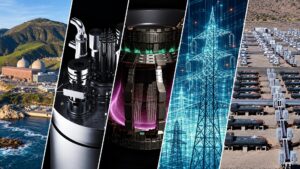
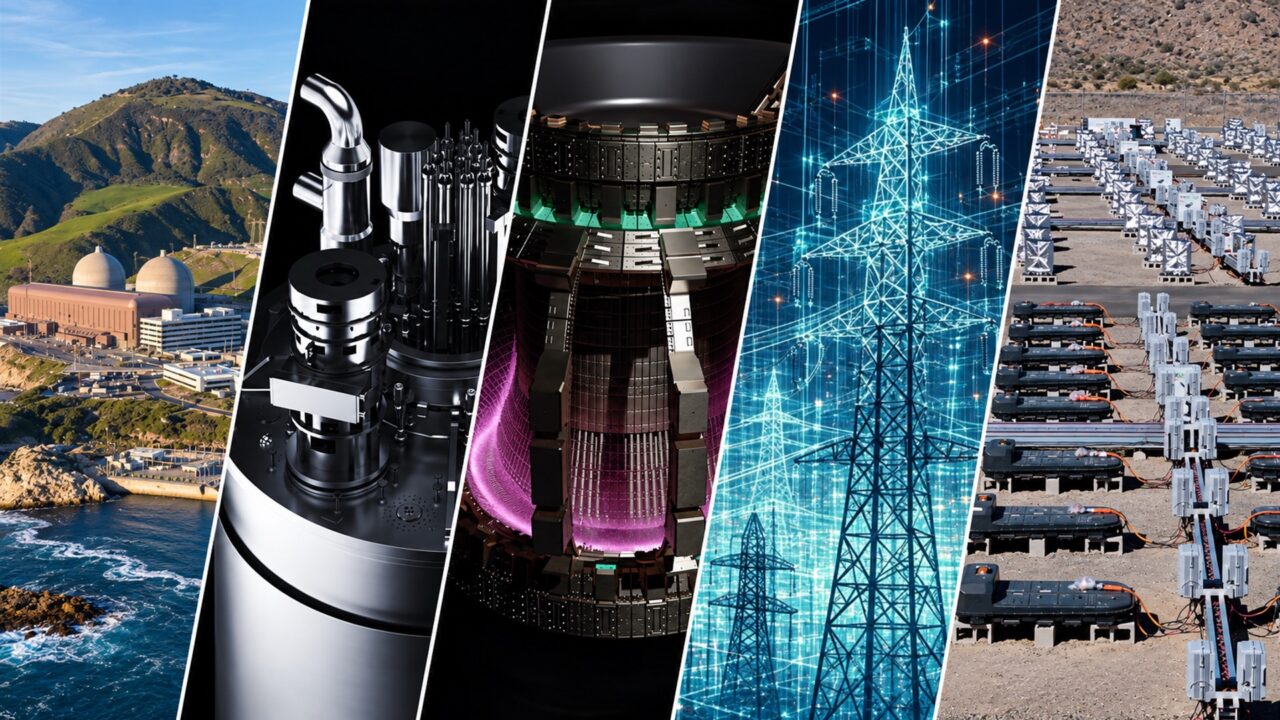
At New York Climate Week, NVIDIA is highlighting five companies pioneering clean energy projects with AI baked into their foundation, accelerating research-to-inception pipelines and ultimately helping build a low carbon grid. 

ThinkLabs AI Drives Toward An Autonomous Grid With Digital Twins

ThinkLabs AI is curating digital twins and agents — using the NVIDIA CUDA platform — to speed up interconnection timelines, seamlessly integrate clean energy sources and optimize the grid to handle ongoing variability. 

“The grid is getting less and less certain, so the ability to see things not statically, but as a probability — hence all the utility actions — should be risk informed,” said Josh Wong, founder and CEO of ThinkLabs, a member of the NVIDIA Inception program for cutting-edge startups. “That hits not just reliability objectives, but also affordability, so we know how to maximize and optimize investments.” 

Southern California Edison used ThinkLabs software to reduce the time required to evaluate each grid interconnection application from 30-45 days to just two minutes.

The speedup came from a ThinkLabs agent that runs grid simulations and identifies solutions to interconnection barriers. 

Atomic Canyon’s AI Platform Helps Redefine Operations in the Nuclear Sector 

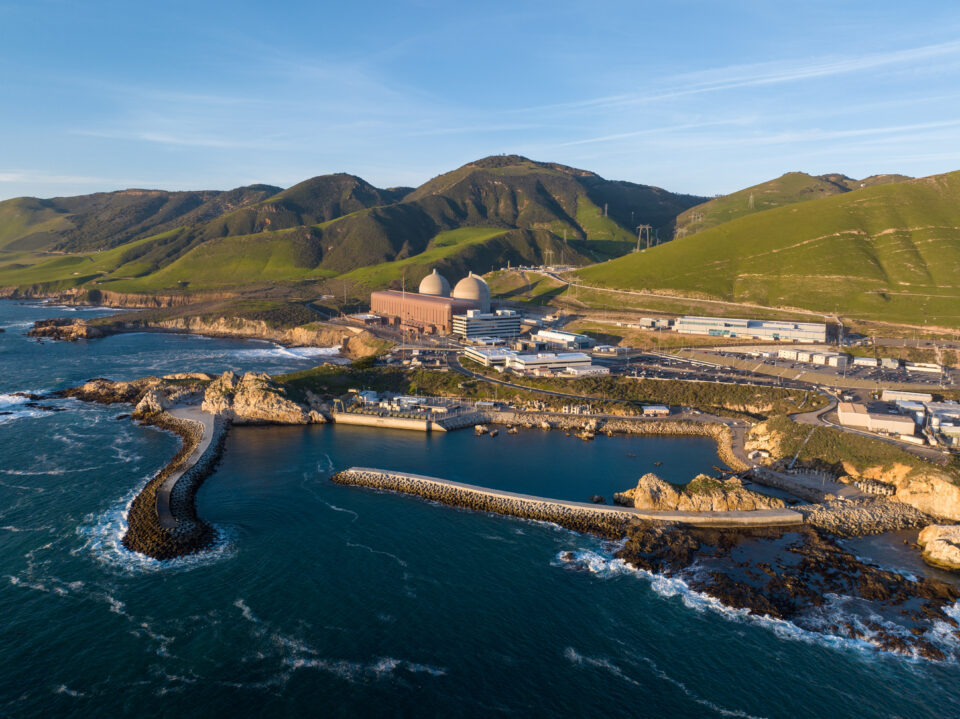
PG&E’s Diablo Canyon, optimized by Atomic Canyon

Atomic Canyon, another NVIDIA Inception member, is bringing AI-powered knowledge management and assistance to reactor operators with its NVIDIA accelerated compute-powered Neutron and NIVA platforms to streamline nuclear power plant operations.  

Neutron acts as an AI workbench built for nuclear professionals. It turns all of their  procedures, regulatory guidance, operating experience, licensing records, design  calculations, and structured and unstructured data into a knowledge layer.  

NIVA, short for Nuclear Industry Virtual Assistant, was built with the Institute of Nuclear  Power Operations, Electric Power Research Institute and the Nuclear Energy Institute as a unified platform bringing AI-powered capabilities to the national nuclear fleet.  

“Nuclear is a known technology we’ve been doing for 50 to 60 years, but the way we’ve  been doing things simply will not scale to meet the moment that’s in front of us; it needs to be reinvigorated by artificial intelligence,” said Trey Lauderdale, founder and CEO of Atomic Canyon.

Redwood Materials’ Repurposed EV Batteries Power AI Without Waiting on the Grid

Electricity demand from AI is accelerating faster than new grid infrastructure can be built, leading to a bottleneck in the industry’s growth. 

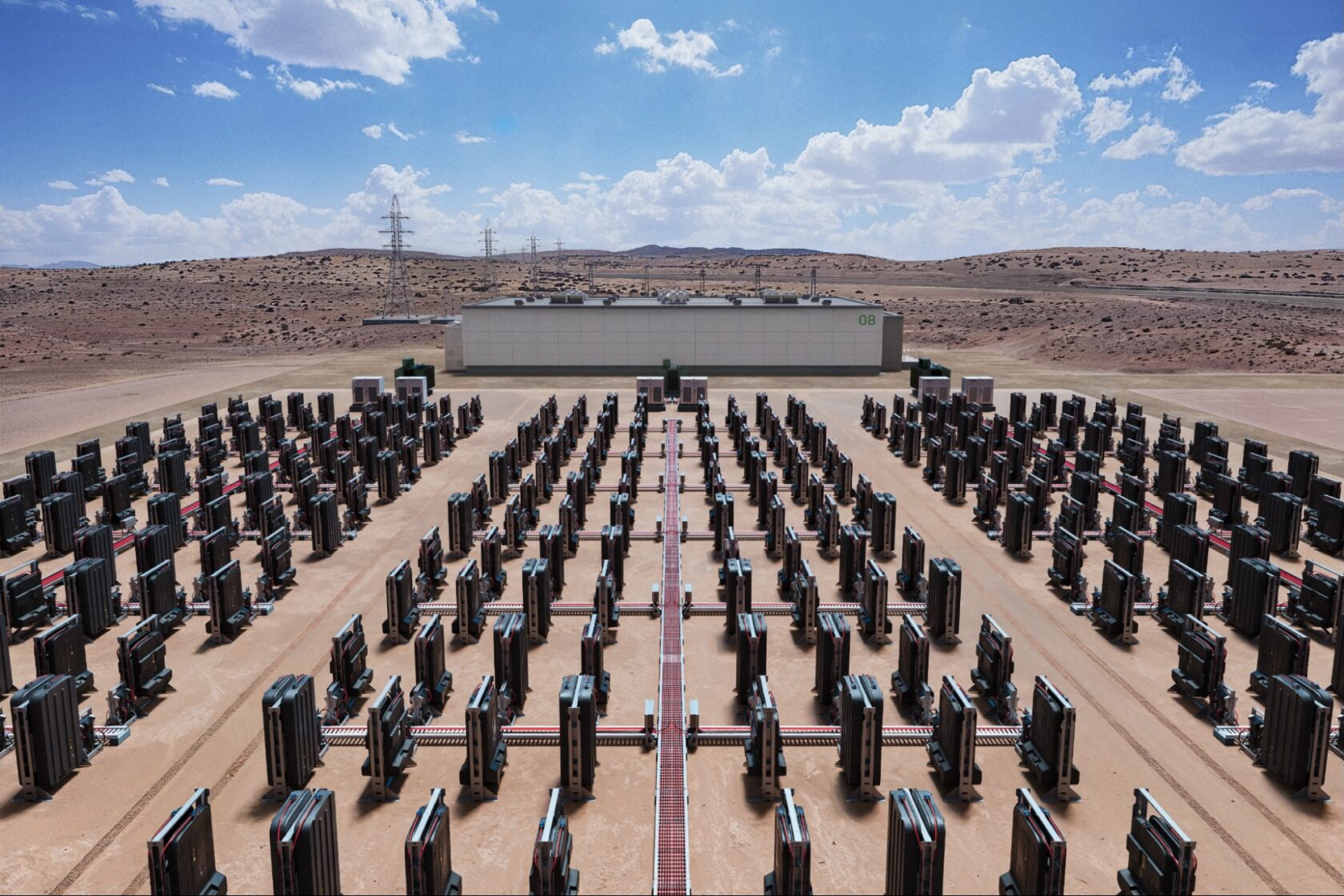
Redwood Materials is closing that gap by harnessing its expertise in battery engineering, power electronics and systems design to build large-scale, off-grid power solutions for AI factories — enabling new capacity to come online in months rather than years.

These 100%-recycled electric vehicle batteries are firming up power suppliers by acting as onsite energy storage to create a secure, flexible energy system for AI factories and the national grid at large. 

The batteries are integrated into existing clean energy infrastructure with an AI intelligence layer — running on the NVIDIA Blackwell platform — that makes the system hypervigilant and adaptable to the real-time energy needs of the data center it’s supplying power to. 

This approach also lowers the cost of power. Redwood’s simplified architecture — built on in-house power electronics — requires far fewer transformers and inverters, eliminates the need for an uninterruptible power supply, and can deploy repurposed or new electric vehicle batteries.  

“Using these batteries with our power electronics and systems control software, you can make a highly responsive power source that can deal with the novel fluctuations of AI training,” said Colin Campbell, chief technology officer of Redwood Materials, another NVIDIA Inception member.

TerraPower’s Natrium Reactor Sets New Standard for Safe, Sustainable Nuclear Power

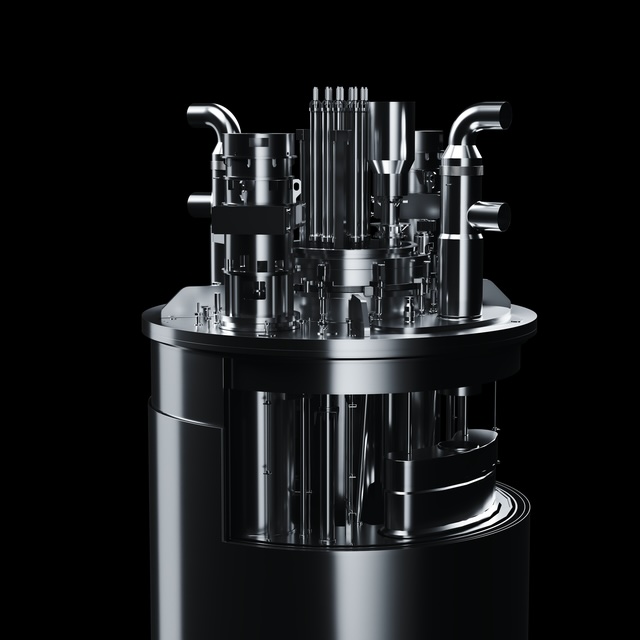
TerraPower Natrium Reactor

Nuclear energy currently powers 20% of the nation’s electricity. TerraPower is working to make sure that more power is safe, sustainable and quickly harnessable through its emission-free Natrium reactor.

“Twenty years ago, our founders, including Bill Gates, realized that emissions avoidance should also be a part of this energy solution,” said Chris Levesque, president and CEO of TerraPower. 

TerraPower is connecting an NVIDIA Omniverse-powered platform to create digital twin software that will support its efforts to accelerate the siting and delivery of future plants from years to months. 

Natrium reactors have a unique design that separates them from traditional nuclear power; they’re cooled with liquid metal sodium instead of water — allowing them to operate at a lower pressure, equivalent to atmospheric pressure. This reactor doesn’t require offsite water or electricity to keep it stable — in the event of an emergency, it can keep itself cool without any intervention. 

Commonwealth Fusion Systems Creates Fusion Energy Ready for the Grid

Fusion energy is poised to join the clean energy stack in the 2030’s, thanks to Commonwealth Fusion Systems (CFS).  

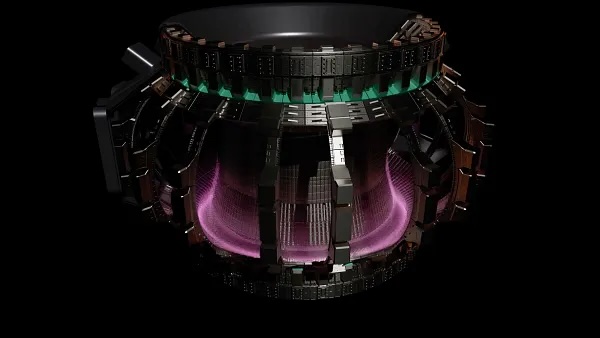
With the help of NVIDIA Omniverse libraries and OpenUSD, CFS is compressing years of experimentation into weeks for its SPARC tokamak demonstration fusion machine, which can successfully replicate the sun’s power source on Earth.   

Fusion energy is a carbon-free, safe source of power.   

“With fusion, there’s no running out of control,” said Brandon Sorbom, cofounder and chief science officer of CFS. “It is passively safe, since the default mechanism is shutting itself down.”   

Using high-temperature superconductors, CFS enables stronger magnetic fields than previous fusion systems.   

These magnets allow SPARC’s design to be 40x smaller and, by extension, cheaper to build and operate. The company’s ARC power plant — the first of which will be built in Chesterfield County, Virginia, and will connect to the grid in the 2030s — is more than 10x smaller.   

“We will be able to build a first-of-its-kind plant that will be cost-competitive with both renewable and nonrenewable sources of energy,” said Sorbom. 

Explore more NVIDIA-powered sustainability use cases.

  • Categories:
  • AI