They say there’s no such thing as a dumb question. As someone who asks dumb questions for a living, I can tell you that’s a really stupid thing to say.
But the best questions are often the ones where someone smart explains something from the ground up to a total novice (read: me). The beauty of NVIDIA: there are a lot of smart people upon whom I can inflict my very dumbest questions.
Turns out I’m not alone. Month in and month out, tens of thousands of readers ask search engines these very questions. And they get connected to the answers through our blog.
What are they? Smart question. Here are five of our most popular in 2019.
This post is over a decade old, but the answer — thanks to the emergence of deep-learning driven AI, supercomputing, and self-driving cars — is more relevant than ever. That’s why we’ve updated our original post earlier this year, and why more readers are seeing this post than ever.
Visualize the fields of AI, machine learning and deep learning as concentric circles. AI — the idea that came first — is the largest circle. Then comes machine learning, which blossomed later. And finally deep learning — which is driving today’s AI explosion — fitting inside both. Click on the link, above, for more.
This is one of the key questions in AI right now, which is why this post has become one of our most popular. Click on the link for a plain English answer to these questions, and a walk through the kinds of datasets and problems that lend themselves to each kind of learning.
This is another question that’s drawn more readers over time. Training, in short, is the process of running data through a neural network to teach it a task. That’s taught computers to do things that, just a decade ago, most believed could only be done by humans. Inference, by contrast, is the process of putting that trained network to work, in everything from hyperscale data centers to autonomous machines.
Used to be if you wanted to see ray tracing, you went to the movies. If you wanted to see rasterization, you fired up a video game. Ray tracing models the way light moves around the real world beautifully but it’s computationally intensive. Rasterization, by contrast, can be done in a hurry. NVIDIA’s latest Turing architecture GPUs blur these lines, with hardware acceleration for real-time ray tracing, making truly cinematic games possible.
Have a question you want answered? Send us your idea.
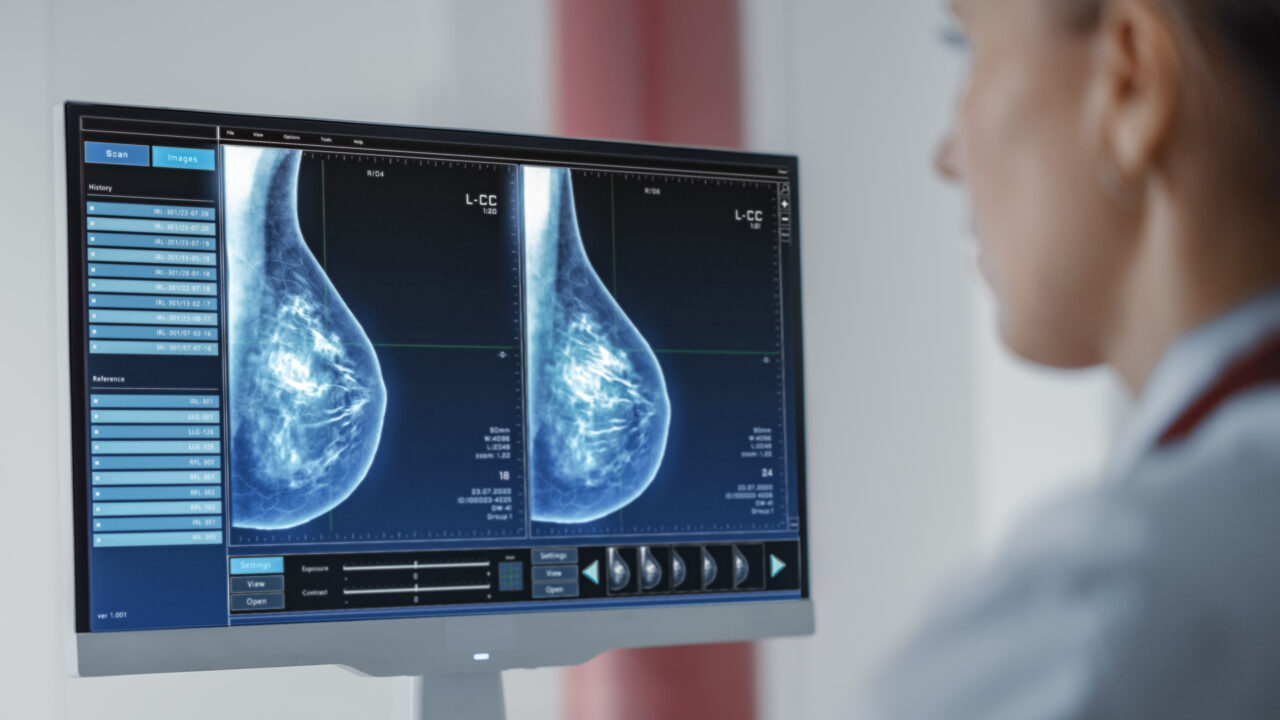
Breast cancer is the most commonly diagnosed cancer among American women — yet the gaps in care are wide. A majority of women over age 40 skip the recommended annual screening. Radiologists are reading more mammograms with fewer colleagues. And when a diagnosis arrives, the tests that inform treatment can take weeks to return results.
Companies in the NVIDIA Inception program for startups are building AI applications to support clinicians at each of these friction points, including imaging, risk assessment and treatment planning.
About 40 million mammograms are performed in the U.S. each year, but a projected shortfall of tens of thousands of radiologists over the next decade is straining the system’s capacity to read them.
At the other end of the care timeline, treatment decisions often hinge on genomic assays sent off to outside labs — assays that take weeks to process, at a moment when speed and certainty matter most.
The companies below are addressing both ends of that gap, and everything in between, accelerated by NVIDIA AI infrastructure.
Automated Imaging Delivers AI-Powered Insights
For women struggling to find time or a nearby location for breast cancer screening, access is a practical barrier that translates into missed diagnoses. NVIDIA Inception startup iSono Health was built around simplifying this imaging workflow.
The company’s FDA-cleared ATUSA platform — a wearable, automated 3D quantitative ultrasound system — captures a standardized breast volume in approximately two minutes per breast, compared with up to 45 minutes for a conventional handheld ultrasound.
The system’s AI, trained on thousands of full-breast scans comprising over 1.5 million ultrasound frames, automates image acquisition. It uses NVIDIA GPU acceleration and open source medical imaging technology to deliver a 3D scan that the company says is 28% more sensitive than a handheld 2D ultrasound.
Handheld ultrasound depends on whoever holds the probe, so a woman’s scans typically can’t be compared from one year to the next. ATUSA captures the whole breast the same way every time, creating a repeatable view of breast tissue that could help clinicians analyze how a patient’s tissue changes across successive scans, while also reducing operator errors and variability.
ATUSA is commercially available through partner clinics across California, Texas, Georgia, Tennessee and Washington D.C., with new sites coming online regularly.
“Getting the scan closer to the patient is the first breakthrough,” said Neda Razavi, CEO of iSono Health. “Our vision is to make that scan increasingly informative: helping clinicians see what is there, understand what has changed and make more informed decisions.”
iSono Health has developed AI capabilities for lesion detection, 3D segmentation and lesion classification. It next plans to extend its AI pipeline into multimodal diagnostic intelligence spanning 3D ultrasound, mammography, MRI and clinical information.
The company has a multicenter clinical study with 3,200 patients underway to further validate the platform’s performance, with lead research sites at UC Davis and Vanderbilt University Medical Center.
Finding Cancers, Cutting False Alarms
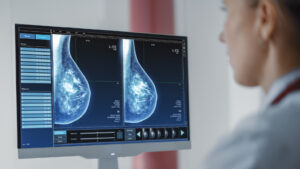
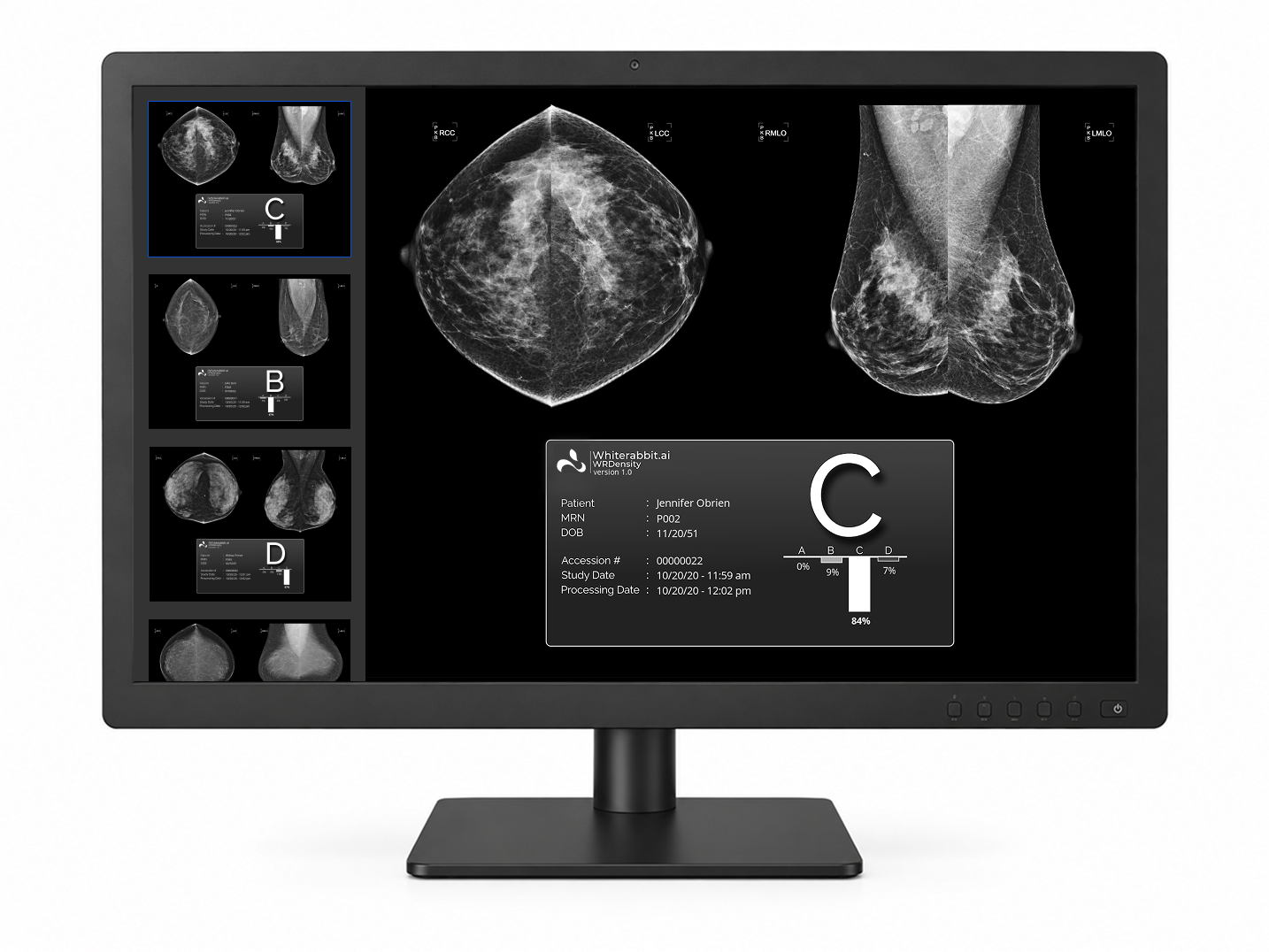
Another NVIDIA Inception company, Whiterabbit.ai, develops AI technology for breast cancer screening. Its FDA-cleared WRDensity software automatically assesses breast density from mammograms and has been used in the care of hundreds of thousands of patients.
The company has also developed WRRisk, a clinical decision support software for estimating patients’ long-term risk of developing breast cancer — and is researching a new generation of AI for mammography that could help radiologists detect more cancers while automating the screening of mammograms that are negative for breast cancer.
The goal is to reduce the burden on a strained radiologist workforce, accelerate results and reduce avoidable callbacks for patients, and lower downstream healthcare costs.
Whiterabbit.ai’s FDA-cleared WRDensity software automatically assesses breast density from mammograms.
“Every day, breast radiologists face a needle-in-a-haystack problem, trying to find roughly one cancer in every 200 mammograms,” said Jason Su, cofounder and chief technology officer of Whiterabbit.ai. “We hope AI can be a powerful sidekick to radiologists, helping to clear away the hay so they can focus their expertise where it matters most.”
Whiterabbit trains its AI models on a cluster of NVIDIA GPUs housed at Washington University in St. Louis, supplemented by additional GPU capacity in the cloud. Inference runs on NVIDIA GPUs deployed directly in the clinic.
Predicting Which Treatments Will Work
Once a patient is diagnosed with breast cancer, the next question is what to do about it — and the answer depends on predicting how the cancer will respond to treatment.
Today, these predictions are limited in scope and accuracy, and often require a separate tissue biopsy with a two- to four-week wait. Ataraxis AI is building clinical intelligence that predicts patient outcomes and response to different therapies using digital data, including pathology slides that are already part of the standard patient workup.
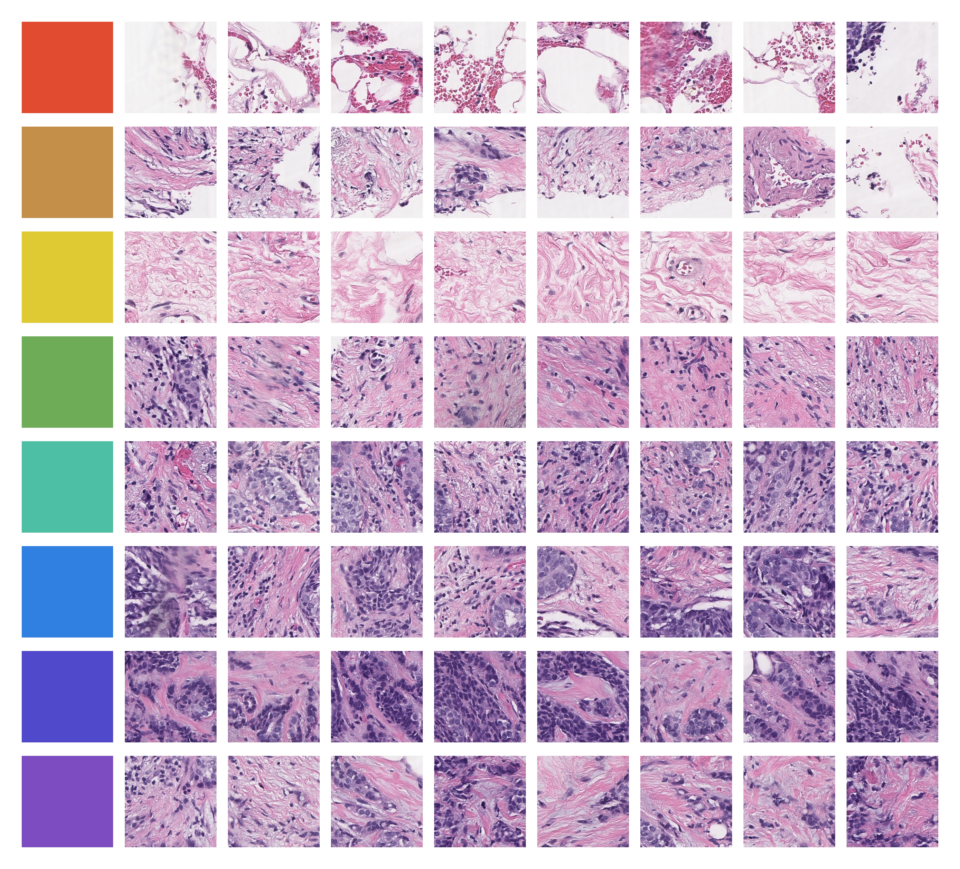
Ataraxis’ AI models interpret patterns in pathology slides, visualized here as color-coded clusters. The models learn to associate variations among these patterns with differences in recurrence risk and chemosensitivity.
“The tools oncologists rely on today to guide therapy decisions were largely trained once, fifteen years ago, and never updated. Our models get stronger every time we acquire more clinical trial data,” said Joseph Cappadona, member of technical staff at Ataraxis AI. “But as we scale our models, the bigger shift is being able to answer more questions to help oncologists personalize therapy across all cancers.”
Ataraxis’s AI models analyze digital pathology slides and standard clinical variables to predict treatment response and recurrence risk. One model predicts whether presurgical chemotherapy is likely to shrink a patient’s tumor to the point of response before the operating room. After surgery, another model estimates a patient’s five-year recurrence risk and the likely benefit of chemotherapy as a next step.
Both models have been validated across more than 10 institutions and multiple clinical trials, and are in active clinical use. They run on NVIDIA GPUs on premises, in an offsite data center and in the cloud — using PyTorch accelerated by NVIDIA CUDA throughout.
Providing Tumor Insights With 3D Visualization
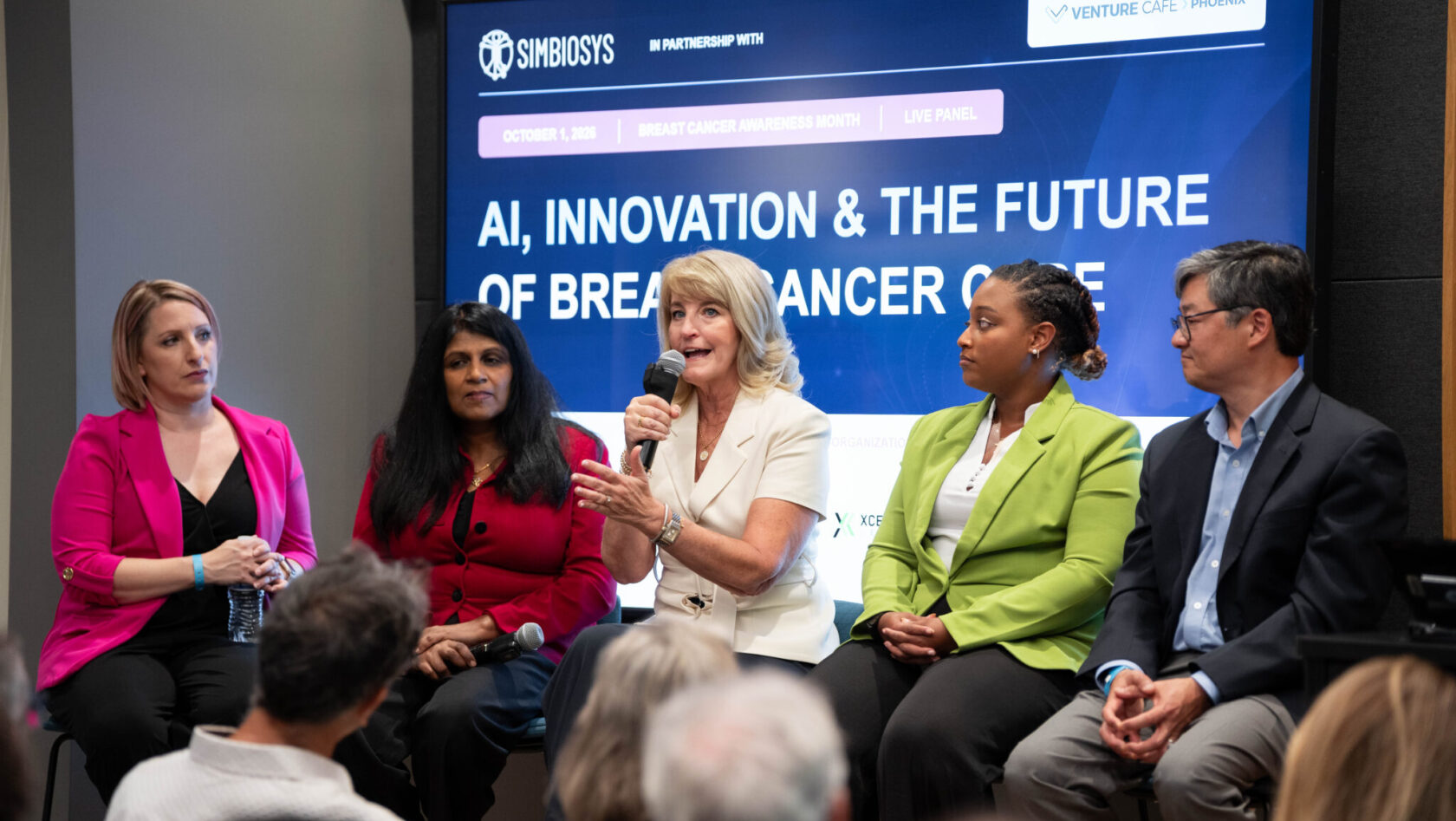
Another NVIDIA Inception company, SimBioSys, joined NVIDIA on a recent panel marking Breast Cancer Awareness Month.
The company builds AI-powered precision medicine technology that creates accurate 3D models of breast tumors, veins and other soft tissue, delivering important insights to help guide surgeries and influence treatment plans. It has also built a tool to estimate the risk of breast cancer recurrence based on 3D volumetric data from a patient’s breast MRI, tumor pathology and clinical data.
“We’re building a platform that now allows us to take multimodal data — imaging exams, pathology results, genomic testing when applicable and other biological inputs — and, using AI, bring that all together,” said Stacey Stevens, CEO of SimBioSys, at the event. “When we do that, it generates new insights beyond what we had from any individual piece.”
Stacey Stevens, CEO of SimBioSys, and Chelsea Sumner, healthcare AI startups lead for North and Latin America at NVIDIA, spoke on an October 1 panel in Phoenix, Arizona, on AI’s role in advancing breast cancer care.
SimBioSys uses NVIDIA MONAIfor training and validation data, andNVIDIA CUDA-Xlibraries includingcuBLASand MONAI Deploy for its imaging technology, which runs on NVIDIA GPUs in the cloud.
“NVIDIA technology gives us the computing power to take hundreds or thousands of images, apply our AI and analyze them quickly,” Stevens said. “That speed matters because patients and physicians need answers quickly. They can’t afford to wait days or weeks.”
How NVIDIA GPUs Help Accelerate OpenAI’s GPT-6 Astra Ultrafast
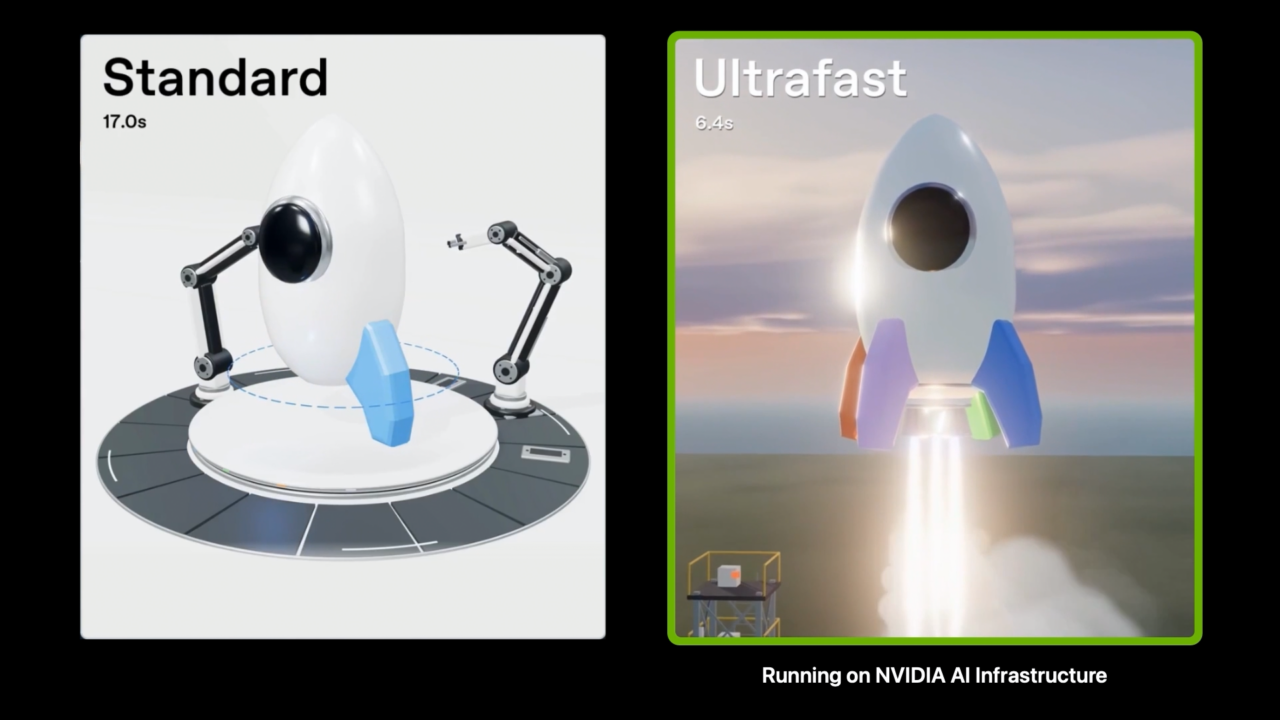
Running on NVIDIA Blackwell GPUs and accelerated by continuous inference optimizations through OpenAI’s models, GPT-6 Astra Ultrafast delivers faster model responses across code generation, tool use and interactive applications.
GPT-6 Astra Ultrafast, running on NVIDIA Blackwell GPUs, is available now in the OpenAI API and to eligible ChatGPT Work and Codex users.
Accelerated by inference optimizations through OpenAI’s models that tap into the capabilities of the NVIDIA Blackwell architecture, Ultrafast offers up to 8x faster token generation than the Astra Standard mode. For developers, faster generation can shorten coding agents’ edit-test-debug cycles, reduce the time spent generating responses between tool calls and make interactive applications feel more responsive.
A faster response matters most when it’s repeated across a workflow: an agent writes code, uses a tool, checks the result and decides what to do next. Ultrafast brings Astra’s capabilities into these time-sensitive loops. NVIDIA AI infrastructure helps OpenAI serve more useful model outputs when developers need it.
“NVIDIA’s deep investment in tooling and documentation has enabled us to make our models exceptionally good at programming Blackwell and Rubin GPUs,” said Philippe Tillet, inference lead at OpenAI. “Astra can turn that knowledge into high-performance kernels that make NVIDIA hardware compelling across the full frontier of latency, throughput and cost. With Astra Ultrafast, that means faster model responses as agents write code, use tools and work through complex tasks.”
Continually Improving Performance
Performance gains don’t stop when a model is deployed. OpenAI is using its own models to help refine the inference software running on NVIDIA GPUs, taking advantage of the platform’s programmability to test and implement improvements. That ongoing work can make model responses faster and deployed infrastructure more productive over time.
“Our work with NVIDIA is helping us make AI faster and more useful,” said Uday Ruddarraju, chief technology officer of compute at OpenAI. “We used our internal models to optimize inference on NVIDIA GPUs, and NVIDIA’s programmability helped us deliver the acceleration behind Astra Ultrafast.”
A programmable NVIDIA platform allows developers and researchers to reuse infrastructure across training, inference and reinforcement learning as models evolve. That flexibility helps teams repurpose compute resources as demand changes, improving utilization and avoiding overprovision for each workload.
Developers can use GPT-6 Astra Ultrafast through the API today. See the Ultrafast guide for access, pricing and implementation details.
Bringing together the world’s brightest minds and the latest accelerated computing technology leads to powerful breakthroughs that help tackle some of the biggest research problems.
To foster such innovation, the NVIDIA Graduate Fellowship Program provides grants, mentors and technical support to doctoral students doing outstanding research relevant to NVIDIA technologies. The program, in its 26th year, is now accepting applications worldwide.
It focuses on supporting students working in AI, machine learning, autonomous vehicles, computer graphics, robotics, healthcare, high-performance computing and related fields. Awards are up to $60,000 per student.
Since its start in 2002, the Graduate Fellowship Program has awarded over 220 grants worth around $8 million.
Students must have completed at least their first year of Ph.D.-level studies at the time of application.
The application deadline for the 2027-2028 academic year is October 30, 2026. An in-person internship at an NVIDIA research office preceding the fellowship year is mandatory; eligible candidates must be available for the internship in summer 2027.
For more on eligibility and how to apply, visit the program website.
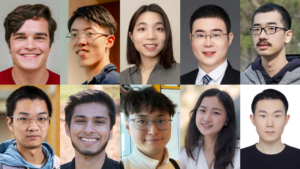
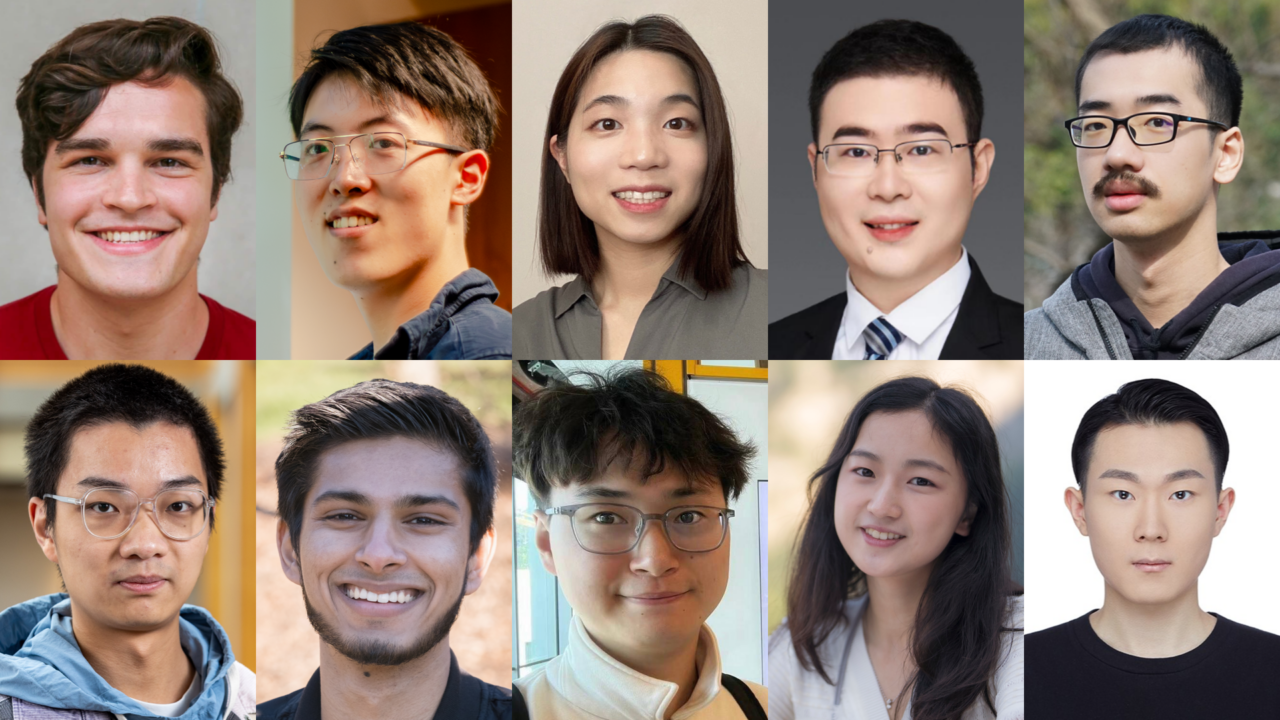
Featured image shows last year’s NVIDIA Graduate Fellowship recipients.