country_code

How AI, Machine Learning Are Advancing Academic Research

Academics are taking up GPUs, data science and AI to advance research.
by Cheryl Martin

Insulin. The polio vaccine. The periodic table of elements. Countless discoveries across every field of research have their origins in academia.

Universities and research institutes around the world are key drivers of discovery and innovation, with professors and researchers looking for answers to the biggest questions facing each academic discipline.

With powerful GPU computing resources, academics can use AI, machine learning and data science to more swiftly advance knowledge in their respective fields.

How AI Is Used in Astrophysics and Astronomy

Innumerable questions remain about the origins of the universe, and about the workings of cosmic bodies such as black holes. A team at the University of Toronto is harnessing deep learning to parse satellite images of lunar craters, helping scientists evaluate theories of solar system history.

Running on NVIDIA GPUs on SciNet HPC Consortium’s P8 supercomputer, the neural network was able to spot 6,000 new craters in just a few hours — nearly double the number that scientists have manually identified over decades of research.

At the National Center for Supercomputing Applications at the University of Illinois, Urbana-Champaign, researchers are using deep learning to detect and analyze gravitational waves, which are caused by massive stellar events like the collision of black holes.

And scientists at the University of California, Santa Cruz, and Princeton University have been using NVIDIA GPUs to gain a better understanding of galaxy formation.

How GPUs Are Used for Biology

Deep learning is also giving scientists powerful tools to understand organisms back on Earth. Researchers from the Smithsonian Institution in the U.S. and the Costa Rica Institute of Technology are using big data analytics and GPU-accelerated deep learning for plant identification, classifying organisms recorded in museum specimens with an image classification model.

University of Maryland researchers are using NVIDIA GPUs to power phylogenetic inference, the study of organisms’ evolutionary history. Using a software tool called BEAGLE, the team examines underlying connections between different viruses.

And at Australia’s Monash University, researchers are developing superdrugs for antibiotic-resistant superbugs using a process called cryo-electron microscopy, which allows researchers to analyze molecules at extremely high resolution. Using a supercomputer powered by more than 150 NVIDIA GPUs, the team is able to resolve its image models in days instead of months.

How AI Is Used in Earth and Climate Science

Geologists and climate scientists work with streams of data to analyze natural phenomena and predict how the environment will change over time.

Hundreds of natural disasters occur each year, striking different corners of the world. While some, like hurricanes, can be spotted days before hitting land, earthquakes, tornados and others take humans by surprise.

At Caltech, researchers are using deep learning to analyze seismograms from more than 250,000 earthquakes. This work could lead to the development of an earthquake early warning system that can warn government agencies, transportation officials and energy companies when an earthquake is on the way — giving them time to mitigate damage by shutting off trains and power lines.

In the aftermath of a natural disaster, deep learning can be used to analyze satellite imagery to gauge impact and help first responders direct their efforts to the areas that need it most. DFKI, Germany’s leading research center, is using the NVIDIA DGX-2 AI supercomputer to do just that.

Climate scientists, too, rely heavily on GPUs to crunch complex datasets and project global temperature decades into the future. A researcher at Columbia University is using deep learning to better represent clouds in climate models, enabling a finer-resolution model with improved predictions for precipitation extremes.

How AI Is Used in the Humanities

The usefulness of AI and GPU acceleration goes beyond the biological and physical sciences, extending into the fields of archaeology, history and literature as well.

In a legendary volcanic eruption more than two millennia ago, Mount Vesuvius buried Pompeii and nearby towns in volcanic ash. This eruption also hit a library filled with papyrus scrolls, welded together by the heat of the lava. A University of Kentucky computer science professor has developed a deep learning tool to automatically detect each layer of these scrolls and virtually unfurl them so the contents can be read by scholars, more than three centuries after their discovery.

For texts from a few centuries ago, humanities researchers often rely on scans or photographs of physical pages to read these works digitally. But these texts, printed in antiquated fonts, aren’t legible by computers. This means scholars can’t use a search engine to find a specific passage of text or analyze the usage of a particular word over time.

Instead of relying on the lengthy and expensive process of hiring individuals to convert manuscripts to typed text, researchers across Europe are using AI on early German printed texts and 12th century papal correspondence from the Vatican Secret Archives.

How AI Is Used in Medicine

AI and GPUs are used broadly throughout healthcare and medical research. At universities, too, these technologies are being used to develop new tools for medical imaging, drug discovery and beyond.

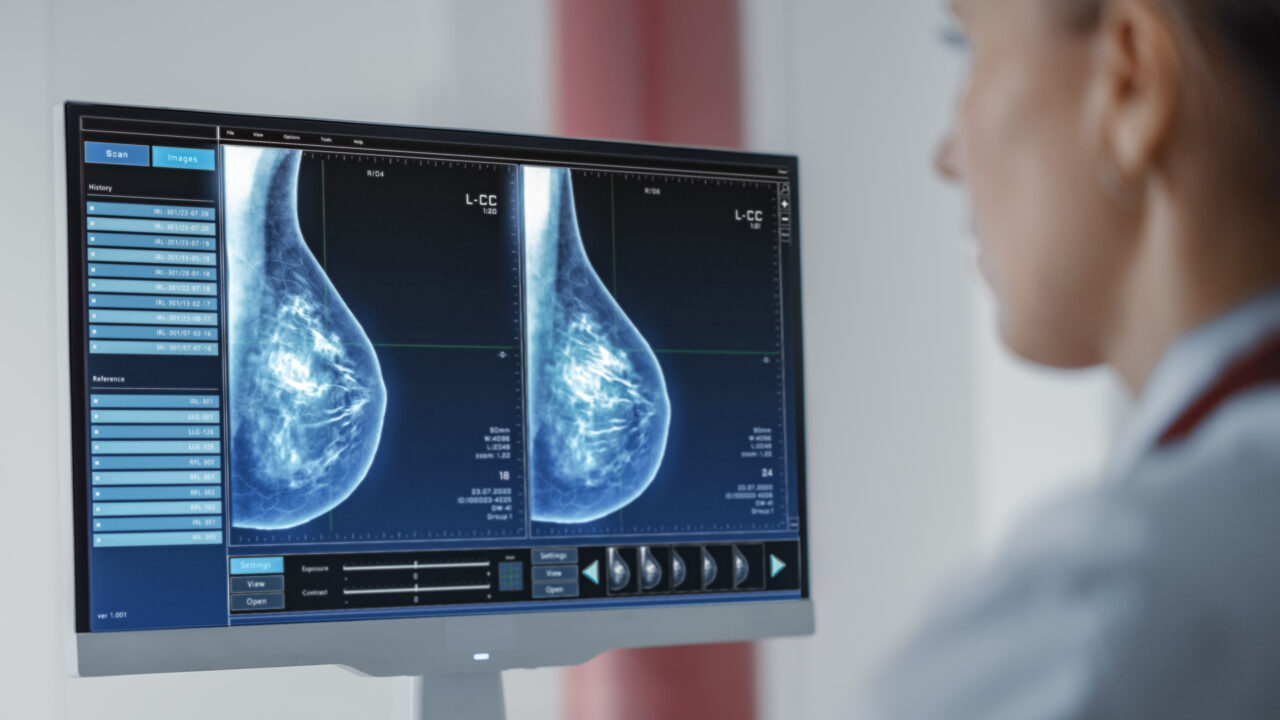
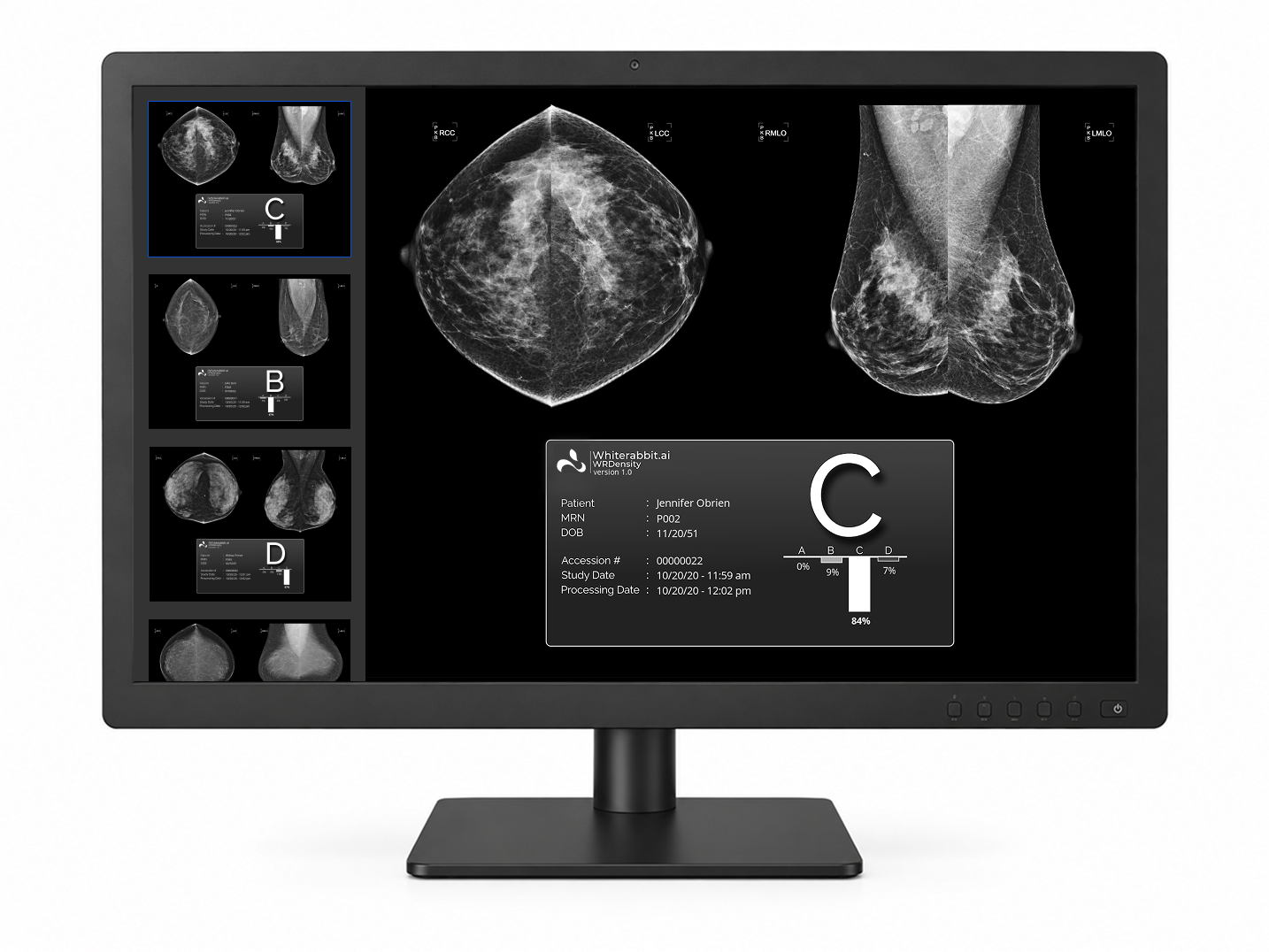
MIT researchers are using neural networks to assess breast density from mammograms, creating a tool to aid radiologists in their readings and improve the consistency of density assessments across mammographers.

In the field of drug discovery, deep learning and the computational power of GPUs can help scientists mine through billions of potential drug compounds to more quickly discover treatments for currently incurable diseases.

A professor at the University of Pittsburgh is using neural networks to improve the speed and accuracy of molecular docking, a technique to digitally model how well a drug molecule will bind with a target protein in the body.

How GPUs Are Used for Physics

Physics researchers simulate some of the trickiest, most complex molecular interactions to test theories of how the world works. These experiments require massive computational power — like the deep learning work done by Princeton University and Portugal’s Técnico Lisboa to study and predict the plasma behavior in a nuclear fusion reactor.

Being able to anticipate dangerous disruptive events during a fusion reaction even 30 milliseconds before they occur could help scientists control the reaction long enough to harness this potential source of carbon-free energy.

And at Switzerland’s University of Bern, a research team is analyzing the impact of gravity on antimatter, a rare kind of material that annihilates upon collision with ordinary particles, releasing energy. With GPUs, the scientists have been able to improve their ability to study the way particles interact during matter-antimatter collisions.

RAPIDS Powers Machine Learning, Data Analytics

Beyond deep learning, researchers rely heavily on machine learning and data analytics to drive their work. RAPIDS, powered by CUDA-X AI GPU acceleration, allows data scientists to take advantage of GPU acceleration with a robust platform of software libraries.

An open-source platform, RAPIDS integrates Python data science libraries with CUDA at its lowest level. It can shrink training times from days to hours, and hours to minutes — so data scientists can iterate their analytics workflow faster, ask more questions from their datasets and more quickly reach answers.

The ability to store data in GPU memory enables academics to try different algorithmic approaches with their datasets without the time-consuming process of moving data between GPU memory and host. RAPIDS also features interoperability between different software libraries comprising data analytics, machine learning, graph analytics and deep learning algorithms under a single data format.

Professors and researchers interested in teaching kits, the NVIDIA Deep Learning Institute and the University Ambassador Program can visit our academic programs website to learn more.

See the NVIDIA higher education and research page for additional AI resources for developers and educators.

Strength and Destiny Collide: ‘Samson: A Tyndalston Story’ Arrives in the Cloud

Jump into new adventures with four new games, including ‘Rayman 30th Anniversary Edition.’
by GeForce NOW Community
Samson on GeForce NOW

A timeless story of grit, faith and rebellion takes center stage as Samson: A Tyndalston Story joins the GeForce NOW library today. 

The highly anticipated release from Liquid Swords can now be streamed on nearly any device with GeForce NOW bringing cinematic intensity and mythic storytelling to the cloud.

Catch it as part of four new games in the cloud this week.

Stream the Power

Samson on GeForce NOW
A new legend rises.

Tyndalston is a city built on debt, muscle and memory. Samson: A Tyndalston Story from Liquid Swords follows Samson, a former enforcer pulled back to the streets that made him. Violence is currency as every fight is personal, every hit carries history and every escape feels earned in a city that never forgives.

Gameplay blends cinematic melee action with choice-driven narrative progression. Every confrontation — from shadowed alley brawls to large-scale set pieces — feels purposeful, reflecting Samson’s internal struggle between vengeance and redemption. Brawls hit fast and close. Cars aren’t set pieces — they’re weapons. Momentum and terrain decide if the player walks away or falls harder. Every job, debt and decision cuts toward freedom or collapse.

The game takes full advantage of ray-traced global illumination, reflections and shadows, creating a city that feels cinematic and alive. NVIDIA DLSS 3.5 boosts performance, while NVIDIA Reflex technology cuts down latency to keep controls razor-sharp during split-second fights. With GeForce NOW, the experience streams instantly at maximum fidelity, even without the latest hardware. No waiting around for downloads or worrying about system specs, just dive straight into the grit and glow of Tyndalston.

Celebrate New Games

No arms, no problem.

Celebrate three decades of Rayman with the definitive edition of the platforming classic in Rayman 30th Anniversary Edition, featuring five versions from iconic consoles, over 120 additional levels and an exclusive documentary that explores the creation of the limbless hero. Stream it on GeForce NOW without having to wait around for downloads or updates. 

In addition, members can look for the following:

  • Samson (New release on Steam, April 8, GeForce RTX 5080-ready)
  • Morbid Metal (New release on Steam, April 8, GeForce RTX 5080-ready)
  • DayZ (New release on Xbox, available on Game Pass, April 9) 
  • Rayman: 30th Anniversary Edition (Steam and Ubisoft)

GeForce RTX 5080-ready game this week, in addition to Samson and Morbid Metal:

  • Starfield (Steam and Xbox, available on Game Pass)

What are you planning to play this weekend? Let us know on X or in the comments below.

Press Start on April: GeForce NOW Brings 10 Games to the Cloud

This week also brings 12 new games to stream in the cloud, including the hit title ‘Arknights: Endfield.’
by GeForce NOW Community
April games list on GeForce NOW

No joke — GFN Thursday is skipping the tricks and heading straight into the games. April kicks off with ten new titles, bringing fresh adventures to GeForce NOW, including the launch of Capcom’s highly anticipated PRAGMATA.

A dozen new games are available to stream this week, including Arknights: Endfield, which expands the acclaimed series into a full 3D real‑time strategy adventure. On GeForce NOW, every battle flows with precision and every mission looks sharper than ever.

So gear up, grab a controller or gaming device of choice, and get ready to stream — another month of great gaming is now underway.

Command the Frontier

Arknights Endfield on GeForce NOW
Reclaim the frontier using cloud technology.

Arknights: Endfield from Hypergryph expands the acclaimed Arknights universe into a full, 3D, real‑time strategy role-playing game. Blending tactical planning with sleek sci‑fi aesthetics, the title invites players into a world featuring terraformed settlements, advanced technology and looming threats beneath the planet’s surface.

Set on the perilous planet Talos‑II, Endfield follows a group of pioneers uncovering lost secrets and battling hostile factions. The game seamlessly merges base‑building, exploration and combat — with squads of operators coordinating in real time to overcome environmental hazards and powerful enemies. Every decision impacts survival, progress and the unfolding mystery of the world.

On GeForce NOW, Arknights: Endfield can be played at the highest settings from virtually any device, enabling crisp visuals and high performance without compromise. GeForce RTX rendering brings the game’s metallic skylines and glowing wastelands to life, while ultralow-latency streaming ensures every tactical command lands with precision. 

Spring Into April

MegaMan Star Force Legacy Collection
He’s back.

Capcom’s Mega Man Star Force Legacy Collection includes seven games and additional features, including a gallery of illustrations and music. Eleven‑year‑old Geo Stelar is a grieving boy who isolates himself after the mysterious disappearance of his astronaut father. His life changes when he encounters an extraterrestrial being named Omega‑Xis, granting him the power to become Mega Man. The collection streams instantly with GeForce NOW, turning any device into a Star Force terminal ready to save the world once more.

Check out what else is available this week:

  • Hozy (New release on Steam, March 30)
  • Cooking Simulator 2: Better Together (New release on Steam, March 31)
  • Legacy of Kain: Ascendance (New release on Steam, March 31)
  • Subliminal (New release on Steam, March 31)
  • Super Meat Boy 3D (New release on Steam, March 31)
  • I Am Jesus Christ (New release on Steam, April 2)
  • ALL WILL FALL (New release on Steam, April 3, GeForce RTX 5080-ready)
  • Arknights: Endfield (Official Site)
  • Mega Man Star Force Legacy Collection (Steam)
  • Nova Roma (Steam and Xbox, available on Game Pass)
  • RuneScape: Dragonwilds (Steam)
  • Way of the Hunter 2 (Steam, GeForce RTX 5080-ready)

And look forward to the games coming throughout the month:

  • Vampire Crawlers: The Turbo Wildcard from Vampire Survivors (New release on Steam, April 21)
  • Samson (New release on Steam, April 8)
  • Replaced (New release on Steam and Xbox, available on Game Pass, April 14)
  • Cthulhu: The Cosmic Abyss (New release on Steam, April 16)
  • PRAGMATA (New release on Steam, April 17)
  • Outbound (New release on Steam, April 23)
  • Heroes of Might and Magic: Olden Era (New release on Steam, April 30)
  • Bus Bound (New release on Steam, April 30)

More of March

In addition to the 15 games announced last month, a dozen more joined the GeForce NOW library:

  • 1348 Ex Voto (Steam, GeForce RTX 5080-ready)
  • BATTLETECH (Xbox, available on Game Pass)
  • Cooking Simulator 2: Better Together (Steam)
  • Despot’s Game (Xbox, available on Microsoft)
  • Diablo II: Resurrected (Steam)
  • Hozy (Steam)
  • King’s Quest (Ubisoft)
  • Monster Hunter Stories 3: Twisted Reflection (Steam, GeForce RTX 5080-ready)
  • Super Meat Boy 3D (Steam)
  • Warcraft I: Remastered (Ubisoft)
  • Warcraft II: Remastered (Ubisoft)
  • Way of the Hunter 2 (Steam)

What are you planning to play this weekend? Check out Crimson Desert on GeForce NOW in Anytime Anywhere Gaming’s YouTube review.


Game On: Five New Titles Now Streaming on GeForce NOW

‘Screamer’ and the latest update from ‘Honkai Star Rail’ are streaming this week on GeForce NOW.
by GeForce NOW Community
Screamer on GeForce NOW

That gaming backlog won’t clear itself — GeForce NOW is here to help. Stream the latest titles straight from the cloud across a variety of devices.

This week, five new titles are ready to play instantly in the cloud gaming platform’s library. Screamer drifts onto the scene with retro‑racing attitude and pixel‑perfect speed. Plus, Honkai: Star Rail Version 4.1, “Unraveled for Daybreak,” touches down.

Hit the Gas

Screamer on GeForce NOW
The ‘90s called — it wants the cloud.

Screamer from Milestone roars back onto the track as a blistering arcade racer that thrives on speed, precision and pure retro attitude.

Tight corners and neon‑soaked straights define a style built for thrill seekers who crave the rush of classic ‘90s racing action. The mix of sharp visuals, snappy handling and roaring engines creates an experience that’s equal parts vintage energy and modern muscle.

Running on GeForce NOW, Screamer puts pedal to the metal with ultralow latency and buttery‑smooth streaming. In the cloud, every race launches instantly, every drift hits with full force and every victory feels just a little louder.

Let’s Play Today

Honkai Star Rail 4.1 on GeForce NOW
All aboard the Astral Express.

Honkai: Star Rail Version 4.1, “Unraveled for Daybreak,” is available now, bringing new adventures aboard the Astral Express. The crew touches down at Star Rail FEST, a grand interstellar celebration packed with new zones, characters and challenges. Detective Ashveil joins as a new five-star Lightning hunter, chasing conspiracies hidden behind the glitz of the Phantasmoon Games. Dive into the new Wispae War Saga, enjoy free Warps and explore fresh Divergent Universe content filled with rewards and events. Play the latest Honkai: Star Rail update instantly on GeForce NOW — no installs, just starlight and action.

Members can also look for the following:

  • Screamer (New release on Steam, March 26, GeForce RTX 5080-ready)
  • King’s Quest (New release on Ubisoft, March 25)
  • BATTLETECH (Xbox, available on Game Pass)
  • Despot’s Game (Xbox, available on Microsoft)
  • Diablo II: Resurrected (Steam)

What are you planning to play this weekend? Let us know on X or in the comments below.